


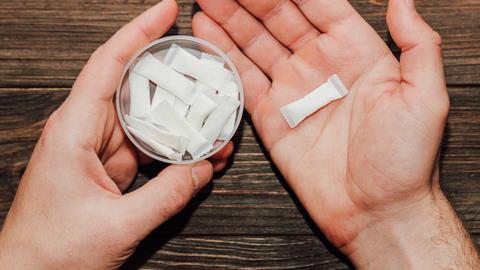
Fuelled by social media sales, caffeine pouches are growing fast. Are they the next big energy trend or a health risk?
Content creator CJ Weber is performing an “upper deckie on TikTok”. By that, he means placing a caffeine pouch under his upper lip to deliver an energy boost.
It’s a simple action that will no doubt resonate with his 149,100 followers. In the US, especially, interest in caffeine pouches – sachets that are placed between the lip and gum for absorption into the bloodstream – is surging on platforms such as TikTok.
“Consumers are clearly hungry for more of this new format,” says Nora Minno. She’s director of nutrition, regulatory and product communications at US caffeine pouch brand Wip, which has been “blown away” by interest in its home market.
 But there’s growing interest in the UK, too. UK vendors are reporting high growth in the format – and caffeine pouches arrived in bricks & mortar stores via WH Smith last month. However, there are concerns. Campaigners are warning of growing teen usage, as pouches don’t carry the same age restrictions as energy drinks. Consumers are also wary of the association with nicotine pouches.
So are these concerns fair? Or could this be a valid and mainstream addition to the energy market? And what are the barriers to more widespread adoption?
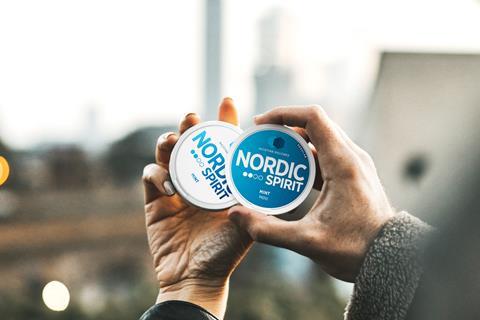
Caffeine pouches remain relatively niche, even in the US. So getting hold of exact numbers on the market size is tricky. However, Research & Markets estimates the global market will grow from $71.3m (£52.5m) this year to $107.2m (£78.9m) by 2032. “Caffeine pouches have emerged as one of the most dynamic intersections of functional nutrition, oral delivery formats and lifestyle-driven consumption,” it says.
On the other side of the Atlantic, Wip believes the format is becoming increasingly mainstream. “We conducted a large-scale piece of market research of 10,000-plus 21 to 40-year-olds, and found nearly 50% purchase intent among caffeine consumers at large,” says Minno.
In the UK, consumers appear more cautious. That’s if they’re even aware of caffeine pouches. Only 20.8% said they were familiar with the concept in The Grocer’s survey of 1,921 UK adults with Vypr, conducted this month. And only 26.1% said they would be interested in trying caffeine pouches.
Still, those figures are notably higher among certain demographics. As many as 35.2% of 35 to 44-year-olds expressed an interest in trial.
And appetite is fast growing in specialist retailers. “Caffeine pouches are a rapidly growing segment,” says Markus Lindblad, head of legal & external affairs at Haypp, which specialises in selling tobacco-free nicotine products online. “Within our group, the UK is the global leading market. Around 10% of our UK consumers use caffeine pouches, compared to 5% in the US and Sweden.” Crucially, that UK figure has doubled on the previous year.

What consumers think of caffeine pouches
This growing appetite is persuading more mainstream retailers to get on board. Consumers can pick up brands such as End, X-booster, Belter, Fuze and Muse on Amazon.co.uk. Then a breakthrough moment came last month, when Finnish brand Denssi secured a national listing at WH Smith for its caffeine pouches.
“Bringing Denssi to WH Smith is an important milestone for us,” said Sami Säämänen, founder and CEO of Denssi, at the time. “This partnership ensures customers can easily access Denssi products wherever their day takes them.”
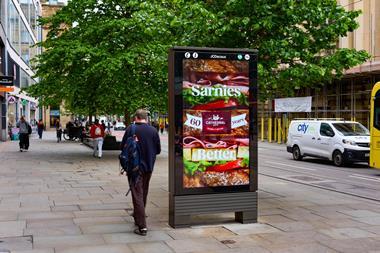
Tellingly, the partnership was marked by a large display on the billboards of WH Smith at London Victoria Station. That gives a clear clue on who WH Smith sees as its core consumers.
After all, although caffeine pouches have faced criticism for their appeal to teens, brands cite consumers in their twenties and thirties – including the on-the-go crowd – as their target demographic.
“There is broad appeal amongst adult consumers who are looking for a physical or mental boost,” says Wip’s Minno. “This includes fitness enthusiasts, endurance athletes, college students, busy professionals, shift workers, gamers, construction workers and more.”
The likes of Belter are clearly targeting the fitness market. On its website, the brand describes caffeine pouches as a “go-to for athletes”. Then there are the likes of LF*Go, which has a partnership with boxer Mike Tyson.
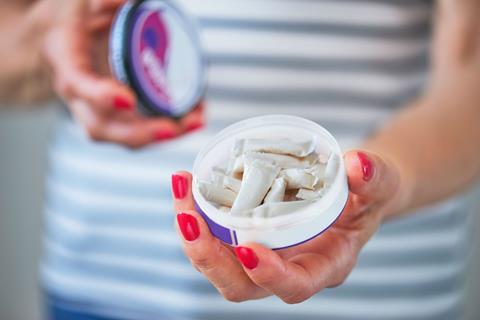
Other brands are focusing on ease of use. “I’ve leaned into pouches being a more convenient delivery method of caffeine,” says Kirke Lashelle, founder of US caffeine brand Kaffa. “So it’s at the intersection of nicotine pouches, energy drinks and mint gum.”
That’s a potentially lucrative position to be in. After all, the energy drinks market is in strong growth in the UK. Last year, the category delivered yet another year of double-digit value gains – up 10.6% to be worth over £2.7bn in grocery [NIQ 52 w/e 6 September 2025].
Alex Beckett, food & drink principal strategist at Mintel, believes caffeine pouches could appeal to that consumer base. “Caffeine pouches are stimulating, discreet, flavoursome and zero-calorie, so they present competition,” he says.
The similarity with nicotine pouches also suggests high-growth potential. The biggest brand in grocery – Velo – racked up £113.4m on the back of 66.7% growth last year [NIQ]. Zyn also nearly doubled in sales over the past year, according to owner PMI.
“We’re seeing strong and sustained growth in the nicotine pouch category,” says Baris Ozcan, director of smoke-free products at Philip Morris Limited. “Pouches can be used anywhere and any time, which is a key driver to their appeal.”
Vape retailer Totally Wicked also points to the convenience of the pouch format. “The target demographic for both caffeine and nicotine pouches is heavily skewed toward the 18 to 34 age group, who are usually looking for a product that fits into their lifestyle,” says Natalie Stacey, head of brand communications.
Five caffeine pouch brands sold in the UK
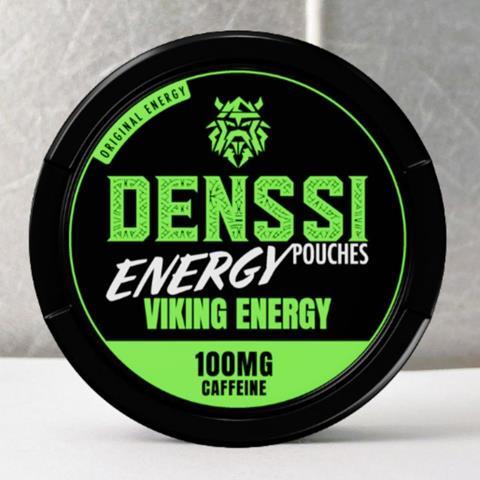
Denssi
Country of origin: Finland
Rsp: £8.49/pack on Amazon.co.uk
Launched: 2025
‘No sugar. No crash. Just energy.’ That’s the tagline for Denssi’s caffeine pouches, which are available in six flavours from Viking Energy to Berry Beast. The brand made a breakthrough into bricks & mortar stores last year with a nationwide listing in WH Smith.
Muse
Country of origin: UK
Rsp: £7.99/pack on Amazon.co.uk
Launched: 2024
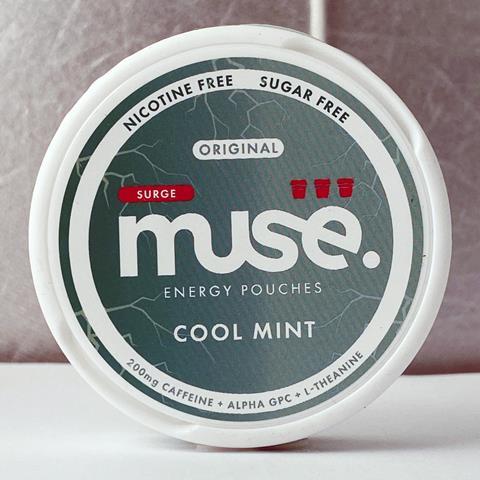
Muse sells three different strengths of caffeine pouch: Focus (70mg), Boost (140mg) and Surge (200mg). Those come in bold flavours such as Iron Brew and Blue Razz Lemonade. The combination of caffeine, Alpha GPC and L-theanine delivers a “smooth focus without jitters or crash”, Muse says.
Fuze
Country of origin: UK
Rsp: £6.49/pack on Amazon.co.uk
Launched: 2025
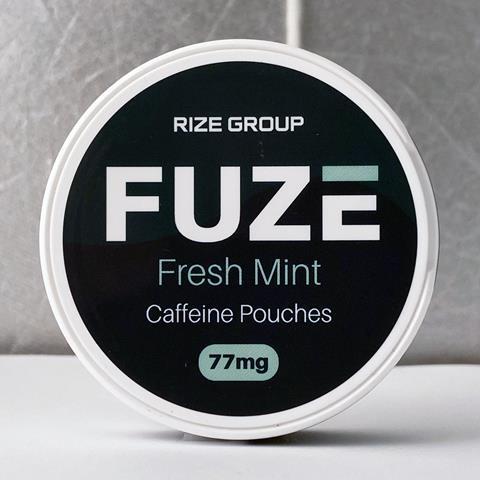
Not to be mistaken with Fuze nicotine pouches, this fledgling caffeine pouch brand is positioning itself as a rival. Little information is available, but it appears to have been founded in the UK last year – and early Instagram videos show an ambassador trying to get finance bros to swap out nicotine.
End
Country of origin: Lithuania
Rsp: £7.95/pack on Amazon.co.uk
Launched: 2023
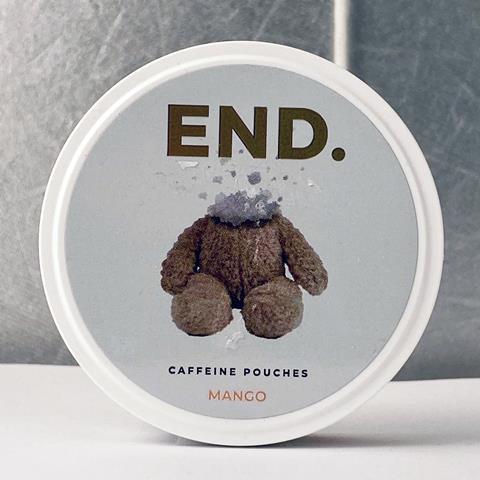
A pack of ‘extra strong’ End Banana pouches–containing 100mg of caffeine – show an image of a teddy’s head blown off by the sheer power. Not subtle marketing, but it aims to persuade “sports, fitness and gaming” enthusiasts to ditch the “sticky energy drinks”.
X-Booster
Country of origin: Poland
Rsp: £8.50/pack on Amazon.co.uk
Launched: 2024
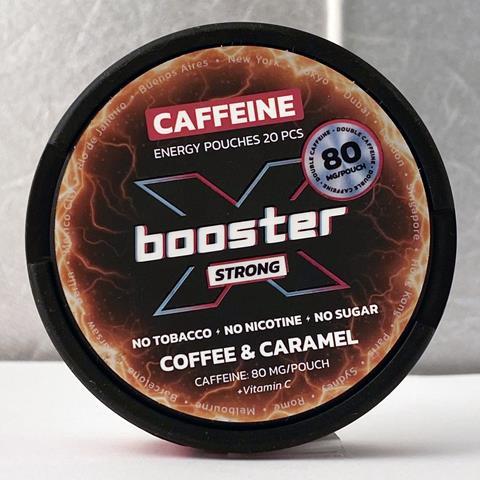
X-Booster is described as “the perfect fit for active consumers seeking instant stimulation”. The brand offers three strengths – 40mg, 80mg and 120mg – in flavours ranging from coffee & Caramel to Bubble Gum. The pouches are marketed on Amazon.co.uk as ideal for “work, sports or travel”.
Appealing to kids?
So if caffeine pouches can combine the functionality of energy drinks and convenience of nicotine pouches, they are arguably in a winning position. Yet that intersection is also the source of heated controversy.
Denssi, for example, leans heavily on cues that are synonymous with energy drinks. Not only does it have partnerships with racing events – MotoGP and Nascar – it carries similar visuals to brands such as Monster.
Like energy drinks, caffeine pouches also come in a variety of appealing flavours, from X Booster’s Bubble Gum to Denssi’s Tropical Fury.
Put simply, it’s easy to see the draw for teenage boys. That appeal was one key factor behind supermarkets agreeing a voluntary ban on energy drink sales to under-16s in 2018. There are now plans to enforce a statutory ban on drinks such as Red Bull, Monster and Prime Energy, which contain between 80mg and 160mg of caffeine per can for this age group.
However, no such measures apply to pouches, which can contain up to 200mg. Specialist retailers including Haypp and Totally Wicked don’t sell to under-18s as a blanket rule. But outside of those specialists, things get murkier. Amazon told The Grocer it would be “guided by legislation” and WH Smith did not reply to requests for comment.
Barbara Crowther, campaign manager for the Children’s Food Campaign, is concerned about the youth appeal. “The government is absolutely right to restrict sales of high-caffeine drinks,” she says. “At the same time, we have also called on government to keep caffeine pouches and other highly caffeinated products under review.”
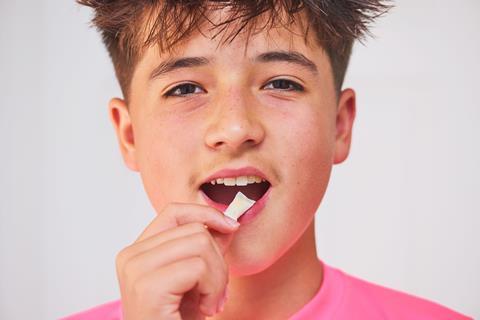
Another issue to note is the vast variation in strength. Kaffa pouches contain just 50mg of caffeine. Others such as Wip offer strengths up to 200mg. Given up to 400mg a day is considered safe for adults, it’s nothing to worry about in theory.
However, British Dietetic Association dietician Aisling Pigott is concerned by the “ease of taking more than intended”. And of course, those doses are far more worrying for children.
Caffeine pouches have come under particular fire for reaching this demographic through channels such as TikTok Shop. That’s a concern for the likes of Kaffa’s Lashelle, who is “committed to marketing to individuals aged 18-plus”.
“I’m not on TikTok Shop and that, in my eyes, is kind of borderline,” he says. “I feel [it] has a very young audience, so to have the shop there with all these caffeine pouch brands – I’m not sure that’s [for] the best.”
The similarity with nicotine pouches only reinforces the concern over young users. Action on Smoking and Health (ASH) has raised fears over their marketing.
“We’ve seen a worrying surge in awareness of pouches in children over the past few years – likely related to the aggressive marketing of products including giveaways at shopping centres and festivals and ads on social media,” warns Caroline Cerny, deputy chief executive at ASH.
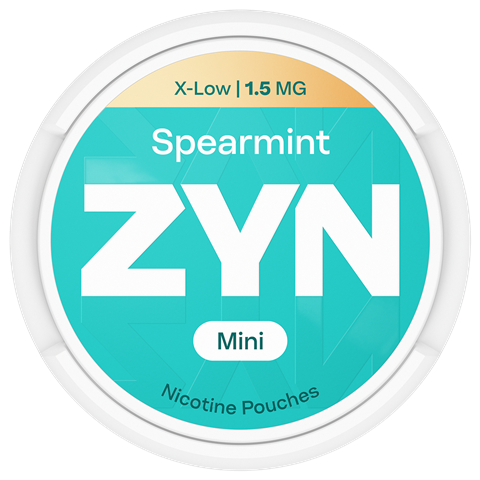
If caffeine pouches are lumped in the same boat, they face a PR problem. A sizeable number of UK adults described caffeine pouches as “worrying” or “addictive” – 30% and 21% respectively – in The Grocer’s poll with Vypr. And the associations with nicotine are understandable. Some brands – like Denssi and Muse – make both caffeine and nicotine pouches. Lindblad of Haypp says there is a notable crossover between the two markets.
However, other brands are keen to create distance. Having become addicted to nicotine pouches at just 15, Lashelle positions Kaffa as a healthier alternative. “I wanted to create a similar experience without the highly addictive chemical,” he explains.
US brand Deckiez similarly positions its caffeine pouches as delivering a “knockout blow to nicotine”. Founder Dean Herkenrath says he “wanted to take action against nicotine use in the sports world”.
That’s a valid concern in the UK, too: a Loughborough University study last year found one in five professional footballers in England use nicotine pouches.
Digging into the market, it appears there is a dichotomy between shadier caffeine pouch brands – tellingly, most did not respond to The Grocer’s request for comment – and those that see themselves as a wellness product. Lashelle, for one, sells his product as a “clean and convenient” energy format. Wakey similarly talks about “clean energy” on its site.
The notion of wellness could not be further away from how sceptical UK consumers view caffeine pouches. But the market is still in its infancy. So whether caffeine pouches can reinvent themselves as a wellness proposition, rather than a shady underbelly of the energy market, will likely depend on which players prosper and how they market themselves.
If positioned right, they could just stand to make a dent in the £2.7bn energy drinks category. As Mintel’s Beckett sums up: “The human need to stay productive, invigorated and alert isn’t going to decline any time soon.”







No comments yet