



Long-term contracts have become the norm, with retailers claiming they offer farmers security and cash to invest. Is it that straightforward?
The two cows were surprisingly relaxed given the bright lights and packed crowd. They lumbered quietly behind two young boys, past shelves of herbs and spices and then the milk fridges at the back. Even a tug by a flustered police officer did little to upset them. “You need to get them out of here right now,” the officer warned. “Don’t touch the animal,” a man snapped. Stafford’s local Asda hadn’t seen such drama in a long time.
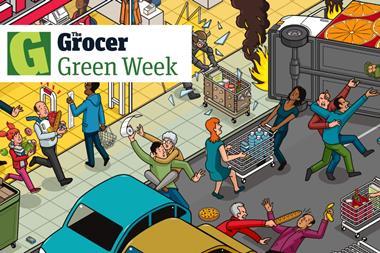
It was the summer of 2015, and the sight of cows marching through UK supermarkets was among a wave of farmer protests in which processing plants were also blockaded and milk given away for free outside stores. farmers were irate that the likes of Morrisons and Asda were selling milk for less than it cost them to produce – while the supermarkets insisted the shelf price had nothing to do with what farmers got paid.
Who won? Well, it seems bringing a couple of farm animals on to your adversary’s home patch is rather a good way to get what you want. All supermarkets eventually pledged to offer farmers a better price for their milk. Tesco and Sainsbury’s had introduced the first such agreements in 2007 – but they’ve been improved and are generally acknowledged as a boost for dairy farmers lucky enough to get one.
Sainsbury’s
Sainsbury’s has promised 60% of its own-brand SKUs across fresh produce, dairy, meat, fish and poultry will be on deals longer than five years by the end of 2026. This includes the expansion of long‑term agreements for 62 British berry farms, a sector historically reliant on short‑term deals.
Today, amid a renewed period of farmer strife, supermarkets are applying the same principles in a new tranche of long-term contracts they claim will give farmers the confidence and security they need to keep producing. M&S has done it for beef and lamb; Aldi with apples, eggs and beef; and Sainsbury’s across meat, fish and produce. Sainsbury’s head of livestock Henry Blain says the goal is to make these deals “the norm rather than the exception”. So what do these long-term contracts mean for British food supply? What are the advantages? And will they genuinely help farmers in the long term?
They’re pitched as an investment in the future of British agriculture – that with long-term deals, farmers can more easily get investment from banks, invest in new tech and make decisions untied from the whims of a novice supermarket buyer. Aldi’s apple supplier has been able to plant a whole new orchard.
But those cows in Asda’s milk aisle still loom large. “[Supermarkets] are desperately scared of more farmer uprisings,” says a former agricultural buyer at a major retailer. It’s no surprise, really. Farmers have already blockaded Sainsbury’s, Asda and Lidl distribution centres this year in protest over rising costs, and while they never grew beyond a handful of tractors, that’s not to say the next one won’t.
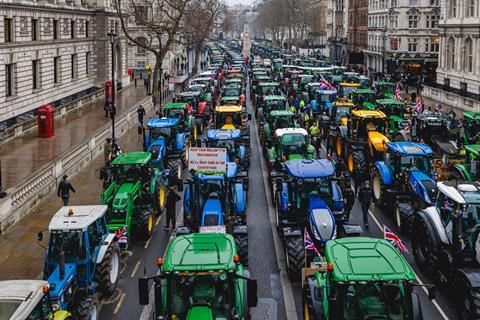
The Iran war has only exacerbated an already dire situation for farmers (see box, p36) in which soaring fertiliser and diesel prices have made it even harder for them to regain their costs of production. A review by Defra into farm profitability last year found one in three British farmers is losing money.
The big supermarkets are clearly concerned. After all, despite constant pressure, they rarely announced long-term deals when times were good, particularly in areas like fresh produce that are historically oversupplied on to the open market. Now, though, with growers shutting up shop and supply contracting, a sweep of pledges has quickly emerged.
Retailers are also coming to realise that international markets are less reliable than they once were, says Richard King, a partner at agricultural consultancy Andersons. “That ability to pick up the phone and magic up supply from anywhere in the world isn’t quite as easy as it was once thought to be.”
Part of that is Brexit, he says, with some growers in Spain and Portugal often now avoiding the UK due to the extra hassle of shipping outside the single market. The reputation of British supermarkets can also act as a deterrent. “Our retailers do tend to be quite demanding, so those growers sometimes try and find a better deal elsewhere,” he says.
Marks & Spencer
In April, M&S announced two decade-long contracts with ABP and Dunbia worth £2.1bn for its British lamb and beef supplies. “These long-term partnerships enable us to invest in higher welfare standards, environmental outcomes and supply chain resilience,” says Peter Kennedy, head of agriculture.
Nonetheless, and regardless of the underlying motivations, most farmers are broadly optimistic about the new deals, even if many are still keen to figure out exactly how they might affect their bottom line.
While every contract contains its own specificities, in light of the hefty price erosion farmers have suffered in recent years, some are insisting a minimum price benchmark is a must. “Ten-year commitments without a minimum price don’t guarantee anything,” says Neil Shand, CEO of the National Beef Association.
This does occasionally happen in volatile markets like beef or lamb, where supermarkets or processors may offer a ‘cap and collar’ model with a fixed maximum and minimum price. More common is an ‘open book’ model that pays farmers their cost of production plus a guaranteed margin. This started with Tesco and Sainsbury’s milk deals in 2007 and has since expanded into eggs after Russia’s invasion of Ukraine sent production costs soaring. Lidl announced an equivalent deal for its pork producers in 2024.
These typically work by offering all farmers in an established pool a set price based on an analysis of their cost of production carried out every few months. For farmers, it smooths out the peaks and troughs of selling on the open market – a good thing at times when the market price is low and farmers can be comforted by knowing they are at least guaranteed a stable income.
Aldi
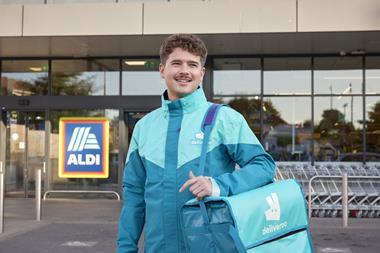
Aldi has implemented long-term contracts across apples, eggs and beef. Most striking is its £750m deal with Kent apple grower AC Goatham, which will last for 20 years. This has seen a new ‘Aldi Orchard’ planted – a 200-acre plot that will grow a mix of gala and braeburn apples for Aldi stores across the country.
Right now, in milk, for example, farmgate prices have fallen about 25% over the past year, but if you’re supplying Tesco you’re getting around 43p a litre, AHDB data shows. Compare that with someone selling into cheese and likely getting less than 30p. The tables can always turn with the next market surge, though, when suddenly your cheese-linked neighbour might be riding high on the windfall of free markets.
For supermarkets, the benefits often include financial gain of their own. By paying the average cost of production, farmers who fall below it will gratefully earn more while those above it will clearly not. “It’s quite a clever way to do it, because what happens is everybody tries to get better,” says the former supermarket buyer. “Then the cost of production actually comes down, and then the average price as well.”

Long-term contracts a tiny proportion of the market
However, for all the press releases and all the claims these deals will be “the norm rather than the exception”, long-term contracts still govern just a tiny proportion of the food supermarkets sell. Most meat is still bought short-term, as is almost all fruit and veg. Grains like wheat and oats are rarely even mentioned.
When Aldi announced a 20-year deal with Kent apple grower AC Goatham two years ago, Ged Futter, a retail expert and author of a recent report on the state of farming, hailed it as “game-changing”. Today, though, he’s grown frustrated at the slow pace of uptake across the rest of the sector. “There are still too few long-term contracts in too few categories,” he sighs.
This is clearly true for the fresh aisles, but it gets more complex in crops entering other parts of the store. In long supply chains like wheat, where the grain could pass through many mills and factories on its journey, it can be tricky for supermarkets to leverage influence over the terms ultimately dealt to each farmer.
It is slightly easier in foods like beef or chicken, where there may be just one actor between retailer and farmer. In cases such as M&S’s 10-year contracts with ABP and Dunbia, supermarkets often try to dictate the terms and leave the processor to manage it, King says: “The supermarket quite often calls the shots. The processors then almost end up as an agent of the supermarket, passing on the money and the requirements.”
Lidl
Lidl launched a series of deals for its root veg growers back in 2024, each for a maximum of three years. Later that year, it placed its pork farmers on a new cost-of-production payment model that guarantees minimum volumes and includes a fixed margin for farmers.
But who is this really benefiting? One beef and lamb farmer we spoke to says many farmers who supply the major supermarkets don’t even want a long-term contract. While they say an extended deal may be attractive for dairy farmers with a consistent output and easily definable costs, “we’re hill farmers, so our costs are a bit more vague”.
They therefore do not expect farmers to get any major benefit from M&S’s new deals. While the contracts will enable ABP and Dunbia to give farmers reassurances of taking stock on a regular basis, “we’d only get a small premium. It wouldn’t be massive,” they say.
Instead, they suggest these deals are much more about guaranteeing supply for the supermarkets while allowing processors to upgrade their operations. “If ABP get a 10-year contract to supply M&S say 100,000 cattle a year, they can then commit to building a plant, running the plant, employing the people, deploying capital, knowing they’ve got that market.”
Peter Kennedy, M&S head of agriculture, says the retailer invested more than £7m over the past decade to support farmers with agricultural innovation: “We work closely with our farmers in every supply chain, whether that’s with a supplier partner or directly.”
What are the long-term benefits?
The ultimate question, though, should not be whether these long-term contracts do enough to help British farmers scrape into the black or guarantee another few seasons of summer strawberries. It should be whether they – alongside other private and public policy measures – are helping farmers to one day confidently say they can keep growing food for decades to come.
This means not just staying afloat, but having enough income for farms to invest in the infrastructure and technology necessary to keep costs down, cut carbon emissions and protect the country’s soil and rivers.
As Joe Stanley, head of sustainable farming at The Allerton Project, puts it: “We really do need to have a more aspirational approach for our food system than: ‘Well, at least they’re not losing money’.”
The reality is that the full implications of such contracts may not become clear for many years. And just because they seem a good deal for farmers now, doesn’t necessarily mean they will in five years’ time.
“Contracts tend to reinforce the power relations of the people at the point they signed,” says former Defra advisor Henry Leveson-Gower. “And actually, the longer the contract, the more problematic they are, because at the point you signed you need to have imagined all possible futures that might affect its implementation.”
Tesco
Tesco has six ‘sustainable farming groups’ across milk, cheese, beef, pork, lamb and potatoes, and each group benefits from “transparent pricing structures”. It says it also has long-term contracts in several other categories including eggs, chicken and fruit (such as citrus, apples and grapes).
So, given that’s impossible, if and when the unforeseen occurs, who is the contract more likely to favour? Maybe it will be balanced. “But you should ask the question: who has more resources to employ lawyers to write contracts in their interest, the supermarket or the farmers?” says Leveson-Gower.
Any supermarket would reasonably respond that it’s not in their interests to wound a valuable supplier. That much of their food comes via “long-term partnerships” they’ve held for many years. That may be true. But Rob Chester, a former director at Tesco and Walmart, argues that when it comes down to it, the culture inside supermarkets still often favours short-term commercial decisions over the type of long-term thinking that would truly protect British farmers.
This is seen in the amount of risk supermarkets and wholesalers are willing to place on farmers’ shoulders even when they’re already close to collapse, he says. “If you’ve got risk borne by the people in the supply chain probably least able to cope with it, that’s a bad thing for everybody.”
So while longer-term contracts are a start, Chester argues there remain fundamental problems in the food chain that are still ignored because they’re “inconvenient and difficult”. For example, supermarkets’ net zero commitments will inevitably boil down to agriculture, given the sector accounts for over 90% of a retailer’s total carbon emissions. Yet he sees few manoeuvres enabling supermarkets to influence change, particularly in more complex supply chains like wheat.
“It’s unthinkable to me that you’re going to have a solution to net zero which doesn’t mean closer links between agriculture and the retailers,” says Chester, now CEO at sustainability consultant SCI. “But it doesn’t feel like anybody’s really got a grip of that at the moment. I find that tremendously sad and worrying.”
Among the myriad problems facing British farming, long-term supply deals are clearly no panacea. No one claims they are. But they could be an indicator of what’s to come. If supermarkets start rolling them out far and wide, it will suggest a much closer relationship along the food chain that could be essential for combating the climate crisis, among other problems.
If, however, most farmers are left to battle on their own, without guarantees and forced to ride on the volatile storms of free markets, it might not be long before British production collapses under the weight of forces beyond its control.
Just how bad are things for British farming?
More than half of British farmers are now thinking about shutting up shop, and who can blame them? First the loss of subsidies from the EU has never been adequately replaced, not helped by the government stripping £100m out of England’s farming budget.
But the cost of everything from labour to fertiliser has skyrocketed, while the price for crops like cereals is nearing historic lows. What’s more, climate change is ravaging crops, with floods and heatwaves sending yields plummeting.
Last year’s drought was estimated to cost British arable farmers over £800m in lost revenue, according to the energy & Climate Intelligence Unit, making it one of the worst harvests on record.
“We’re looking at yields halving in successive years,” says Joe Stanley from the Allerton Project, a 320-hectare demonstration farm in Leicestershire.
As a result Britain’s total food production is plummeting. Wheat imports have hit record highs, fresh vegetable self-sufficiency is at record lows, and potato production is at its lowest level for more than a decade. Without major changes, harvests could fall by another third by 2050, according to Science for Sustainable Agriculture.
It’s all the more vexing for farmers because the money exists in the system – it’s just not for them. A study by Sustain in 2022 found farmers receive less than 1p of profit for every supermarket block of cheese or loaf of bread. For an average four-pack of burgers, the processor earns 10 times more than the beef farmer.
“Farmers are expected to take risks, absorb shocks and adapt quickly, but their limited bargaining power means they often face squeezed margins or lost returns,” said former NFU chair Minette Batters in a review on farm profitability last year.




No comments yet