





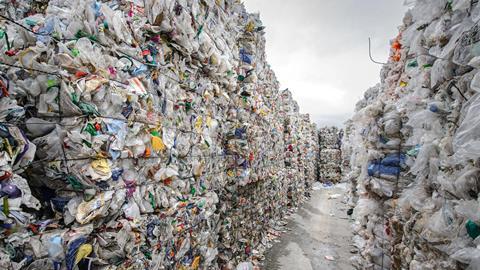
As EPR arrived, so did a raft of companies falling below the threshold
The government’s extended producer responsibility packaging tax has suffered its fair share of scandal since the first invoices landed in October.
Last week’s decision by the UK government to bail the system out for a year – amid an expected shortfall in the tax collected – was the latest in a long list of calamities.
Within 48 hours came another. A swathe of new companies are cropping up both in the UK and abroad to exploit a loophole, evidence suggests.
So what damage is it doing, and what can be done to stop it?
A raft of small packaging firms launched after EPR invoices landed, revealed research of Companies House filings by the Foodservice Packaging Association (FPA).
The spike points to opportunistic exploitation of the scheme’s de minimis threshold, which exempts small producers with turnover less than £1m who handle less than 25 tonnes of packaging a year, the FPA claims. Almost 99% of the companies consist of a single director or person in control, it found.
The FPA also says many businesses have reported the influx of new companies is having a devastating impact on turnover.
Read more:
-
Fury as investigation shows surge in EPR ‘tax dodgers’
-
EPR bailout is a victory for The Grocer’s relentless journalism
-
PackUK asks government to allow EPR scheme to run at a loss
Klöckner Pentaplast (KP), a UK-based global packaging company supplying retail, is one. Sales director Austin Schwarz says volumes have plummeted by almost a third, as EPR has pushed customers to new, smaller suppliers.
“A lot of our large customers have stuck with us, but a lot of the smaller customers have started importing from places like Turkey, Romania, mainland Europe and the Far East.
“The frustration is that we’re fully compliant and support EPR. We’re one of the largest food packaging manufacturers in the UK and have no choice.”
KP has reported the rise of the new companies to the Environment Agency but says there has been little feedback.
FPA executive chair Mike Revell is calling on the government’s enforcement agency to launch an investigation. In an open letter to the EA, he says: “Our findings represent a deliberately conservative, lower-bound estimate.”
He warns the need to plug a funding shortfall in year one “reinforces the importance of comprehensive participation”.

Call for threshold review
The FPA is calling for an independent audit of companies that appear likely to fall in scope of EPR compared with those actually registered, and a review of the de minimis threshold.
That would be welcomed by Hasnain Karawalli, director of Dunstable-based Satco Plastics. He says his company, which makes food takeaway containers and has a turnover of about £33m, has also been hit by the rise of smaller new operators.
At the same time,“we are aware of big companies, not just these small ones, that are not paying EPR and nothing has been done about it”, he says.
Karawalli says he has “compiled evidence including company names, newly formed and closed entities, and shared directorships that indicate deliberate avoidance of EPR”.
He is “willing to share this with the EA but we want promises that they will act”.
Defra says it is aware of concerns over non-compliance and is working with the EA to ensure fair and robust scheme administration. Turnover thresholds were put in place to support small businesses, it adds. Meanwhile, the EA says it takes enforcement very seriously and uses a range of measures including targeted inspections.
But until companies see the results of these efforts, concerns will only persist.





No comments yet