







It has no agreed definition, yet brands and retailers are getting on board. Can the regenerative movement outpace organic?
Regenerative farming has quickly become one of agriculture’s trendiest concepts. It has long featured in conference programmes and industry reports, and it’s now making its way onto product packaging and restaurant menus up and down the UK.
Yet for a term that is so fashionable, it remains surprisingly hard to define, with no agreed-upon meaning – legal or otherwise.
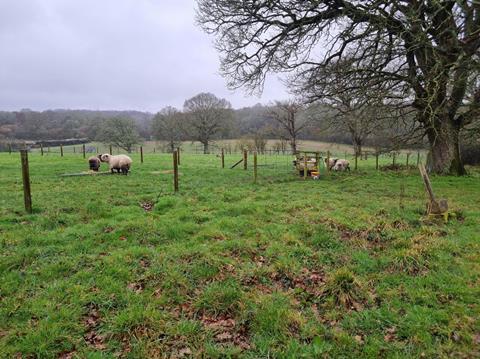
According to Mark Brooking, chief impact officer at dairy co-op First Milk, that’s precisely the point. “Rather than a fixed set of rules”, regenerative farming is “a principles-based approach farmers adapt to their own systems”, he says. “It’s about improving soil function, water infiltration and nutrient cycling so farms become more resilient, productive and less reliant on external inputs.”
The term ‘regenerative’ can sound daunting. “A lot of farmers think: ‘That’s not for me, that sort of newfangled farming’,” says Andy Bason, farm manager at Hampshire-based Newhouse Farm. “But in the end, it’s just good farming.”
Still, that lack of a definition raises some difficult questions. “There are businesses and companies doing amazing things under the banner of regenerative. And there are some who are clearly co-opting it and using it to keep business as usual ticking along,” says Sarah Compson, standards innovation director at organic charity the Soil Association.
So, what exactly is regenerative farming? What are the barriers to implementation? Can it learn anything from the organic movement? And what does the future of regenerative look like?
In 2020, a group of academics attempted to provide a definition of the term in their report Regenerative Agriculture: The Soil is the Base. Comparing 28 different studies, they concluded regenerative agriculture is an approach that uses “soil conservation as the entry point to regenerate and contribute to multiple provisioning, regulating and supporting services, with the objective that this will enhance not only the environmental, but also the social and economic dimensions of sustainable food production”.
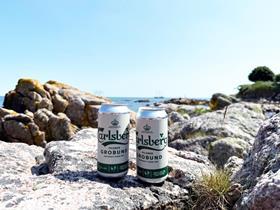
Grobund beer
The limited-edition Carlsberg beer, made from 100% regeneratively grown barley malt, was sold at Danish festival Folkemødet last summer.
The Scandinavian brewer said it was symbolic of a “much larger movement”, with Carlsberg planning to produce all of its beer using regenerative grain by 2040. “We see a future in brewing with regenerative grain, and we want to contribute to the development of regenerative agriculture not just in Denmark, but worldwide,” said Carlsberg Denmark MD Peter Haahr Nielsen.
For those less fluent in academic speak, Wildfarmed co-founder Edd Lees says the concept is actually “pretty simple”, describing it as “literally a silver bullet”.
“Instead of extracting from soils year after year, it focuses on rebuilding them – at the same time as producing food, so we can continue to grow crops to feed generations to come,” he explains.
Thanks to its strong branding and high-profile founders – Andy Cato of dance music duo Groove Armada and former TV presenter George Lamb complete the trio – Wildfarmed has become the UK’s poster child for regenerative farming.
At the heart of the initiative are its third party-audited Wildfarmed Standards, which boil down to “farming with nature, not against it”. Some of the methods espoused are minimum tillage, avoiding insecticides, fungicides and herbicides, keeping soil covered year-round and integrating livestock into fields.
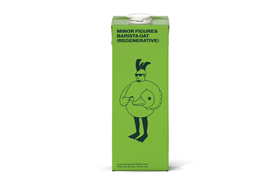
Minor Figures Barista Oat (Regenerative)
Minor Figures teamed up with Wildfarmed in October to launch the brand’s first barista-standard oat drink made with regeneratively grown oats.
We’re thrilled to be working with Wildfarmed to create a UK-first that’s pushing us closer to the future we want to see,” said Minor Figures co-founder and CEO Stuart Forsyth. “Barista Oat (Regenerative) takes advantage of Wildfarmed’s pioneering regenerative practices, which prioritise people and the planet to create a product that’s in harmony with both nature and coffee.”
The business works with more than 1,000 partners in the food sector, acting as a “bridge between farmers, food brands, retailers and shoppers, making it an option for anyone who wants to make regen happen”, Lees adds.
That momentum is only likely to grow in the wake of a report last month from think tank Demos, supported by McCain, finding that sustainable methods could increase farm profits by £1.6bn a year by 2035.
First Milk is another business fully committed to the regen mission. The Co-op, which is made up of 700 dairy farming families, partnered with Yeo Valley in 2023 to create a regenerative-focused milk pool. That was one of the factors credited with a 20% rise in turnover to £570m in 2025.
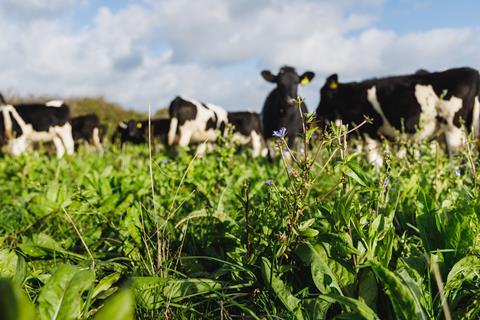
Using similar methods to Wildfarmed – such as protecting soil surface, encouraging biodiversity and integrating livestock – First Milk says its members delivered more than 326,000 ‘regenerative actions’ across nearly 90,000 hectares last year, contributing to a 3.4% reduction in emissions per kilogram of milk.
“Practices such as grazing management, cover cropping and reducing soil disturbance are tools, but the real focus is on measurable outcomes: healthier soils, lower emissions, improved biodiversity and better water retention,” Brooking says.
Retailers are engaging with the concept, too. Wildfarmed lines are stocked by Tesco, Waitrose and Ocado. On the own-label side, Waitrose says produce from its 3,000-acre Leckford Estate is grown “in harmony with nature, using regenerative agriculture”. The supermarket also promotes regen more widely through initiatives like its Farming for Nature programme.
“There’s no one-size-fits-all solution when it comes to regenerative agriculture, as no two farms are the same. That’s why we’re working across our supply chains to identify the best approach,” says Leckford director Andrew Hoad. “ Our approach is flexible, collaborative and outcome-driven.”

‘A steep learning curve’
Even with that flexibility, farmers still face significant barriers to adoption.
“Regenerative is quite a steep learning curve, quite a big step. You do run the risk of having problems, and yield is a key driver,” says Newhouse Farm’s Bason.
Newhouse began its regenerative journey two decades ago, when it switched from ploughing to minimum tillage due to difficulties with its clay-capped soil. The change proved beneficial, but Bason says farmers need “more knowledge” and “more science”. Ultimately, they “need to be confident the new techniques are going to work before they can risk transitioning”.
And it is a risk, says British Apples & Pears executive chair Ali Capper. For starters, the lack of regulation means “it’s a bit opaque and a bit woolly”.
But she agrees with Bason that the most pressing concern for most farmers is yield. “It may be really good for the environment and your soil, but if it reduces the growth potential of your crop and your yield, then your profitability per hectare is going to be diminished,” Capper says. “If yield is going to drop by 20%, or quality by 5% to 10%, is that going to be funded?”

Wildfarmed crumpets
Wildfarmed claimed a category first when it brought crumpets made with regeneratively farmed wheat to the masses in November.
The NPD was the company’s first range expansion beyond bread and flour into morning goods. “We called on our experience, knowledge and friends in the baking community to create the most premium, artisan-inspired crumpet,” said Wildfarmed head of grocery Andy Thomas at the time. “We cannot wait to see these regenerative crumpets out in the wild.”
There are certainly questions about financing the transition to more sustainable systems – and many point to the need to share risk. government support does exist through schemes such as the Sustainable Farming Incentive, Countryside Stewardship, Landscape Recovery and various capital grants.
Even so, former NFU president Minette Batters believes government funding is falling short. “You can’t expect an unsupported sector to be taking on all these costs,” she says. “Everybody’s got to be investing at scale with nature and you have to have a profitability margin.”
So some major layers are looking beyond government support. James Young, VP of agriculture at McCain GB&I, says the shift to regenerative systems “requires shared responsibility across the value chain with food companies, financial institutions and other partners helping reduce risk”.
McCain works with partners such as NatWest to provide preferential finance for regen investments, easing upfront costs so farmers don’t have to carry the full burden. That can have a transformative effect on both farming methods and morale. McCain’s Farmdex Report 2025 found 51% of farmers had considered leaving the sector last year, but those investing in sustainable practices were more optimistic about the future.
“The great thing about regen not being a regulated term is that farmers have space to innovate”
Sarah Compson, Soil Association
Of course, some argue it’s difficult to finance something that still lacks a definition. While Brooking thinks rigid certification frameworks aren’t the answer, others say they are essential. Philip Rayner, MD and founder of Glebe Farm Foods, argues standardisation could help resolve “confusion, as products and ranges could be clearly labelled and therefore easy to spot in store”.
Even more crucially, it could reduce the risk of greenwashing. María Montosa Ródenas, technical specialist at global investor network FAIRR, warns “disconnected strategies, weak targets and low transparency all undermine the credibility” of regenerative farming.
“Credibility is crucial,” she adds. “By linking regenerative agriculture to climate transition plans, companies set detailed, time-bound milestones and therefore minimise the greenwashing risk.”
She’s not alone in her concerns. The ASA was concerned enough by regenerative claims to issue guidance in 2024, warning that “claiming to use regenerative farming methods alone is typically not going to be enough to substantiate claims of a product’s positive environmental benefit”.
However, the regulator notes it has not yet received any complaints, carried out investigations or published rulings on regenerative farming. The guidance, it says, “is designed to pre-empt potential problems”.
Organic parallels
The ASA’s guidance noted, as many others have, that “there are plenty of parallels between regenerative and organic farming principles”, though it points out there are “some fundamental differences at play”.
Chief among them is the use of chemical weedkillers such as glyphosate, which is banned under organic standards but used by some regen farmers. “Personally, I think any farming system that allows glyphosate and artificial nitrogen can’t really be described as regenerative,” says the Soil Association’s Compson.
There is some argument for a method that is less restrictive. Despite its hard-won status as an accepted part of the UK grocery scene, organic farming growth has been largely stagnant over the past decade. As of 2024, 503,000ha of farmland was farmed organically in the UK, according to Defra. Although it now represents 3% of all farmland in the country, it is down on 2015’s 521,000ha and the number of organic operators has decreased from 6,056 to 5,133 in the same period.
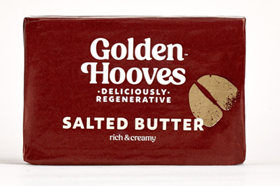
Golden Hooves salted butter
The First Milk-owned brand launched its first butter in November. It was described as “rich, creamy and fresh, with a luxurious mouthfeel and sweetness from regeneratively farmed milk”.
The brand said the launch is “punchy proof” that shoppers do not need to “choose between quality and conscience on their everyday items”.
Compson acknowledges that regen could benefit from its looser regulatory framework. “Back in the 70s, 80s and 90s, the organic movement really celebrated the fact that the term became regulated,” she says. “That was a huge success, but it’s also the root of some of the challenges we have today. The great thing about regen not being a regulated term is farmers have space to innovate…they can feel part of a movement without needing to jump through any regulatory hoops.”
Rebecca Tonks, founder and CEO of St Ewe Free Range Eggs, believes regenerative agriculture has an opportunity to grow in a way organic cannot. “I don’t know if [organic is] quite as scalable as a regenerative way of farming, because there’s a huge cost to organic and the outputs are lower,” she says.
Those costs mean organic products come with a high price that many consumers find prohibitive. However, Compson points out that in parts of Europe – particularly countries like Denmark, where organic has a much larger market share – “the price differential is lower because you’ve got the economies of scale”.
Even in the UK, organic is “not the niche it was once considered to be”, she adds. Indeed, organic sales outgrew non-organic by 400% in 2025, according to the Soil Association’s latest Organic Market Report.
Arguably, there is no need for the two terms to be pitted against each other. The rising demand for sustainably produced food is a boon for regenerative as well as its organic older brother.
Compson believes the two approaches can work well together. “A lot of the innovations we’re seeing in regen come from the organic movement,” she adds. “That’s why the experience of organic farmers should be central to designing what those systems look like and what that future looks like.”
One note of caution, though, is that adding yet another environmental label into the mix could create problems, especially given regenerative’s relative infancy. “We don’t need consumers to be bamboozled by more and more claims because, ultimately, you just erode trust if you can’t back it up with something that intuitively feels correct,” Compson says.
Trust will be crucial in convincing consumers to get behind regenerative farming – and to pay for it.

Tribe apple & raspberry flapjack
Natural energy challenger Tribe was another brand to partner with Wildfarmed, this time to create what it claimed as the UK’s first flapjack bar made with regeneratively farmed oats last April.
“We’ve been inspired by the Wildfarmed mission to make regenerative food accessible and are proud to be collaborating on a UK-first oat bar with regenerative farmed oats,” said Tribe co-founder Tom Stancliffe. “This is a game-changing product that tastes great and pushes the boundaries of the cereal bar category.”
“Regenerative credentials can strengthen the story, but they’re not yet a standalone driver of price,” Brooking says. “Our experience shows the opportunity lies in combining sustainability with quality and provenance, rather than relying on regenerative alone to command a premium.”
Most crucially, regen advocates have a job to do in terms of familiarity. “If you asked someone, what’s the difference between organic, Red Tractor and regenerative they aren’t going to know, are they?” Bason says.
Indeed, market data from Dutch non-profit foundation Foodvalley shows regenerative agriculture is moving faster than consumer understanding. Its research found that new food and beverage launches carrying regenerative farming claims grew at a rate of 44% globally between 2021 and 2025, but 71% of people say they are unfamiliar or only slightly familiar with the term.
“On the consumer side, the issue is awareness,” admits Lees. “The global economic cost of degraded soils, polluted waterways and declining biodiversity has been repeatedly measured in the trillions. One day those bills must be paid. If everybody knew what a regenerative food system delivers, it would happen much more quickly.”
Soil health: Why does it matter?
Soil health sits at the heart of regenerative farming practices – and the potential benefits could be transformative for farmers. An Environment Agency report in 2023 estimated that soil degradation cost the UK £1.2bn a year as far back as 2010. With about 95% of global food supplies directly or indirectly dependent on soil, the report stresses that soil health is also vital for food security.

Almost four million hectares of soil in England and Wales are at risk of compaction, affecting fertility and water resources, and increasing flood risks, warns the agency. At the same time, more than two million hectares of soil are at risk of erosion.
Andy Bason, farm manager of Newhouse Farm, says it’s a “massive topic in farming”.
“Farmers have still got a huge amount to learn about soil health,” he says. “We’re now understanding that it is the starting point, the very thing we need to produce profit. What we do to our soils can massively affect its properties.”
Soil health is not just important from a food security perspective. UK soils currently store about 10 billion tonnes of carbon – equivalent to roughly 80 years of annual UK greenhouse gas emissions, according to the agency.
Worryingly, the report also found that intensive agriculture has caused arable soils to lose between 40% and 60% of their organic carbon. Healthier soils could also help mitigate the impacts of extreme weather.
Despite the concerns, the EA warns that “there is insufficient data on the health of our soils and investment is needed in soil monitoring”.
“Healthy soils with more organic matter also absorb and hold more water, reducing runoff and improving water quality,” says Glebe Farm Foods MD Philip Rayner. “However, transitioning to regenerative farming methods isn’t easy: it can initially reduce yields and prove tricky for farmers to find ways to stay productive while protecting the environment.”








1 Readers' comment