Recalls can have huge consequences – so why can’t companies stop them happening, and which categories are most at risk?

Product recalls sink small businesses and hurt large ones. Take Nestlé, whose underlying profits will take a £71.9m hit from global baby formula recalls this year, which led to the write-off of £105.5m of inventory.

And then there is the risk of harm to consumer trust or, worse still, people falling ill. Recent infant formula recalls by both Nestlé and Danone were sparked by the presence of the toxin cereulide, which can cause vomiting, diarrhoea and stomach cramps.

As of 2 March 2026, the UK Health Security Agency had received 61 notifications of children who fell ill after being fed from the now recalled formula batches – 35 boys and 26 girls – though it noted the children had seasonal viruses in some cases.

Yet despite so much being at stake, recalls persist. As reported by The Grocer last week, the number rose last year, having fluctuated over the previous five. The 141 issued in 2025 – up from 115 in 2024 – was equivalent to one every two to three days.

Aldi and Lidl topped a table of retailers to recall the most products, issuing eight and 10 respectively (including Lidl in Northern Ireland).

So, why do they keep happening? And when it comes to products, which categories are subject to the most?


Read more:


Experts put the rise partly down to more sophisticated and frequent checks, and producers and retailers exercising greater caution when potential problems arise. But they also point to supply chains growing longer and increasingly complex. Three of the biggest recalls of the past three years have involved mustard powder with undeclared peanut contamination, Dubai chocolate, and infant formula – with supply chain complexities in common.

Rachel Lyne, regulatory partner at law firm Browne Jacobson, suggests new trends requiring new supply chain arrangements are a contributing factor.

In the past 10 years demand has grown for more exotic cuisines, making supply chains “ever more global, complicated and long”, Lyne says. “That has added complexity to ensuring food is safe.”

The complexities are laid bare by the experience of FGS, the ingredients supplier at the centre of a recall of 303 products from 56 brands in November 2024, from Iceland fish pie to Papa John’s garlic and herb dip.

After peanut contamination was discovered in a finished product, each and every ingredient supplier including FGS was contacted before the company’s mustard emerged as the culprit. The contamination was eventually traced back to either having travelled through soil, with mustard crop grown close to peanuts, or through the secondhand bags used by farmers, FGS Ingredients head of operations Jatin Patel recently told the podcast Food Safety Matters.

The FSA advised FGS to withdraw two years’ worth of product that used the Indian mustard as a precaution.

FGS has since implemented a stricter regime and requirements of suppliers.

“We’re asking for testing each and every time the product changes hands from the farmers to the processes for cleaning and every step of the way,” Patel says.

Dubai chocolate

It makes sense then that confectionery, subject to long supply chains and trend-based product development, was the most recalled category in 2025 (see table, above).

“Confectionery recalls were boosted in part by the influx of Dubai-style pistachio chocolate products seen globally,” says RQA Group’s latest product recall report. “This caused global supply chain pressures, which tend to be a leading indicator of elevated risk.”

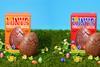
Chocolate bars and two Easter eggs from Tony’s Chocolonely were among the 37 confectionery lines withdrawn last year, due respectively to the potential presence of small stones and possible metal contamination.

Michael Lilley, product recall leader at specialist insurer CFC, says errors that commonly lead to recalls “can range from foreign materials getting on to the line, [or] testing procedures not picking up pathogens”.

In the case of Nestlé and infant formula, it was its discovery of cereulide in low levels in products in late 2025 that led to the global recall.

Tests showed the contamination came from arachidonic acid oil (ARA), supplied by a manufacturer in China. Nestlé immediately stopped using all mixes containing ARA oil from that supplier and blocked distribution of all corresponding infant formula finished products.

In the UK, Nestlé recalled several lines of SMA infant and follow-on formula on 5 January.

SINGLE USE ONLY (2)

Recent infant formula recalls were sparked by the presence of the toxin cereulide

Danone had used the same ARA oil supplier in China but had cut ties in November for commercial reasons, it is understood. It recalled an initial batch of Aptamil First Infant Formula in the UK on 24 January, having found cereulide in it.

Following recalls across several countries, the European Commission asked EFSA to deliver urgent scientific advice to support risk management decisions across the EU. And on 2 February, EFSA’s scientists proposed an acute reference dose (the maximum single day oral exposure anticipated without appreciable risk) of 0.014 μg/kg body weight for cereulide in infants. EFSA’s proposal broadened the scope of the recalls across Europe.

On 3 February, Nestlé added an additional batch to the recall, which may have been available in Northern Ireland. Danone then expanded the recall to additional Aptamil and Cow & Gate lines on 6 February.

One month on, Danone and Nestlé stress that all their infant formulas on the market are safe for babies.

“Nestlé was the first company to identify the issue and act, weeks before other manufacturers, in what is today an industry-wide issue,” the company says. “We acted swiftly and responsibly to prioritise the health and wellbeing of infants.”

As for the financial cost, Nestlé self-insures, while Danone cannot comment on how much it expects to recover from insurers or its supplier.

Insurance risk

Lyne and Lilley warn that most businesses – especially small ones – risk under insurance or falsely believing that a standard liability contract will cover the costs. It will to a point, but it won’t stretch over the years it can take to cover operations and cash flow.

“I still find it staggering that people don’t take out more insurance for product recall,” says Lyne.

Especially when even entirely avoidable recalls arising from mislabelling are on the rise. They accounted for 42% of recalls in 2025 according to RQA, up from 28%.

As a case in point, Gü this week recalled a batch of Blonde Chocolate Cheesecake packs that had been mistakenly packed with Hazelnut Praline Zillionaire cheesecakes, and, therefore, contained undeclared hazelnuts.

But mistakes can never be entirely eliminated.

“I don’t think there’s a system that will ever be developed that is foolproof,” says Lyne. “The vast majority of companies do a lot and are getting better at having regimes in place across the supply chain. Businesses take it more seriously than they ever have. But there will always be some degree of risk.”

Patel believes precautionary allergen labelling ‘may contain’ warnings are part of the solution. “There seems to be a lot of reluctance against it, but if there is a potential risk that should be introduced.”

It could prove annoying to allergy sufferers who just want certainty – but would of course be preferable where certainty is impossible to give.