



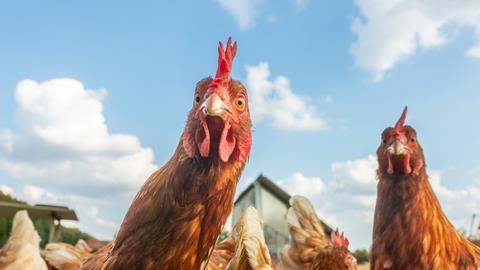
The great British egg industry has been dealt another blow, potentially a haymaker, by a government extending tariff-free access for Ukrainian eggs.
As we reported this morning, minister for trade Chris Bryant touted the step as necessary to help shore up Ukraine’s beleaguered economy, but he will not find many supporters within the sector, which largely feels it is being shafted to help prop up the embattled country.
To quote the British Egg Industry Council’s chief executive Nick Allen, the government “simply doesn’t care about British consumers or British farmers”. And he does seem to have a point.
Frustration and double standards
In 2024, the government said tariff liberalisation would be extended on all goods for five years until 31 March 2029, with the exception of poultry and eggs, where there would only be a two‑year extension, due to end in March next year.
Now, that extension will stretch until 31 March 2028.
Defending itself against the resulting outcry, the Department for Business & Trade insisted Ukrainian eggs only made up a tiny proportion of imports. It said it would work with farmers to monitor the impact. But Ukrainian imports, most of which come from battery cages, have boomed and could be further supercharged by increasing UK egg pack prices – which jumped 8.4% in 2025 thanks to growing demand and rising input costs.
In fact, producers have instead been left frustrated by a government that has sought to hike animal welfare requirements while still allowing imports from countries that do not meet the same standards.
Read more: UK-Ukraine free trade deal condemned by UK egg industry
Earlier this month, Defra launched a consultation on ending the production of caged eggs in the UK by 2032, to the cheers of animal rights campaigners. But at the same time, egg producers and industry bodies want to know how they will be protected from the competition – which could get a whole lot cheaper.
It is not just a question of economics, either, with eggs produced within less rigorous systems (Ukraine is just one of many) carrying a higher risk of diseases like salmonella. Edwina Currie helped to slash egg prices by 60% in 1988, when she claimed most British eggs carried the disease. A repeat could prove catastrophic.
Cage fight
Campaigners have repeatedly insisted people will pay more for eggs if they can guarantee it means happier chickens, and many supermarkets, as well as brands, have been moving from caged systems for quite some time.
On Monday, The Happy Egg Co launched Tiny Farmers on YouTube. Created in partnership with Channel 4, the short film aims to educate the public about hen welfare and nurture the next generation of protesters destined to park their tractors outside Parliament.
With the welfare-focused egg brand willing to invest in securing the likes of Clarkson’s Farm’s Harriet Cowan and comedian Jessica Knappett, it is fair to say that Whitehall’s progressive, animal-focused attitude (in this instance, at least) is in keeping with that of British consumers.
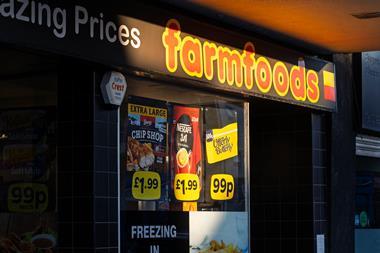
Currently, Farmfoods is the only major UK retailer still selling eggs from caged hens without a commitment to stop selling them in the next few years (like Iceland) and as such is bearing the brunt of the anti-cage backlash. Yesterday, four animal rights charities felt emboldened enough to demand the retailer recommit to its abandoned pledge to do better.
Read more: Channel 4 and The Happy Egg Co team up for Tiny Farmers
But a disconnect clearly exists. Caged eggs made up 16.7% of all eggs sold in the UK last year, according to Worldpanel by Numerator data, and Farmfoods is not alone in stocking them.
So, what’s going to give? Will the government listen to egg producers by hiking tariffs on imported eggs and make this sceptred isle the “home of the free” for hens? It could start by listening to the egg prodcuers, who have legitimate fears of being undercut, or put out of business entirely.
One thing is certain; the Animal Welfare Strategy pledge, which says the government is “prepared to use the full range of powers at our disposal to protect our most sensitive sectors”, is not carved in stone.
No comments yet