






The cover feature I wrote last year about the lack of working-class startups still sticks in my craw. Most of all, I remember the conversation I had with Hunter & Gather co-founder Jeff Webster, in which he recalled telling his nan he was going to uni. “What you doing that for? You’ve got a great little job there,” she replied, referring to his part-time role selling bathrooms and kitchens at B&Q.
As Dagenham-born-and-bred Webster said: “It feels to me, from my lived experience, almost like the working-class mindset is that all that glamorous stuff, the big stuff, the business stuff – that’s for the other side; you leave that to them. It sounds harsh to say it, but there was no one in my family who was motivational or inspirational. You’re encouraged not to stand out, and that’s left me feeling quite vulnerable at times.”
Some people I speak to in the sector seem to think it’s doing pretty well on social mobility. It’s not. For starters, as I found in a feature on pay gaps earlier this year, only one supermarket gives enough of a shit to measure its socioeconomic background (read: class) pay gap, let alone act on it.
The same goes for every major food company in the country. Not one of them measures it, either.
Grocery needs to ‘step up’
Yet more confirmation came our way yesterday, when the Social Mobility Foundation released its 2025 Social Mobility Employer Index Top 75. The organisation refers to it as “the definitive list of employers championing social mobility in the workplace”. Guess how many fmcg companies were in the top 75?
One.
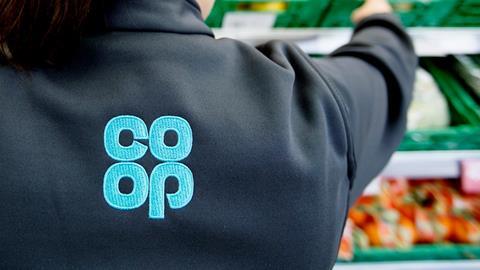
Unsurprisingly, that sole representative was Co-op. “We’re proud to be recognised as the only grocery business in the SMF’s Employer Index this year,” Claire Costello, chief people and inclusion officer, told The Grocer. “As an industry that employs people in every community across the UK, we all have a role to play in improving social mobility. Greater fairness in work is not only the right thing to do, it’s also vital for productivity and growth.”
Sarah Atkinson, chief executive of the Social Mobility Foundation, was equally scathing of the industry’s pitiful showing.
“The grocery sector needs to step up its social mobility game,” she said. “Supermarkets – and retailers more broadly – are largely absent from our Social Mobility Employer Index, and industry data on the socioeconomic make-up of their workforces is hard to come by. In a sector as large and fundamental to our collective wellbeing as food, this isn’t good enough.
“We know there’s a better way: Co-op has made some massive changes, like becoming the first retailer to publish its socioeconomic pay gap last year. This found real and specific barriers for some working-class colleagues, which they’re now working to address in an informed, targeted way. The rest of the food industry is lagging miles behind.”
A social mobility focus
So, why do so many in the industry have their heads in the sand? Some will admit there’s a problem in the startup and challenger brand space – a quick read of The Grocer’s coverage shows clearly that most of those brands are started by founders from more privileged backgrounds – but most appear to believe it starts and ends there.
This seems to be due to a few very high-profile instances of people working their way up in the industry. That’s great. But for every one of those success stories, how many employees have been passed over for promotion due to accent bias, lack of ‘polish’ or any of the umpteen other barriers once they come up against rivals who attended a Russell Group university?
“Perhaps because it’s possible to go from the shop floor to the C-suite there’s an assumption that social mobility happens organically – but a hunch isn’t good enough,” says Atkinson. “Collecting data, setting up industry-wide initiatives to share progress and best practice, entering the Index for honest evaluation and advice on how to improve – these are the basics to ensure that our workplaces are enabling everyone to thrive, regardless of background.”
The sector feels a long way off that. And that’s a great shame, because the Co-op’s social mobility manager Lorna Jones told me earlier this year that the retailer’s decision to collect data on socio-economic background (SEB) and publish the attendant pay gap has allowed it to pinpoint crucial areas for improvement.
“You’ll see in our reports from last year and this year that women from a lower SEB are experiencing the biggest pay gap at Co-op. What are we going to do about that? We’ll start to pull together a development programme for women from low SEBs to give them the tools, confidence, whatever it might be, to try and address those barriers.”
It’s not easy to collect this data – class has not only become a strangely dirty word in recent times, many people genuinely don’t know or understand their own class background. But Jones was adamant it’s not as hard as some would have you believe. And it’s worth the effort – on all fronts.
“This is about economics as well as fairness. Businesses that focus on social mobility tend to perform better: a greater focus on social mobility by employers could add up to £19bn to annual GDP, according to research by Demos and Co-op. Overlooking social mobility means missing out on the best talent,” says Atkinson.
It’s expected that it will soon become mandatory for any company with more than 250 employees to report its ethnicity and disability pay gaps. But the class pay gap is, as ever, left out in the cold. So, for now at least, it seems that fmcg companies will have to motivate themselves. And if the yesterday’s results from the Social Mobility Foundation are anything to go by, let’s not hold our breath.
Maybe the sector thinks class background isn’t as important to people’s prospects as other characteristics. Maybe it’s convinced itself that it’s doing fine. But where else in their business would these multibillion-pound behemoths rely on gut rather than cold, hard data? Maybe, the sector just doesn’t care.









1 Readers' comment