



Fever-Tree has been on a 20-year journey from unruly startup to mixer category leader. Now CEO Tim Warrillow has his eyes on the growing opportunity in adult soft drinks
Tim Warrillow’s quest to find the finest ingredients for Fever-Tree’s drinks has taken him to every corner of the globe.
At the start of the brand’s journey to becoming the UK and US’s leading tonic supplier, one particularly perilous trip sent him to the conflict-hit Democratic Republic of the Congo in search of quinine – the crucial ingredient in its tonic water.
“From my research I found one last remaining plantation of the highest quality quinine,” he recounts. “Unfortunately it just happened to be in the most remote and lawless part of the world.”
After losing lots drawn with co-founder Charles Rolls, Warrillow was dispatched to Africa, taking two flights and an eight-hour taxi ride. Crossing the border into Congo, his vehicle was stopped several times by armed militia – including once by a young Congolese brandishing a rocket launcher. After paying them off, he was rewarded with the discovery of “a brilliant partner” with whom Fever-Tree works to this day.
“That is quite literally the lengths we had to go to – and still do,” he says. “And it sets us very notably apart.”
Quality drinks
In his latest excursion, Warrillow has just returned from visiting pink grapefruit suppliers in southern Spain. Thankfully, the trip proved altogether more straightforward than that first visit to Congo. “That’s why I volunteer myself now,” Warrillow quips.
With Fever-Tree this year celebrating its 20th anniversary, the challenges these days are different: in particular the headwinds buffeting hospitality and a slowdown in spirits sales have hit tonic sales (UK revenues at Fever-Tree slid 3% in the year to March).
Nonetheless, the 50-year-old former ad executive remains optimistic about the runway for growth. A “transformative” distribution deal signed with Molson Coors in January has the potential to turbocharge US sales, while other opportunities in alcohol can offset the decline of gin at home, he says.
“The gin market has come off this wonderful Covid peak where we all turned to our drinks cabinet for entertainment,” he says. “But there are all these other drinks like spritz that are growing, driven by consumers’ desire for longer but lighter drinks.”
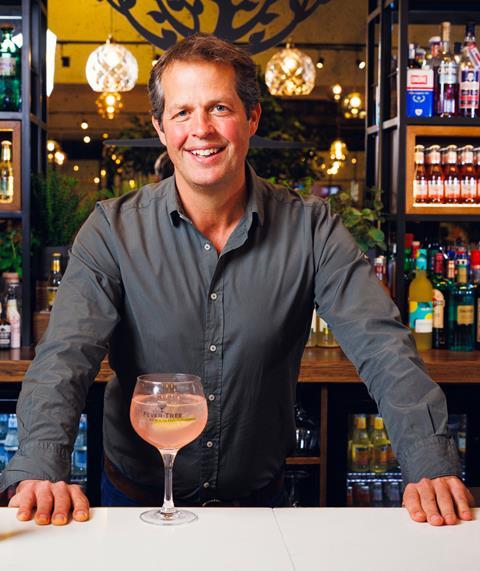
Name: Tim Warrillow
Lives: London
Age: 50
Family: Married to Gemma, have four boys; Oscar, Barnaby, Louis and Billy. Also part of the family are our eight sheep, four cows, six chickens and a dog
Potted CV: Started a business at university before first proper job in advertising. Launched business consultancy. Met Charles Rolls and co-founded Fever-Tree
Career highlight: Fever-Tree becoming the number one mixer brand in the UK
Business icon: Richard Branson
Business motto: Fortune favours the brave
Favourite book: To Kill a Mockingbird by Harper Lee
Item you couldn’t live without: Coffee machine
Hobbies: Anything outdoors but particularly tennis, golf, sailing, farming and travelling
Favourite film: Four Weddings and a Funeral
Favourite album: Brothers In Arms, Dire Straits
Favourite cocktail: A Mezcal Paloma with Fever-Tree Pink Grapefruit Soda
Favourite soft drink: Fever-Tree Ginger Beer
Favourite non-Fever-Tree drink: An old, oaky rioja
Death row meal: An enormous feast of Asian dishes
It’s a trend that Fever-Tree has tapped in recent boozy collaborations with French rosé supplier Maison Mirabeau and Margot Robbie’s Papa Salt Gin. Both have been more successful than Fever-Tree’s previous foray into the world of premixed G&Ts and will act as the blueprint for future NPD in booze, Warrillow says.
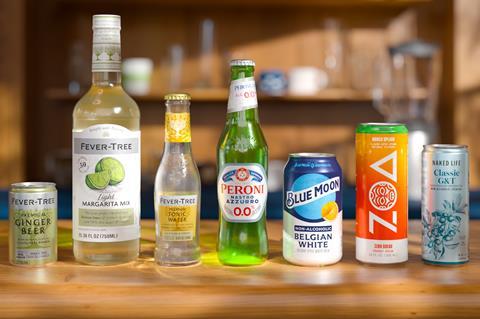
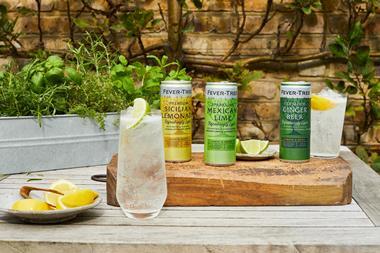
With consumers increasingly looking to moderate their alcohol intake, Fever-Tree’s focus has also markedly shifted away from tonic and towards adult soft drinks in recent years. Products such as its Ginger Beer, Pink Grapefruit Soda and newly launched non-alcoholic cocktails now make up around half of all sales globally.

“There is such an opportunity to focus in on the adult socialising occasion and produce drinks to meet that need,” says Warrillow. “Our consumers are already drinking about 35% of our products straight – using them as a sophisticated non-alcoholic alternative – yet we’ve never talked about it.”
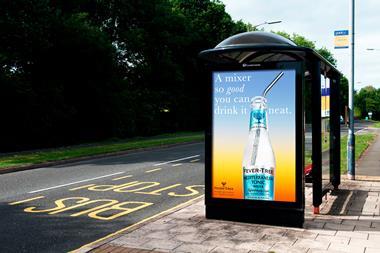
That’s now changing. The brand plans to expand its non-alcoholic cocktail range with the addition of a mojito variant next year. A new ATL campaign, meanwhile, will emphasise Fever-Tree’s drinks are “so delicious as a mixer, but also as a soft drink as well”.
Escaping the sugar tax
One area it won’t be looking to explore, however, is the functional drinks segment. Despite retailers giving over more shelf space to better-for-you soft drinks, Fever-Tree’s focus will remain on “fantastic non-alcoholic drinks that are still a treat”, Warrillow insists.
Given that stance, there was some consternation at the business about proposals to lower the threshold at which the Soft Drinks Industry Levy applies. Many of Fever-Tree’s drinks contain between 4g-4.5g of sugar per 100ml, and were in the firing line of initial proposals.
Warrillow expresses relief that – following industry consultation – a compromise threshold of 4.5g/100ml was confirmed last month, helping Fever-Tree’s products escape the levy.
Nevertheless, reformulation was never on the cards. “I’m very against artificial sweeteners, not just in terms of the negative flavour impact but also because I don’t believe they are the healthiest alternative,” he says. “Broadly speaking I am not a great fan of the levy – it’s a great shame we’re driving people to reformulate and introduce more artificial sweeteners. But fortunately this [latest] change won’t affect us.”
Tariffs
One legislative change that has impacted Fever-Tree, however, is Donald Trump’s tariff on UK imports, after it wound down its US bottling arrangement ahead of striking the deal for Molson Coors to produce, distribute and sell its drinks in North America.
As such, its products are currently being made in the UK and shipped across the pond. Profitability has taken a hit – pre-tax figures slid 15% to £11.2m in H125 – with Fever-Tree and Molson Coors jointly shouldering the 10% levy ahead of on-shoring of production in 2027.
“I’d love it if it could happen earlier because then we won’t continue to pay tariffs,” says Warrillow. “But the great thing is that we know it is going to end.”
More Big Interviews:
-
‘Sell kimchi to Korea? Why not?’ Nick Vadasz, the pickle ambassador
-
Paul Gillow: ‘It’s time SHS Group was brave and bold again’
-
How Surya Foods built a world foods empire, one cuisine at a time
Any short-term pain will soon be forgotten once the deal – warmly received by both drinks analysts and Fever-Tree shareholders – begins to bear fruit, Warrillow insists.
“They [Molson Coors] have told the world they want to grow beyond beer and said Fever-Tree is their trump card,” he says. “I was asked to speak at their annual distributor conference in Arizona in September in front of 3,500 people, and was delighted with the exposure we were given. It’s proof of the fact that they’re serious about this, and we’re a great strategic fit for them.”
At Fever-Tree’s insistence, Molson Coors took an 8.5% ownership stake in the London-listed business as part of the deal. Naturally, this raised questions about whether the US business could look to swallow Fever-Tree in its entirety in the future.
Warrillow has no desire to entertain such speculation today, however. “We’re a publicly listed company so theoretically we’re always up for sale. But I’m incredibly excited about the opportunity that lies ahead and what we can achieve on our own.”


No comments yet