




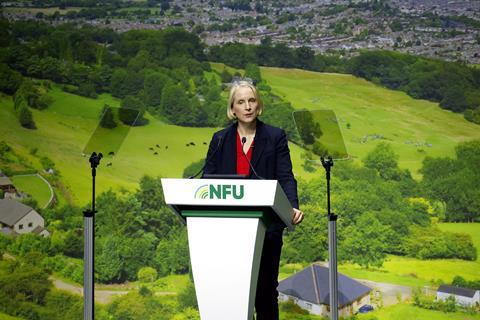
Defra secretary Emma Reynolds has announced a £345m support package for farmers to boost productivity.
At the NFU Conference in Birmingham today, she announced a raft of packages to show how the government is “taking action to back farmers”.
Part of this includes changes to the Sustainable Farming Incentive, which will be “simpler, fairer, more stable, and shaped by farmers”.
It will include 71 actions, down from 102, with agreements capped at £100,000 per year.
With 97% of farms already below this level, the government said the cap would help ensure funding was shared more fairly and reached more small and medium-sized farms.
Applications will open in June for small farms, those of holdings of three to 50 hectares registered with the Rural Payments Agency, and those without a live Environmental Land Management revenue agreement.
A second application window will open to all farmers in September, with further details to follow. The SFI will continue to back productive, profitable farm businesses that deliver food security and value for consumers.
The Labour government’s abrupt closure of the SFI prompted fury from the farming sector last spring. Former farming minister Daniel Zeichner announced a closure of the scheme in March 2025 following a “record number” of signups, with “every penny” of the scheme’s £1.05 billion budget having been allocated.
However, the short-notice move left many farming businesses out of pocket, while errors in Defra’s closure decision led to a partial reopening of the scheme to new applicants last summer.
Reynolds told the conference that “there will be no more sudden, unexpected closures” to the post-Brexit subsidy scheme.
“The reformed SFI announced today appears to strike the right balance between simplifying the process and maintaining flexibility, while still retaining preferable actions for farmers and growers,” said NFU president Tom Bradshaw. “It’s good to see the recognition of the uplands by maintaining actions that support the much‑loved landscapes in which they work, but we’ll need to work through the wider detail of the scheme.”
He added it was “pleasing” that Defra had taken on feedback from the NFU.
The SFI details were also welcomed by Soil Association policy director Brendan Costelloe who said: “The continued support for conversion to organic and the core ongoing organic land management options will help to give further confidence to the growing numbers looking to seize the opportunities from the booming organic market.”
Reynolds also outlined in her speech that the Food and Farming Partnership Board will have its first meeting in March with a member of the NFU on that board. She said further board members will be announced shortly. The board will “reset how we work together,” she told conference attendees.
The package also includes £70m for the Farming Innovation Programme to move research into practical tools. This builds on a previous award of £21.5m for 15 projects across England to help farms cut emissions, strengthen resilience and boost productivity.
An additional £50m in backing for the Farming Equipment and Technology Fund will help farmers invest in equipment from seed-planting robots to pesticide spreaders.
Read more: Declining food production must end now, NFU says
Reynolds also confirmed a new round of ELM Capital Grants opening in July 2026 with increased funding of up to £225m available, to help farm businesses invest in infrastructure that supports environmental targets and long-term resilience.
Additional announcements included reinforcing high standards on animal health and welfare by consulting on making vet visits mandatory for cattle, sheep and pig farmers.
The government will also tackle bird flu by launching a new grant this summer to offer poultry biosecurity reviews, delivered through on-farm vet visits.
“It’s encouraging to hear the Defra secretary of state reaffirm her commitment to working in partnership with farmers and growers,” said Bradshaw. ”Today’s announcement on investment in productivity demonstrates that she recognises the vital contribution our nation’s food producers make to the economy and to our national security.”
He added that the government’s pledge to be “serious about partnership” was welcome but that there “must be transparency around the farming budget as well as a long-term plan for food and farming”.
“The resilience of our food system can’t be taken for granted, underlying profitability is essential to driving the investment needed and the resilient food system that society needs,” said Bradshaw.









No comments yet