



Employment costs pushed up prices at Greggs in 2025, but CEO Roisin Currie has predicted more “respite for the consumer” in 2026.
The food-to-go chain, which saw underlying pre-tax profits fall 9.4% to £171.9m in 2025, experienced overall like-for-like cost inflation of around 5.5% in the year.
It said this was driven primarily by employment costs, including the impact of the increase in employers’ National Insurance contributions from April last year, as well as rising costs of food and packaging.
While the business said it was looking to offset these costs through savings, it added that it was using ”careful pricing activity” to cover some of the pressure.
In October, Greggs raised the price of its breakfast deal from £3.95 to £4.50, while its two-part deal, which features a main item and a drink, increased from £2.95 to £3.15.
In January, it increased the price of a sausage roll by 5p and added 10p to the price of a latte coffee as it looked to absorb rising costs further.
Speaking with the media today, Currie said Greggs was predicting cost inflation would be “somewhere around 3%”, as its “food and packaging costs and employment costs are all coming through around that level”.
“It is very positive given the backdrop that we’ve had over many years,” added Currie. “Potentially, it should give a bit of respite to the consumer, who will also be hit by a less inflationary environment.”
However, the retailer said that employment cost inflation would again be the biggest driver of higher costs in 2026.
With increases to the UK national living wage from 1 April, Currie said this was a cost “we just have to take and then we have to work hard on lots of other cost initiatives within the business to make sure we continue to deliver strong profit growth”.
For Currie, the year ahead will be a juggling act. “My balance is trying to make sure that any decisions the government make both look after businesses and help us continue to grow, because that is what grows the economy, and look after the customer to try and help them have more disposable income at the end of the month.
“The other factor is employment. We’re trying to make sure that we find a way to support more young people into the workplace, because I guess that is key to the success of a future growing economy.”
Greggs also faced challenges around “changing dietary needs” of consumers in 2025. In January, Currie said there was “no doubt” weight-loss drugs had led to people looking for “smaller portions”, affecting the business’s bottom line.
To accommodate these changing preferences, the group said its innovation pipeline “reflected emerging dietary trends with the launch of turmeric and ginger shots, two protein shakes and an egg pot, broadening choice for customers looking for quick, healthy, high-protein options”.
BTG managing partner Julie Palmer said the ”increasing popularity of weight-loss drugs, lower spending and confidence from consumers and rising business costs” seemed to have “eaten into” Greggs profits.
While Greggs experienced ”resilient sales in a flaky market”, with like-for-like sales up 2.4% year on year, ”even Greggs has been unable to stay completely immune from the challenging outlook for food and drink retail”, she added.
“To keep its strong slice of the market and continue a trajectory of sustainable growth, Greggs will be needing to walk a tightrope of pricing and profitability to keep customers coming through their doors so they can maintain their growing estate and secure a stronger bottom line.”
Shoots of growth in 2026
Alongside its plan to offer “exciting launches and deeper customer engagement via the Greggs App” in the year ahead, Currie said that growing its store estate in under-represented locations “will absolutely be the focus” for the brand.
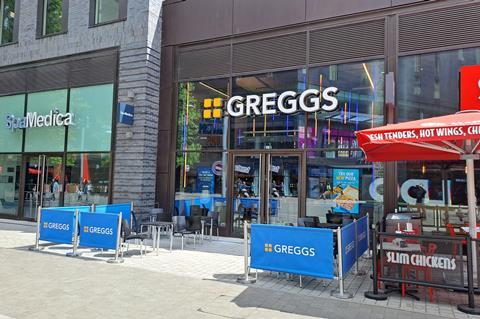
The food-to-go chain grew its estate to 2,739 shops as at 27 December and is targeting around 120 net openings in 2026.
However, Greggs believes there is “clear opportunity for significantly more than 3,000 UK shops over the longer term”.
It is also continuing to evolve its evening growth strategy, which remained its fastest-growing daypart in 2025.
It now has around 2,000 shops open beyond 5pm and at least half of these are open until 7pm. Evening sales also now represent 9.4% of company-managed shop sales, up from 9% in 2024.

No comments yet