




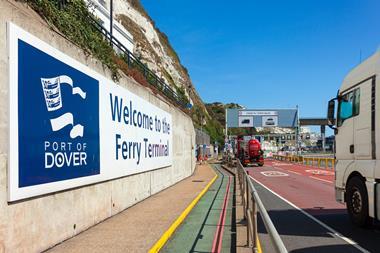
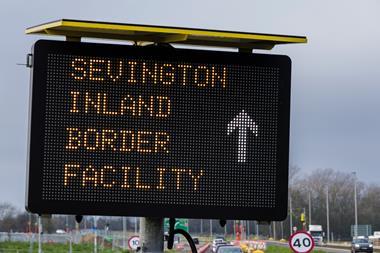
Disruption at the French border for UK food exporters remains “a mess”, with the soaring cost of delays from more officious inspections prompting some suppliers to consider halting shipments, The Grocer can reveal.
There have “always been issues with border inspections at Calais”, but the frequency of inspections has stepped up over the past year and “so have the number of disputable incidents UK exporters are facing”, said Provision Trade Federation director general Rod Addy.
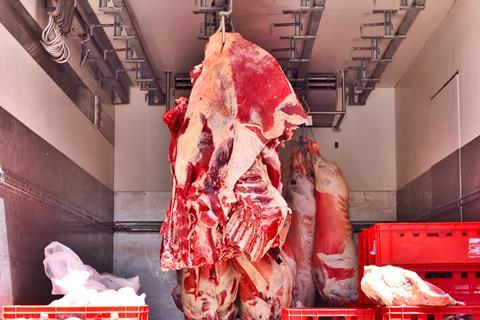
Meat exporters are said to be facing the biggest challenges. In December, The Grocer reported more than 100 consignments, worth more than £10m, had been held up at the French border since last summer.
Such delays were costing logistics firms thousands of pounds per shipment, Addy said. The Calais Veterinary & Phytosanitary Border Inspection Office (SIVEP) tended to “deem loads as posing a threat to human and animal health when suppliers don’t believe they do”, he reported.
French authorities then impounded the loads and charged businesses destruction costs “when the loads could be released and sent back to the UK”, he added.
“There, they could be repurposed or, in extreme cases, disposed for a fraction of the cost.”
The situation “has to change”, Addy urged. “It’s a mess with multiple loads being destroyed. And this was “causing even the largest exporters to question whether sending loads via Calais at all is worth their while”.
Addy’s comments were echoed by Toby Ovens, MD of haulage firm Broughton Transport, who runs up to 50 trucks per week through French border posts.
Ovens said his business had lost as much as £250,000 due to delays and red tape over the past year. And he railed against the ongoing use of paperwork, rather than digital certification, when exporting into the EU.
“Until the new Sanitary and Phytosanitary (SPS) deal with the EU is agreed, we’re going to have to like it and lump it and extract as much as we can from our customers [to recoup the costs],” he added.
A Defra spokesperson said the UK government was in “working closely with French authorities and the companies involved to resolve this situation”.
It comes as meat trade body AIMS this week called for “immediate action to restore frictionless trade in food and agricultural products” between the UK and EU.
Current border controls and certification systems were “imposing unnecessary cost on businesses, reducing competitiveness, stifling industry growth, and damaging food security”, it warned.
AIMS is calling for “immediate dynamic alignment with EU SPS law” and the removal of routine border checks.
Routine veterinary export certification should also be abolished, urged AIMS executive director Dr Jason Aldiss, with mutual recognition of veterinary qualifications, a removal of immigration barriers for key professionals and a “rapid adoption of risk-based inspection systems”.
“Modern assurance systems, digital monitoring, and intelligence-led controls can deliver better protection at lower cost than traditional models”, Aldiss insisted.
“Certification is an artefact of mistrust. Where systems are equivalent, certificates are redundant. Furthermore, every month of delay costs British businesses money and costs consumers choice.”
AIMS also warned that smaller and regional processors were “being disproportionately affected by current arrangements”.
“If we allow bureaucracy to drive consolidation, we weaken resilience and reduce food security,” Aldiss said, while urging the government and EU negotiators to focus on speed, certainty, and system recognition rather than prolonged transitional arrangements.
“Delay is itself a policy choice, and it is the wrong one.”





No comments yet