






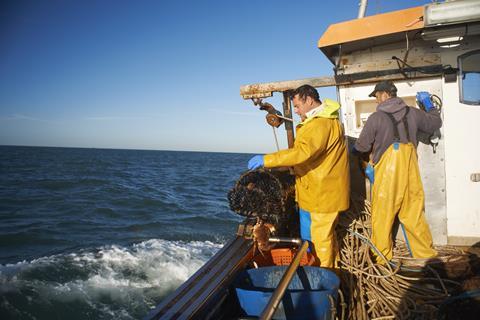
More than half of UK fisheries catch limits were not set in line with scientific advice, new data has revealed.
Concerns have been raised over the “disappointing” data from the Centre for Environment, Fisheries & Aquaculture Science about the effectiveness of UK fisheries management.
That data showed that 46 out of 79 of total allowable catches (58%) were set outside scientific advice from the International Council for the Exploration of the Seas.
Meanwhile, only 31 (39%) were considered to be set in line with guidance, a decrease from 2025, where the level was 46%.
Over the past six years, catch limits have been set above scientific advice around 60% of the time on average, which Blue Marine Foundation fisheries policy lead Jonny Hughes said was “beyond shocking”.
He added that the government had had “countless opportunities to improve the sustainability of our fisheries, yet they repeatedly choose inaction”.
“North Sea haddock shows that when you follow the science, you get more fish and more money, with this stock having increased by 437% over the past decade,” said Hughes. “Celtic Sea haddock shows what happens when you don’t. The difference isn’t geography, it’s management.”
Read more:
-
UK seas in decline despite record protection levels, NGOs say
-
MCS accused of ignoring government, fishers and scientists
-
No sustainable choice for UK cod, warns Marine Conservation Society
This comes following new data from the Marine Conservation Society which warned there was no longer a sustainable choice for UK-caught cod. The charity’s Good Fish Guide also downgraded langoustines and advised consumers to avoid mackerel completely.
Izzy Ross, fisheries campaigner for Oceana UK, said the data was “not an accident, nor is it a surprise: it is the consequence of our actions”.
“It represents year after year of near-identical announcements: the science showing that catch limits are too high to sustain a healthy ocean, yet the UK government, and others, ignoring the warnings,” she added.
Both NGOs have called on the government to make decisive steps to resolve the issue.
Chair of the Environmental Audit Committee, Toby Perkins MP, said the figures were “disappointing” and called for more to be done to ensure decisions were guided by scientific evidence.
“Overfishing needs to be far higher up the political agenda,” he added.










No comments yet