


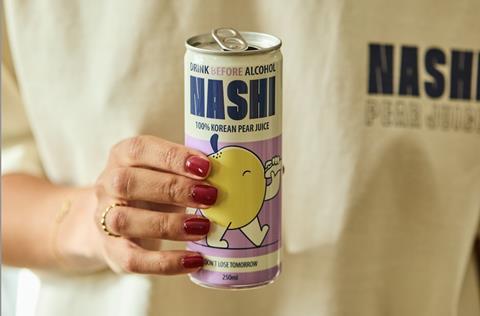
Nashi Pear Juice is to cease claiming its product can alleviate hangover symptoms after being reported twice to the ASA in little over six months.
Founder Taya Jackson said the brand would tweak its marketing and remove references to hangovers after being warned by the advertising watchdog that it could be in breach of the CAP code.
Under CAP Code rules 12.1 and 15.6.2, marketing communications cannot claim that a product or service can prevent, treat, or cure human disease, including mental health conditions, unless it is a licensed medicine.
“Hangovers are legally classified as a disease in the UK, which means we can’t claim or even hint at how Nashi makes you feel the next day,” Jackson wrote on LinkedIn. “Which is an annoying place to be.”
“We’ve had a steep learning curve by discovering that the ASA is really hot on this,” Jackson told The Grocer. “I guess that is a good thing because you want to stop people claiming lots of things.”
The basis of Nashi Pear Juice’s hangover claims were studies published in the Food and Chemical Toxicology journal and Phytotherapy Research, Jackson said. Both showed pear juice could help the body detoxify alcohol and alleviate the symptoms of a hangover when consumed prior to drinking.
“It’s frustrating for us because the science is out there,” Jackson added.
Informal ruling
Nashi was “subject to an informal ruling on this issue in November last year and an Advice Notice in April last year,” the ASA confirmed to The Grocer. Neither resulted in a full investigation or complaints being upheld.
“We received two complaints about a Facebook ad, a TikTok ad and a website for Nashi Pear Juice,” a spokeswoman for the ASA said. “The complainants challenged whether the claims that the product could help ‘cure’ hangovers were claims that a food could prevent, treat or cure human disease. They also challenged whether the ads were irresponsible by encouraging excessive drinking and whether one of the ads made unauthorised health claims.
“We approached the advertiser about the concerns that had been raised and it agreed to remove the claims without being subject to a formal ruling. On that basis, we resolved the case informally.
“Prior to this, we’d received another complaint about claims being made on the Nashi Pear Juice website. In this case, we issued the advertiser with an Advice Notice, reminding them of the rules and providing them with relevant guidance.”
Tagline ditched
Nashi said it would shift its approach and messaging to avoid falling foul of the CAP code. It has removed reviews and testimonials from its website and social media, as well as ditching its ‘Don’t Lose Tomorrow’ strapline.
“All of our reviews say that this is something that has really made a difference,” Jackson said. “We just can’t put those reviews anywhere now because they are making claims.”
Moving forward, the brand would look to position pear juice as a natural way to “warm up” for a night out, Jackson said.
“We warm up for everything .. athletes stretch, artists soundcheck but we’ve normalised drinking with no prep at all,” she said. “We’ve learnt our lesson around messaging, now we’re hoping we can be the Korean pear juice brand that taps into the moment and the culture, rather than the claims!”
Nashi Pear Juice was launched by Jackson and her sister Lucy last year. The brand sells its flagship 100% Korean Pear Juice predominantly via DTC and in specialist retail (rsp: £19.99/6x250ml).
No comments yet