





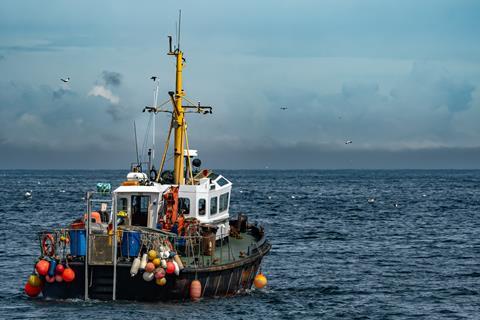
Northeast Atlantic mackerel quota cuts do not go far enough, marine conservation groups have warned.
This week the UK, Faroe Islands, Norway and Iceland signed an agreement to cut catches of mackerel by 48% in 2026 compared to the level allowed in 2025.
The almost 50% reduction goes against guidance from the International Council for the Exploration of the Sea, which suggested the quota shoould be cut by up to 70%.
Ocean campaign group Oceana UK has said that while the 48% number is a considerable reduction, it should have been more aligned with ICES’s 70% recommendation.
“If that sounds big, and hard to do, it’s because it is,” said Hugo Tagholm, NGO Oceana UK’s executive director.
“People are rightly worried about livelihoods and communities, but the stark fact is that without these measures we risk total collapse of this population; we risk decades of boats tied up, and multitudes of ocean wildlife severely threatened,” he added. “We need to abandon this magical thinking that there are always more fish in the sea”.
The Marine Conservation Society echoed concerns that the agreed quota “remains well above ICES scientific advice”. It added that the risk to mackerel stocks would stay high without a shared agreement that includes all coastal states including Greenland and the EU.
“Urgent action to align all states with scientific recommendations is essential if we are to prevent further depletion and secure a sustainable future for northeast Atlantic mackerel,” said MCS Good Fish Guide ratings officer Brooke Schlipf.
Princes and John West owner Thai Union previously suspended the sourcing of northeast Atlantic mackerel for its branded lines.
Defra said the latest agreement builds on the trilateral arrangements made between the Faroe Islands, Norway and the UK in 2024, and will act as a “further stepping-stone towards a long-term quota sharing arrangement involving all coastal states to the stock”.
Read more
-
Over half of UK fish stocks under threat, new data finds
-
MCS advises against sourcing northeast Atlantic mackerel
As part of the agreement, the four parties agreed to set their 2026 quotas in line with a scaled fishing mortality at maximum sustainable yield approach.
The government added the measure is projected to increase mackerel spawning stock biomass by around 8.5% by 2027.
“Our agreement on mackerel means we can protect jobs in our fishing communities while taking a further step towards safeguarding the future of this crucial stock,” said fisheries minister Angela Eagle. “The health of the mackerel stock is very worrying, and it is right that together with other countries we are taking action.
“The UK will continue working closely with all coastal states to tackle overfishing and protect the long-term sustainability of our waters.”








No comments yet