




Rachel Reeves has dismissed mounting pleas from forecourt retailers and motoring groups to scrap planned fuel duty increases, despite FairFuel UK urging her to address the issue in today’s spring statement amid rising oil prices linked to the Middle East conflict.
The Chancellor delivered her spring statement today, highlighting that inflation is falling and forecast to drop further, and stressed that her economic plan remained vital amid heightened global uncertainty.
She noted that her autumn budget extended the 5p cut in fuel duty until the end of August 2026, but did not confirm if this would be extended further.
This means the plan to gradually reverse the cut and return fuel duty to pre‑March 2022 levels remains in place. The rates will rise in three stages: 1p per litre on 1 September 2026, 2p on 1 December 2026, and a further 2p on 1 March 2027.
FairFuel UK founder Howard Cox said Reeves should have used the statement to confirm fuel duty will remain frozen for the duration of her parliament and cancel any planned increases in the autumn budget, calling it “a missed economic growth opportunity for the Chancellor amid a new damaging oil crisis”.
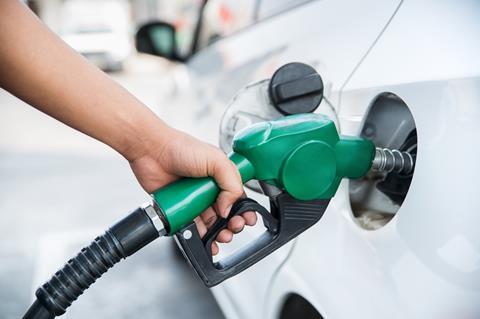
The Petrol Retailers Association (PRA) has also urged the Chancellor to abandon the planned fuel duty increases, as rises in wholesale prices triggered by the Middle East conflict begin to filter down to the pump.
“The conflict in the Middle East has increased the wholesale cost of petrol and diesel, which will mean pump prices will have to go up,” said PRA executive director Gordon Balmer. “Rising fuel prices hurt the economy in the form of higher inflation, impacting already hard-pressed household budgets.”
Balmer said that in the past 24 hours the wholesale price of diesel had increased by 18.5%, equivalent to 7p per litre, while petrol had risen by 6.5%, which is around 2.3p per litre.
“It’s a considerable increase,” Balmer told The Grocer. “But we won’t see that translate into pumps just yet because a lot of the forecourts buy on a lagged basis.”
It added that retailers who buy fuel daily or weekly, which tend to be smaller independents, are more sensitive to volatile price changes in the market.
The AA said while there had been a significant surge in the cost of oil following the weekend’s developments in the Middle East, much of the increase had already been factored in by market traders and was showing in wholesale petrol and diesel cost movements.
Its data revealed the pump price of diesel has risen by 1.3p a litre in the past two weeks, while petrol rose by 1p per litre.
“It’s a surge, not a spike,” AA spokesman Luke Bosdet told The Grocer. “Drivers will see a gradual increase in pump prices and that is what they need to brace themselves for. The question is the magnitude and duration of the Middle East conflict.”
Bosdet also noted that pump prices were currently lower than they were this time last year, with petrol 4.7% cheaper and diesel 2.9% cheaper.
The AA said there was also a “silver lining” that the UK was coming out of winter, which meant fuel efficiency of cars will improve with warmer weather.
“Engines are no longer straining with cold starts or toiling to power heaters, lights and wipers,” said the AA president Edmund King. “Typically, car owners see an improvement of three miles per gallon as they get more range out of a tank of fuel. As a rule of thumb, each 1mpg change is equivalent to 1p on or off a litre of fuel.
“There is no need for drivers to break their refuelling routine. As well as better fuel efficiency, it takes time for cost increases to work their way through to the pump. Supermarkets tend to hold their prices down for longer.
“However, with the government’s Fuel Finder pump-price transparency now becoming established, drivers will soon be able to spot all the cheaper fuel stations locally and locate where to keep their fuel costs down.”







No comments yet