The websites of three in four of the UK’s biggest retailers fail on accessibility standards, “locking out disabled shoppers”, new research has found.
The audit – by AllyRadar – found 33 of the 44 websites scanned had “at least one critical or serious accessibility failure on their homepage alone”.
The results show a mixed picture among supermarkets, with the likes of Ocado and M&S scoring top marks in the audit, while others had serious accessibility failures and so “a checkout some customers cannot reach”.
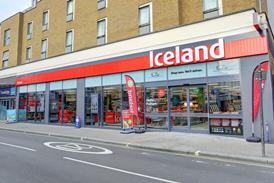
Tesco, Sainsbury’s, Aldi, Holland & Barrett, Iceland and Lidl were each found to have one ‘serious’ accessibility failing – including “links with no discernable text”, which cause errors for screen readers, to “missing lang attributes” in their html code making assistive web readers practically incomprehensible.
Morrisons, Co-op and Asda performed worst among the supermarkets audited.
The Morrisons and Co-op homepages contained web elements with insufficient colour contrast ratios to be readable by users with visual impairments, while Asda’s homepage html code fails to use “only use permitted ARIA attributes” so rendering screen readers unusable. Ally Radar said this coding failure was ”the accessibility equivalent of a mislabelled fire exit – worse than no label”.
“The most common failures are not exotic edge cases – they’re basics,” said Nathan Collins, founder of AllyRadar, which conducted the audit.
“None of what we found requires an accessibility consultant or a big remediation budget – the most common failure in our study is fixed by adding one word of html, and a competent developer could clear most of these sites’ issues in an afternoon,” Collins told The Grocer.
“That’s what makes the results telling: these aren’t hard problems, they’re unwatched ones. Retailers monitor uptime, page speed and conversion obsessively, but nothing in most retail tech stacks turns red when accessibility breaks – so it breaks silently, and stays broken,” he added.
The audit was based on the Web Content Accessibility Guidelines (WCAG), global technical standards that help make online accessible to people with disabilities. It closely informs the EU’s European Accessibility Act, which has applied to e-commerce since June 2025.
Only the retailer’s homepage was scanned, using Axe Core, an industry-standard, open-source accessibility testing engine. A handful of major retailer websites – Waitrose among them – blocked automated scanning and were excluded from the results.

Last month, a regional court in France ordered Carrefour to make its website and mobile app fully accessible within six months, with a penalty of €500 for each day it misses the December deadline.
The order is the first ruling under a national transposition of the European Accessibility Act to go against a retailer.
The French supermarket giant argued that it had reached 71% conformity with France’s national accessibility standard – which is aligned with WCAG – and that this was roughly double where the company stood three years earlier. It had also committed, it said, to reaching 100% by the end of 2026, and had set up an internal accessibility observatory, staffed in part by visually impaired testers, to keep checking its own work. However, the court was not persuaded.
In the UK, under the Equality Act 2010, online retailers must make “reasonable adjustments” to ensure their websites are accessible to disabled users, with the WCAG the recognised benchmark for demonstrating compliance. However, unlike the public sector there are no specific regulations that require their websites and apps to conform to international standards.
Latest UK government figures show nearly one in four (24%) of the total population report having a disability. The annual online spending power of disabled households to UK businesses is valued at £25bn, according to Scope research.
A 2019 Click-Away Pound report found 69% of disabled internet users abandoned websites with accessibility barriers, and 83% of disabled people limited their online consumer choices to websites they knew were accessible.


No comments yet