





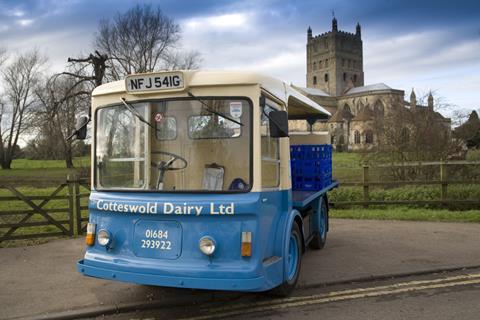
Profits contracted at Cotteswold Dairy last year as rising costs dampened increased demand, its latest Companies House results have showed.
In the year to 27 December 2025 the milk supplier’s operating profit fell 37.0% to £1.7m, due to increased costs including higher material costs, rising labour expenses and broader inflationary pressures across its supply chain.
The business’s filings showed cost of sales expanded 14.5% from £64.8m to £74.1m, with distribution costs and administrative expenses also rising 7.9% and 6.6%.
However, these figures masked what was an otherwise positive 12 months for the company as rising milk and cream prices, coupled with greater volume sales (up 6.2%), propelled turnover by 10.8% from £92.3m to £102.3m.
According to Cotteswold Dairy operations director Justin Young, this reflected “strong underlying demand across the whole business portfolio, together with the continued recovery in the glass milk market following the pandemic”.
He said the supplier continued to invest in personal, infrastructure and operational capacity in 2025, which included the completion of a cold storage facility “to support future growth and efficiency”.
“Alongside this, we remained focused on balancing milk supply with customer demand, with producer recruitment playing an important role in supporting our sales profile and long-term growth ambitions,” Young continued.
The business said the current financial year presented a number of challenges – both for itself and other dairy producers and processors, including ongoing geopolitical uncertainty placing pressure on input costs and difficult climatic conditions which “have impacted forage production, reduced milk volumes and increased pressure on winter feed stocks and rations”.
“These factors are expected to place further upward pressure on the cost of milk production and dairy processing, creating a challenging operating environment for the sector,” Young continued.
Despite the concern, Young said Cotteswold Dairy pointed to its “loyal, committed and highly resilient milk pool”.
“Their contribution extends far beyond our business, playing a vital role in supporting the strength, sustainability and long-term future of the wider UK dairy sector,” he added.








No comments yet