



Supermarkets and other companies are overlooking essential small charities by focusing too much on broad brush corporate giving models and big-name charity brands, according to a report.
Lidl and the food redistribution organisation Neighbourly surveyed around 900 charities and found only 3% believed corporate support reflected local need ‘very well’. Some 95% said smaller, less visible charities were being overlooked. More than a third of the organisations surveyed were focused on providing food, meaning supermarkets would be their key donors.
Analysing government data, the study also found the areas of worst deprivation across England had changed little over five years, suggesting patterns of entrenched severe hardship which corporate giving was failing to alleviate. Of neighbourhoods ranked among England’s most severely deprived in 2019, 82% remained so in 2025.
Meanwhile, deprivation was becoming increasingly ‘hyper-local’, with severe disadvantage sitting streets away from visible affluence, meaning broad regional averages often hid the true scale of need, according to the report.
Called ‘Giving Without Guessing’, it argues the ‘blanket’ giving models used by corporations are ineffective, with businesses relying on high-profile charity brands being at risk of missing the smaller ones closest to people in need.
It makes a series of recommendations for better-targeted giving, including mapping of deprivation using a Neighbourly intelligence tool called Pulse. It also suggests adopting new metrics for measuring the effectiveness of support.
“Being part of a community means understanding and responding to what local people actually need,” said Lidl GB head of sustainability Matt Juden.
“A national commitment only becomes meaningful when it can be delivered with local precision.”
Neighbourly CEO Steve Butterworth said: “Businesses want their community investment to make a real difference, but too often they are giving without the full picture. Need is not always where people expect it to be – it can be hidden inside apparently prosperous areas, masked by regional averages, or concentrated in tiny neighbourhood pockets that conventional giving models simply do not see.”
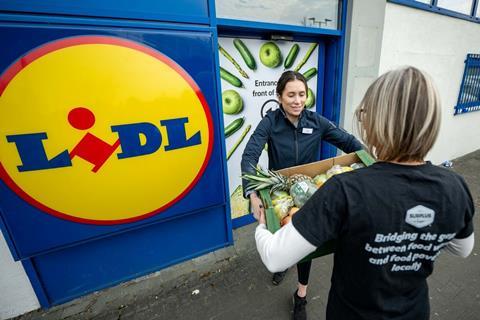
Lidl is among retailers to donate surplus food from stores each day to Neighbourly’s network of local charities.
The discounter extended its partnership with Neighbourly in March to a new initiative enabling both charities and customers to collect surplus food from stores for free. The step followed talks between Lidl and a social media campaigner, Food_waste_inspector_, who filmed in-date food incorrectly thrown in bins rather than donated at the supermarket’s stores.
Juden said: “Through Neighbourly, we’re able to connect every one of our stores with trusted good causes in its area, helping us direct surplus food, customer donations and funding where they can make the greatest difference.
“This approach strengthens the relationship between our store teams and the communities they serve, while giving us confidence that our support is practical, relevant and rooted in genuine local need. For us, that is what meaningful community engagement looks like.”
Butterworth added: “By combining public deprivation data, proprietary intelligence from local charities and other groups on the ground, we help businesses move from broad assumptions to precision-targeted local impact. The goal is simple: support should reach the right place, through the right local partner, at the right time.”




No comments yet