






Food waste in retail makes up just 2% of the total – but retailers have a key part to play in helping consumers cut it out too and progress has slowed. Why?
Much attention has been given in recent weeks to food waste in stores, thanks to an anonymous social media activist raiding the bins of major supermarkets. The TikTok and Instagram campaigner Food_waste_inspector_ has prompted investigations – not to mention a PR crisis – at Lidl, M&S and Waitrose by exposing large quantities of what appears to be perfectly good food in their store bins.
But while food waste in retail should of course be reduced to a minimum, it only makes up 2% of total UK food waste, alongside 16% in farms, 13% in manufacturing and 11% in foodservice, Wrap estimates.
The remaining 58% is household food waste. It’s not just by far the largest portion but also “the most difficult to focus on because it’s spread out across millions of homes”, says Caroline Conroy, senior specialist in Wrap’s food system transformation team.
Tesco
Policies: Products are regularly marked down throughout the day, with dedicated ‘Reduced in price, Just as Nice’ sections in many stores. Food that can’t be sold is donated or offered free to staff. A trial in Express stores allows shoppers to take stickered items for free at the end of the day. Any remaining surplus is turned into animal feed or, as a last resort, sent for anaerobic digestion.
Redistribution partners: Food charity FareShare and community sharing app Olio.
As highlighted by Food Waste Action Week, which concludes on 15 March, UK households throw away 4.4 million tonnes of edible food every year, creating 16 million tonnes of greenhouse gas emissions.
And while it may not be in their direct operations, it is in retailer value chains, and it counts toward the UN Sustainability Development Goal 12.3 of halving food waste by 2030 (from a baseline year of 2007), to which all major supermarkets are aligned as signatories of Wrap’s UK Food and Drink Pact.
“Reducing household food waste is a key lever for emissions reduction outlined in the net zero Transition Plan for the UK food system, so it’s vital that businesses work toward it,” says IGD head of sustainability Sarah Haynes.
So, what are supermarkets doing about household food waste? And what is holding up progress?

Sainsbury’s
Policies: Stores follow clear guidance on product reductions in an approach that varies according to product type and local store needs. Unsold edible surplus is donated as a priority through long-standing partnerships. Where organisations are not able to collect, staff may take best-before surplus home. Inedible food goes to animal feed or creating green energy.
Redistribution partners: Charity redistribution platform Neighbourly and Olio.
Steep learning curve
In the period between 2007 and 2022 “there’s been significant progress,” says Conroy, noting Wrap’s latest research records a 22% reduction.
But that leaves “quite a steep curve to get to that to 50% reduction target by 2030”, she acknowledges.
To accelerate progress, Wrap set out three new recommendations for supermarkets in 2022: remove unnecessary date labels; sell more fresh fruit & veg loose; and help customers understand the importance of storing some fresh produce in the fridge below 5°C.
Retailers have made “great strides” toward the first recommendation. “Most fresh produce lines you see in store now will have the date label removed, which is fantastic news,” says Conroy.
Asda
Policies: Staff mark down items approaching use by or best before at regular intervals, with the timing and level of discount varying by store format and product. Unsold edible surplus is donated as a priority using a system that automatically emails nominated charities. Remaining waste is sent for anaerobic digestion or animal feed.
Redistribution partners: FareShare and Too Good To Go, the marketplace app offering heavily discounted short-dated food.
But they are not doing so well on recommendations two or three.
Wrap gave retailers a list of 21 products that should be sold loose, including apples, bananas, broccoli and potatoes, and set the target of doubling the proportion of fresh fruit & veg sold without packaging to 30% by 2025, rising to 50% by the end of 2030.
It followed Wrap research testing five of the items – apples, bananas, broccoli, cucumber and potatoes – which found selling them loose and without best before dates could eliminate 100,000 tonnes of annual household food waste, thanks to people only buying the quantity they need and using their judgement as to when it is still good to eat.

Aldi
Policies: Aldi offers 75% price reductions on fresh produce, bakery and chilled products that are near the end of their shelf life. It also offers 30% price reductions on ambient items that have imperfect outer packaging. Unsold edible surplus from stores is then donated to local charities and good causes.
Redistribution partners: Neighbourly and Too Good To Go.
Missed targets
But targets have already been missed. “We’re still at about 19%-20% of fresh produce sold loose at the moment, so we’re a way off on that,” says Conroy.
As well as shrinkage concerns, selling more fresh produce loose brings a risk of increasing waste in their own operations – even if that is more than offset in the round by reduced waste in households. It also adds operational costs.
“With business food waste, it’s a part of their P&L, it’s part of their bottom line,” says Conroy. “Whereas in households, it’s not really viewed like that. A few retailers have gone further and faster on loose fresh produce in the past and it hasn’t worked.” Usually, that’s been because it has negatively impacted sales “or there’s been too much waste in store”.

Morrisons
Policies: Markdowns are carried out at varying times at the discretion of store managers. Damaged ambient stock is repaired where possible. Unsold edible surplus is donated to charities. Morrisons also has a mechanism in place for store staff to take home any in-date stock that is unsold and uncollected after closure.
Redistribution partners: Too Good To Go. Stores can also donate surplus food to local charities they have relationships with through Morrisons’ own Community Champions.
It’s why, since 2024, Wrap has been urging the government to consider restricting packaging on uncut fresh fruit & veg. As well as levelling the playing field for retailers, it would create the necessary large-scale shift in consumer behaviour – possibly the biggest challenge in household food waste – by making buying loose “the norm”.
As to Wrap’s third recommendation, helping consumers understand correct temperature storage, there are even signs of backward progress. “The last retail survey we did, in 2022, showed a decline in the little blue fridge logo,” says Conroy.
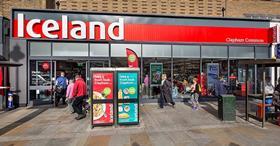
Iceland
Policies: Its approach is focused on reducing waste through markdowns, with an app used to manage chilled and fresh products. Alerts to stores enable most to be marked down the day before expiry. On the last day of shelf life, a second markdown is actioned in the early afternoon. Unsold edible surplus is redistributed through partners or offered to staff free of charge.
Redistribution partners: Discount surplus marketplace app Gander and Olio.
The survey found the logo – which advises consumers to store below 5°C – was present on only 15% of applicable fruit & veg, down from 17% in 2019. Use had also fallen in meat and dairy, though it is fresh produce that accounts for the most waste.
It is a missed opportunity, since “one of the things we can do quite easily at the moment to get more life out of fruit & veg is to put it in the fridge”, Conroy says. “Apples, for example, last around 70 days longer in the fridge than at ambient. And FSA advice on potatoes changed a few years ago from storing in a cool dry place, because in a fridge they last an awful lot longer.”
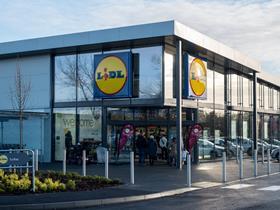
Lidl
Policies: Discounts are applied to select lines towards the end of the day. Lidl also sells ‘Too Good To Waste’ boxes containing 5kg of slightly damaged fruit & veg for £2 in all stores. For unsold edible food, each store has a donation point where items are kept for daily collection.
Redistribution partners: Lidl is extending an estate-wide Neighbourly partnership to include its Surplus Saviours initiative in the Midlands, enabling both charity volunteers and customers to collect.
If only more consumers knew. “We need to make more people aware of what they’re wasting,” Conroy says. “Research shows around 80% of people think they waste less than the average person, so something isn’t adding up.”
It’s an area where Wrap, with retailer backing, is striving to make a change. Using funding from Tesco, Ocado and Birds Eye, as well as Defra, the NGO is running an awareness and behavioural change project with 2,500 households in Hampshire. Over seven days starting on 11 February, households were sent daily prompts, challenges and food saving tips via WhatsApp. The challenges came with daily prizes worth £50 and bonus prizes worth £250.
“Around 80% of people think they waste less than the average person, so something isn’t adding up”
Caroline Conroy, Wrap
The next step is to check in with participants after several weeks have passed to gauge how well new behaviour has stuck.
Wrap global food waste programme lead Will Nicholson says: “We know no one likes to see good food end up in the bin, but the evidence shows we all waste a lot more than we think we do. We’re hoping to help Rushmoor residents by providing timely tips over social media to better manage the food they have and cut the amount they feed to the bin. The results could help us move towards a nationwide campaign.”
Co-op
Policies: Price reduction measures are designed to give customers sufficient time to buy. Co-op’s ‘Too Good to Waste’ initiative offers 50% off in-store loose bakery items from 6pm. Unsold surplus is eligible for collection by local community groups.
Redistribution partners: Local donations are managed at store level using Co-op’s own food redistribution platform, Caboodle, where community groups can register to collect up to two days past the ‘best-before’ date but never past the ‘use by’ date.
Love Food Hate Waste
Raising consumer awareness is also the point of Food Waste Action Week, an annual event staged by Wrap’s wider consumer-facing campaign called Love Food Hate Waste. The campaign provides imagery assets to be used by stakeholders, primarily local authorities, to drive the message to consumers. The focus of this year’s event is the money they could save – a typical family of four loses £86 a month, or £1,000 a year, to their own food waste, according to Wrap. Tips for making food go further are provided each day.
This year’s campaign coincides with the rollout of Simpler recycling England, part of which requires local authorities in England to provide all households with food waste collections by 31 March 2026. Only half of households will have access to the collections during campaign week itself, but the proportion is expected to increase throughout 2026, with some councils waiting until existing long-term contracts expire, as permitted by government.
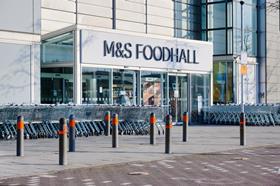
Marks & Spencer
Policies: M&S says its food waste prevention policy starts with having the right stock in the right place at the right time. Stores check products regularly and should be reducing the price in good time to optimise the chance they will sell. Unsold edible is donated or given to staff. Inedible food is sent for anaerobic digestion. M&S has recently increased its focus on waste across its estate, working with store staff.
Redistribution partners: Neighbourly.
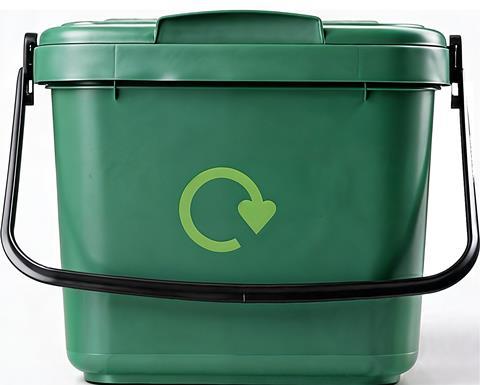
Conroy believes the presence of separate food waste bins in more and more households, proving a constant visual metric of their waste, could be a shot in the arm for awareness. “The food waste caddy is a great prompt for people, and the introduction of food waste collections means behaviours are going to be interrupted. So we’ve got a real opportunity to take advantage of that and start creating new habits and behaviours.”
If retailers can get on track with more of Wrap’s recommendations at the same time, millions more consumers might wake up to what they are wasting.

Waitrose
Policies: Markdowns are prompted via staff handsets, which use an algorithm that provides reduction percentages based on demand, volume and proximity to expiry dates. Staff also have autonomy to make further reductions where appropriate. Edible surplus is offered to a redistribution partner and any not collected is offered to staff free of charge. Inedible surplus goes to anaerobic digestion.
Redistribution partners: FareShare and Olio.





No comments yet