



GLP-1 weight-loss drugs are only part of the story as data shows spend is down or in suppressed growth in multiple channels
New data reveals food spend is down across multiple channels – and there is more going on than the usual story of consumers trading down to save.
Data from Spendmapper for The Grocer shows total spend on food and drink rose by an anaemic 1.8% in the first three months of the year versus the same period last year, well behind inflation and pointing to a real-terms fall in volume. foodservice is taking the worst hit. But even grocery, one of the better performers, is growing below the rate of inflation.
So, what’s going on? Why are consumers buying less? And what else can the data tell us?
The findings come from the Share of Stomach Index, a new quarterly report from The Grocer based on Spendmapper analysis of card transactions from 180,000 consumers across 750 retailers, restaurants, bars and cafés over the past 15 months. The figures are scaled using census data to give a nationally representative view of spend, excluding cash.
“The launch of the share of stomach index provides a clear and immediate view of how UK food and drink spend is shifting on a quarterly and annual basis,” says Spendmapper director Lauren Ambrose. “In a market shaped by fast-moving cost pressures, from inflation to changing customer habits influenced by social media, there is growing value in data that offers a live view of the nuances of everyday food spend.”
As expected, grocery dominates food & drink spend – but its 2.7% year on year growth in Q1 2026 falls short of recent food inflation figures. ONS food and non-alcoholic beverages 12-month inflation was 3.3% in February, while the BRC reported 3.4% for March.
GLP-1s
Weight-loss drugs are part of the explanation. Recent YouGov research found 8% of Brits have used GLP-1s and that they spend 11% less on groceries while on them. Even after stopping, grocery spend remains 7% lower than before the treatment started.
But cost of living pressures and fears of more to come are also hitting spend. CACI’s Q1 Voice of the Nation survey found 44% of people were worried about personal finances in January, even before the Iran war began.
Elsewhere, the BRC-Opinium consumer sentiment monitor found expectations about the state of the economy and personal finances fell sharply in March to the lowest since the survey began. A third (34%) of respondents expect their financial situation to worsen over the next three months.
BRC chief economist Harvir Dhillon says: “Consumers are now not expecting to see the two interest rate cuts that were expected before the Iran war. That immediately forces precautionary saving behaviour on holidays, cars and eating out.
“People are driven by their bank balance. If energy costs continue to rise, spending will remain depleted,” he adds.
That’s considering honest shoppers, of course. Spend will not be helped by shoplifting being at a record high, passing half a billion reported incidents in England and Wales in the year to September 2025.
Winners and losers
Grocery’s below-inflation performance is one the hospitality sector would envy. Spending at high-end restaurants fell by 9% in Q1, the steepest decline of the 11 categories tracked, followed by bars and pubs, where spending is down 6.9% year on year.
“High-end restaurants are clearly suffering, with increasing menu prices and declining ccustomer service quality (because of operating cost pressures) proving to be a deadly combination,” says retail consultant Nick Bubb.
UKHospitality chair Kate Nicholls says: “What these results show is that the cost of living crisis is continuing to impact consumer choices, with knock-on effects for hospitality businesses as customers appear to prioritise food on the go or budget options.
“We know that visiting hospitality remains the number one way the public would like to spend their disposable income, so ensuring they have money in their pockets to do so is critical.
“Equally important is reducing costs for hospitality businesses – who already foot the highest tax burden in the economy – to ensure they can keep costs down, create new jobs, and invest in new products, initiatives and experiences.”
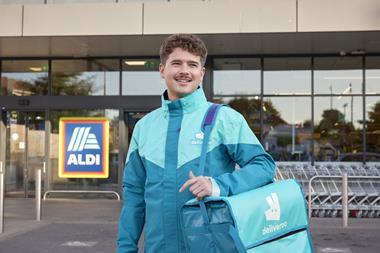
The figures also illustrate that fast grocery has as yet failed to make much of an impact with consumers. It accounts for just 0.1% of food & drink spend and was down 4.4% year on year in Q1 2026. Rapid grocer Gopuff and Zoom by Ocado are the notable exceptions here.
Meal boxes accounted for 1.5% of share of stomach spend and enjoyed a bounce at the start of the year.
“Meal boxes saw a strong start to the year, with HelloFresh and Gousto surging in January,” says Ambrose. “Despite Gousto holding on to new customers better than HelloFresh, spend still dropped off in March, suggesting that some healthier intentions may have faded as the quarter progressed.” Sales for Q1 are up 2.3% year on year.
Coffee and bakery chains showed the highest growth, up 5% year on year. Starbucks, Pret a Manger and Gail’s grew faster than the category average.
Retail Economics head of commercial content Nicholas Found says: “What stands out is a clear prioritisation of essentials and affordable treats. Shoppers are still willing to spend where it feels practical and rewarding, helping to drive stronger demand for coffee, bakery and fast food.”
What happens next
The outlook, according to Ambrose, is for current trends to deepen in the coming months. “While the full impact of the Iran conflict is unlikely to be reflected yet, early signals are beginning to emerge. fuel data shows a sharp increase in average transaction values, which is likely to feed into broader household spending decisions.”
Retailers have navigated shocks like this before.
“The 2022 price shock [CPI peaked at 11.1%] forced retailers to be a bit more resilient,” says Dhillon. “I don’t think there is a sense of panic yet, but there is a sense that retailers need to prepare for a worst-case scenario. It’s about being aware of what could happen if energy prices remain high and consumer sentiment gets weaker.”
Found’s conclusion is that preparation means more than cutting costs and prices. “In this market, the winners are not simply the cheapest operators, but ones offering value, convenience and indulgence.”



No comments yet