





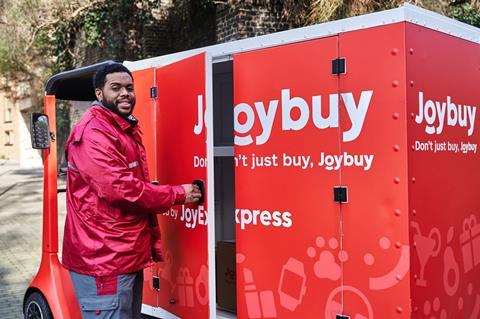
Joybuy can take business from across the retail spectrum. An Aldi/Lidl-style value offering with pure online operational efficiency is white space in the UK. Discounters won’t go online easily, while supermarkets have always struggled to pivot towards online regardless of how they’ve tried. Joybuy’s arrival, though, is most significant because Amazon, our resident online model genius, has left the door open to a challenger in exactly the parts of the market where loyalty for it is weak – the most significant being grocery.
Content with the convenience, shoppers of non-food have learned to navigate Amazon’s cluttered search results, sponsored listings and inconsistent pricing. But where price comparison is instant, shoppers are increasingly willing to switch, as Amazon no longer owns value like it once did. This means Joybuy does not need to beat Amazon everywhere from the outset. It only needs to become credible in the categories that drive frequent visits and repeat purchasing.
That opportunity exists in accessories, toys, crafts, seasonal lines and more, but grocery is where the threat becomes serious. Grocery is all about frequency, so if Joybuy can build a reputation for low prices in ambient grocery, snacks, drinks, confectionery, bulk-buy staples, among others, it can create regular shopping behaviour. Frequency builds habit and habit is what gives retailers real loyalty.
Amazon’s attempts in grocery
Amazon has never fully cracked grocery in the UK. Its proposition has lacked distinctiveness and it is not a natural first choice for mainstream grocery shopping. Joybuy does not need to replicate a full supermarket model to hurt Amazon. It can win in selected grocery areas where shoppers are highly price-sensitive and comfortable buying online, such as household essentials, petcare and personal care basics.
If it gets those categories right, it will gain repeat traffic and basket-building opportunities across the wider platform. Once shoppers visit regularly for staples, they will start adding other items to the basket. If Joybuy achieves a credible destination in top-up, bulk and distress purchases Amazon does not just lose transactions, it loses search starts outside grocery too.
Joybuy is not just building a website – it has built operational capability, recruiting people who understand UK grocery from the inside. It is assembling the commercial expertise needed to compete, getting it right in range, availability, value and local market knowledge.
Suppliers could also prove an important part of the proposition for Joybuy to win. Suppliers have never found Amazon an easy or natural partner. For all its scale, Amazon has remained a transactional platform to suppliers rather than a true grocery customer. Suppliers in all geographies struggle to work within Amazon’s automated, impersonal, efficiency obsession. Suppliers value category thinking, promotional planning and sustainable volume growth. If Joybuy can offer a more collaborative and commercially credible route to market, it will win suppliers’ support and investment.
Amazon has not simply allowed Joybuy to launch, it has invited Joybuy to lunch on its groceries. And the disruption could spread quickly.
David Sables is CEO of Sentinel Management Consultants




No comments yet