






The ASA system’s new rules restricting the advertising of ‘less healthy’ food and drink products came into force at the start of this year. These rules implement legislation passed by the government as part of its wider public health strategy. Although we, the advertising regulator, didn’t set that law, our role is to act independently and impartially to ensure the new restrictions are applied fairly and consistently.
Those restrictions have now moved from principle into practice. And today marks an important milestone: the publication of our first four rulings, giving both the public and advertisers their first look at how real ads are being assessed under the new rules.
The law is straightforward in its aim: reduce the public’s exposure to ads for identifiable less healthy food products. In practice, that means those ads can’t appear on TV or on-demand services between 5:30am and 9pm, or in paid online media at any time.
What our first rulings demonstrate is that while the government’s stated aim is clear and simple, our work to deliver it demands nuance. In judging whether our new rules have been broken, the devil is in the detail of the law. And the content and context of ads matter.
The devil in the ad ruling details
Take, for example, the Instagram post by influencer John Fisher (known to many as Big John), promoting menu items at a new German Doner Kebab outlet. You might assume that an ad for a kebab shop wouldn’t be allowed, but the specific items shown in the ad weren’t classified as less healthy foods under the government’s nutrient profiling model. As a result, the ad wasn’t caught by the law and so didn’t break our rules.
In another case, a travel ad for On The Beach promoting free airport lounge access featured a boy approaching a buffet and taking a chocolate ring doughnut. Here, the food was incidental, not the focus of the ad. We judged that viewers would see it as a generic example of what was available in the lounge, rather than as an ad for the doughnut itself. So again, we considered the ad to be acceptable under our rules.

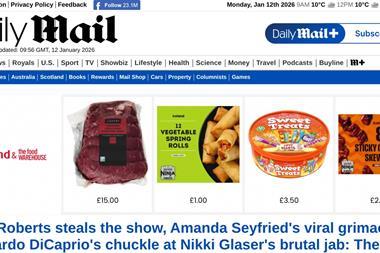
Contrast that with online display ads for Iceland Foods. Those featured a range of foods available for sale at Iceland, including specific sweets that are classified as less healthy. Because they were identifiable within the ads, our rules were broken.
An Instagram post for Lidl Northern Ireland by influencer Emma Kearney crossed a similar line. The ad featured two bakery items, one categorised as less healthy and one not, but the prominence of the less healthy product meant the ad wasn’t allowed under our rules.
Offering a clearer sense of what’s allowed
Taken together, those cases underline a key point: not every ad featuring a seemingly less healthy food or drink is restricted. Applying the rules requires careful, case-by-case judgement, with factors like prominence playing a role.
And they also reveal that less healthy products can be hard to spot. We’ve received a steady stream of complaints from people who’ve assumed, wrongly as it’s turned out, that a product is classified as less healthy. Or that an ad for a less healthy product has appeared in a restricted medium when it hasn’t. After all, businesses have known the restrictions were coming for a good while, and many responded by reformulating products to bring them below the less healthy threshold or by changing their use of media.
Every new regulatory framework brings at least some early uncertainty. By publishing rulings, we aim to give advertisers an even clearer sense of what’s allowed, supplementing our detailed guidance and advice already available to them. People can expect more decisions in the months ahead as we work through borderline areas and establish clearer precedents.
Looking ahead, our approach will combine rulings, guidance and proactive monitoring. Our Active Ad Monitoring system, powered by AI, will help us identify potential problem ads more quickly and effectively. We’ll continue to support advertisers through detailed guidance and training. And we’ll respond to developments such as the government’s recent consultation on applying its newly updated nutrient profiling model to less healthy food ads, which might further shape how we apply our rules.
Guy Parker is CEO of the Advertising Standards Authority








No comments yet