




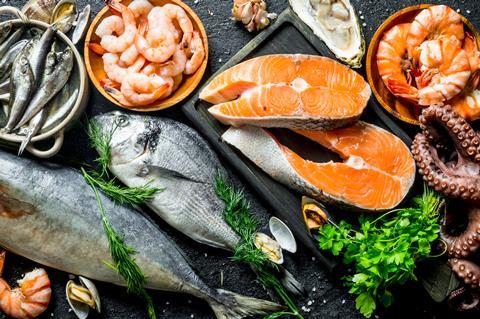
The world’s leading seafood companies have failed to show how they are implementing welfare and sustainability polices, according to new analysis.
The Coller FAIRR Seafood Index found that the 20 seafood companies it benchmarked scored on average just 39/100 for social issues and 25/100 on environmental performance.
This is despite the seafood sector often being viewed as a “lower-impact alternative to other animal proteins”, with the sector enjoying “overly positive perceptions due to the lack of an industry-specific benchmark”, FAIRR said.
The report also revaled that companies scored 25/100 and 23/100 respectively on evidence of environmental and social strategies, and progress on KPIs for environmental and social outcomes, highlighting a major gap between commitments and measurable delivery.
FAIRR said that it underlined an “urgent need” for companies to go “further than paper commitments and demonstrate transparently and concretly how they are monitoring and progressing on outcomes”.
“Whether it’s Illegal, Unreported and Unregulated (IUU) Fishing, overfishing or issues of disease and pollution management in farmed seafood, it’s clear that there’s a lot of work to do to ensure seafood contributes sustainably to global food security and resilience,” said Max Boucher, FAIRR head of nature programmes.
“The companies that sit at the bottleneck of these complex supply chains can contribute to this now by acknowledging the materiality of these risks to their businesses and working to identify high-risk practices at sea, rather than being content with opaque sourcing.”
Of nature and climate topics, companies were least prepared to address pollution-related risks, scoring 19/100 on average. This category included issues such as effluent discharge from salmon farms, marine litter from pens and fishing gear, and chemical contamination.
Global wholesale company Sysco, parent of Brakes, ranked worst across nature and climate topics with a score of 6/100.
Mowi recorded the highest score on social risk management among the companies assessed, with 69/100.
The index also revealed uneven considerations for food quality and health risks as despite food safety ranking among the strongest areas overall, averaging 43/100, the data revealed a less sophisticated approach to antibiotic stewardship (27/100) and animal welfare (26/100). This, it said, could undermine food quality and increase consumer health risks.
It also highlighted missed opportunities to expand more sustainable seafood offerings with companies averaging 11/100 on sustainable products, including protein diversification into plant-based and alternative proteins, and “unfed” aquaculture such as mussels and macroalgae that required no external feed.
Asian companies featured prominently on these opportunities, with Umios, Nissui and Thai Union among the top five, with some businesses in Norway and Chile invested in mussel and seaweed aquaculture.
Traceability also remained “problematic”, the report found, with companies scoring only 27/100 on this topic, which FAIRR said would leave “consumers globally exposed to mislabelling provenance, species and even potentially illegally caught seafood”.
FAIRR said investors would be able to use the Seafood Index as part of their decision-making processes and drive capital allocation to the best-performing companies. The organisation asserted investors could also leverage its findings in their stewardship activities, such as engaging with companies to adopt specific practices like new policies, targets and risk mitigation initiatives.
Karl Høgtun, director governance and biodiversity at DNB Asset Management, called the index a “much-needed tool to capture the nuance of the seafood sector’s operations”.
“The index is vital to bring colour to financially material topics to seafood sustainability – from deforestation to modern slavery,” he said.
Boucher added: “Capital has the power to accelerate the shift towards more sustainable practices if investors have the tools to understand the true impact of harmful practices and their financial materiality.”
”Sysco is committed to sustainable practices and responsible stewardship of natural resources,” said a Sysco spokesperson. ”We will continue to prioritise these goals and others where we have found the greatest benefits to the environment as we collaborate further with stakeholders and partners to work collectively toward these achievements.”







No comments yet