



Why own label’s rise isn’t bad news for brands
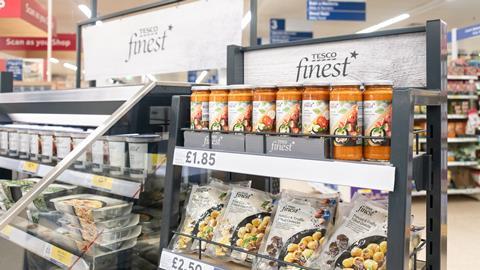
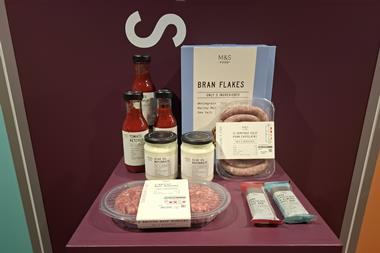
The news that own-label sales now account for more than half of UK grocery volumes for the first time reflects a defining shift in shopper behaviour.
While the cost of living crisis has undoubtedly driven many consumers to trade down, this alone does not explain the scale or sustainability of the change. Retailers have also significantly elevated the quality, consistency and positioning of own-label ranges, making them more compelling than ever before.
What we are seeing is not simply a move toward cheaper products, but a move toward better value. That value can come in many forms: superior functionality, trusted performance, meaningful innovation or an emotional connection. Consumers are still asking ‘why should I pay more?’ The brands that answer that are the ones that win.
Whether a product sits under a retailer’s own brand or a standalone Household name, shoppers still rely on signals of trust, clarity and reassurance.
It is also important to recognise that private label is no longer ‘generic’. It is the retailer’s own brand, and therefore carries the values, reputation and promise of that retailer. The strongest-performing own-label ranges succeed because they are built with the same discipline as any major brand: clear identity, consistent quality and relevance to consumer needs.
The rise of own label should therefore not be interpreted as the decline of branding. It signals a more competitive era, where every product must earn its place in the basket.
Pav Chandra, head of brands, Oven Pride & Surcare
Brewers under pressure
Last week, SIBA’s latest Independent Beer Report laid bare the pressure facing UK brewers. Nearly half of those surveyed now cite survival as their top priority, with 32% expecting turnover to fall in the months ahead. It’s a clear indication of how challenging the current trading environment has become.
Extended Producer Responsibility (EPR) was designed to encourage more sustainable packaging and higher recycling rates. But its introduction comes at a time when the sector is already under intense strain, leaving many brewers cautious about making significant changes in an already difficult economic environment. In practice, this is translating into a more direct and immediate cost for producers, with packaging no longer viewed as a fixed input but as a variable cost that must be actively managed.
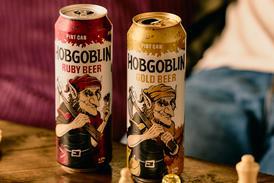
Despite this, as The Grocer recently reported, brewers remain hesitant to move away from glass, even as costs increase. The lack of a significant shift towards cans highlights a more fundamental tension: packaging decisions are not driven by cost alone. Brewers must balance product performance, brand and sustainability, making the choice between formats far more nuanced than a simple financial trade-off. For many brewers, this goes beyond cost. Factors such as shelf presence, product protection and consumer perception all play a role, particularly in a competitive market where brand and quality remain key differentiators.
As EPR beds in, it is becoming clear that sustainability cannot be reduced to a simple equation of cost or weight. These metrics alone do not reflect how packaging performs in the real world, or its full lifecycle impact. The danger is not that brewers are slow to change, but that the wrong signals could drive the wrong decisions.
As a business that has worked alongside brewers for generations, we see these challenges unfolding firsthand as customers revisit their packaging strategies under increasing compliance through EPR and, soon, the deposit return scheme (DRS). We are seeing a reassessment of packaging formats, increased scrutiny on total cost of ownership, and greater focus on how packaging choices impact logistics, storage and overall supply chain efficiency. The conversation is no longer just about materials, but about how packaging performs in practice, balancing cost, product integrity and sustainability. These decisions are increasingly complex, and the margin for error is narrowing. Getting packaging decisions right first time is becoming increasingly important, particularly as the cost of getting them wrong continues to rise.
What matters now is not just how brewers respond, but whether the signals being sent are the right ones. As EPR continues to evolve, and with DRS set to introduce further compliance requirements and costs, there is a need for a more balanced approach, one that supports better decisions, not just cheaper ones. Getting this right will be critical as businesses begin to make longer-term decisions in response to these signals.
Tim Croxson, CEO, Croxsons
How challengers scale
Breakout challenger brands in grocery have generally followed a familiar playbook: start as a DTC brand, build a loyal community and drive growth through highly targeted, performance-led marketing activity.
But the fact that both Brothers Drinks and Huel have made it into Alantra’s Fast 50 for the fifth consecutive year signals something bigger. Once seen as insurgents, many of today’s fastest-growing fmcg players are reaching incumbent-level size while still operating with the behaviours that made them successful in the first place.
While the ‘break in, scale fast and eventually sell to a powerhouse’ brand model is still highly effective, there is now a third emergent space, demonstrating how much challenger thinking is saturating the mainstream.
The fastest-growing brands have proved there is more than one route to becoming a category leader. Continuing to prioritise community-led growth, even as media investment scales, helps to preserve the founder-led instinct that defines many of these companies.
Great brands can grow, evolve and become the leaders of tomorrow while still thinking, acting and creating with the startup mindset that first set them on the path to success.
Olivia Joy, client lead and scale-up specialist, WPP Media
Have your say
Get in touch with your comments and feedback about any of our stories at youropinion@thegrocer.co.uk
No comments yet