



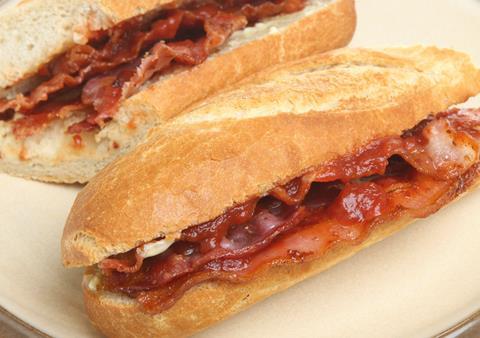
Sales of nitrite-cured bacon plunged by £18.7m in the 12 weeks to the end of January, as figures show shoppers shying away from products containing controversial nitrite additives.
Data from Worldpanel by Numerator (12 weeks ending 25 January 2026 vs the same period in 2025) show nitrite-containing (nitrite-cured) fresh bacon suffered a 7.3% drop in value and a 4.1% fall in volume over the period.
Across the same timeframe, sales of nitrite-free bacon surged, with spend up 21.7% and volume up 19.6% year on year.
The slump comes after scientists spoke out in October to attack the UK government and the FSA for inaction, 10 years on from a WHO report linking nitrites in processed meat to deaths from cancer.
They claimed more than 50,000 British people had suffered from bowel cancer because of the failure to act on the warning over the risks from nitrites in products such as processed meats such as bacon and ham.
The scientists said the new figures showed a dramatic market shift, with consumers abandoning “carcinogenic” curing agents.
The slump has prompted renewed calls on the government to act on the alleged dangers of the ingredient, as well as pressure on retailers to switch to non-nitrite alternatives.
Read more: Why hasn’t nitrite-free bacon taken off despite health risk?
A cross-party open letter to the British Retail Consortium and the British Meat Processors Association, signed by MPs and peers, praised progress made by some retailers and producers but urged the industry to go further and faster in phasing out nitrites in processed meats.
“As parliamentarians committed to safeguarding the health of our constituents and protecting the future of our NHS, we strongly encourage the continued development and wider adoption and promotion of safer, nitrite-free curing methods,” it said.
“Collaborative action between industry leaders, policymakers and health experts can accelerate progress towards a future in which processed meats no longer pose avoidable health risks. We look forward to seeing further industry-wide progress and stand ready to support these important efforts.”
Professor Chris Elliott, one of the Coalition Against Nitrites’ leading scientific supporters, said the sales figure showed that consumers wanted the government and supermarkets to act on the dangers highlighted.
“Consumers are moving first, responding to the overwhelming scientific evidence linking nitrite-cured meats to cancer and the realisation that these chemicals simply don’t need to be used to make the bacon and ham that so many of us love to eat,” he said.
”Parliamentarians are now backing that momentum. The use of carcinogenic nitrites is increasingly out of step with public expectations. This is no longer a fringe issue. It is a mainstream market correction backed by cross-party political support and I hope retailers and producers alike continue to play their part in making processed meats safer to eat.”
A spokesman for the Coalition Against Nitrites added: “A massive £18.7m has been wiped off nitrite-cured bacon sales in just three months.
“That is not a fluctuation, it is a consumer revolt. Shoppers are sending a clear message. They do not want carcinogenic additives in their food. The industry cannot ignore a shift of this scale.””




No comments yet