




Kiddylicious has expanded its pouch offering with six new lines designed to support parents throughout the weaning journey.
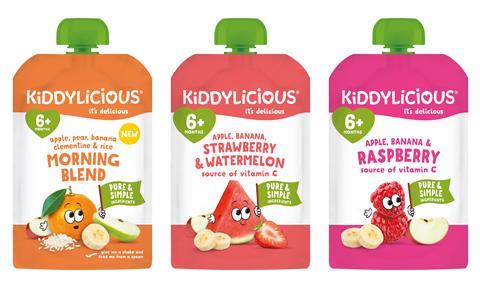
The baby finger food brand has introduced two pouches under its new Morning Blend sub-range. The pouches come in Apple, Banana, Kiwi & Rice, and Apple, Pear, Banana, Clementine & Rice flavours.
It has also added two “benefit-led” pouches: Apple, Banana & Raspberry, and Apple, Banana, Strawberry & Watermelon, both of which are a source of vitamin C. And on top of that, it has launched a Banana, Apple & Apricot-flavoured yoghurt pouch, which provides a source of calcium to support growth and development, and expanded its Bedtime Blend range with a new Apple, Cherry, Banana & Oat variant.
Suitable for babies aged six months and over, the pouches provided “perfectly portioned, nutritionally considered options”, said the brand. They were developed to make eating occasions “easier, more convenient and enjoyable for both parents and little ones”.
The latest additions are available in 100g single pouches (rsp: £1.20), while the Bedtime Blend Apple, Cherry, Banana & Oat pouch is also available in a 4x100g multipack (rsp: £4.50). They have launched in Tesco and Morrisons.
“Pouches from trusted brands play a helpful role in supporting families through busy routines, with Kiddylicious Pouches offering simple, portioned options that are quick, tasty and convenient when parents need them, while providing added benefits like fibre, iron and calcium,” said Ash Byrne, marketing manager at Kiddylicious.
“As a newer entrant to pouches, it’s been vital that we build the range in the right way from the start. That means carefully reviewing our recipes, age guidance and labelling, while creating simple, portioned options parents can easily understand and feel confident using when they need that bit of support.”
Kiddylicious said it was the biggest contributor to pouches’ category growth, adding £1.2m in value sales year on year, according to NIQ data [52 w/e 18 April 2026].



No comments yet