






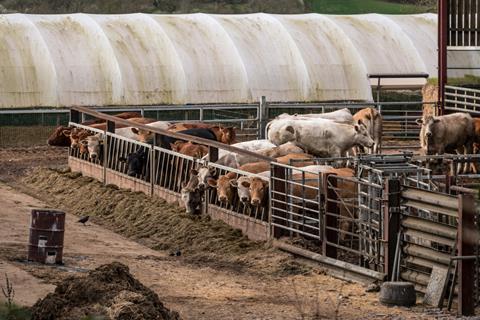
The government’s proposed revisions to the National Planning Policy Framework risk undermining food security, jobs and growth, a leading academic has warned.
Professor Paul Behrens of the University of Oxford has warned that changes to planning that would make it easier to approve intensive livestock units will make food less secure due to the farming method’s dependence on feed imports.
In an open letter to the secretary of state of housing, communities and local government, Steve Reed, Behrens warned it was “dangerous to assume that import-dependent production systems will feed us reliably in the future”.
“Food security is not simply about producing more calories or more commodities in the short term, it is about the long-term ability of a country to have access to healthy food, through diverse systems that can withstand climate shocks, market volatility and geopolitical disruption,” he said.
He explained that the UK produces more meat and dairy in the UK than is required for a healthy diet but is falling short on fruit and vegetable supply, which “presents a severe risk in nutritional security”.
“Intensive livestock systems actively undermine the natural foundations of food production,” he added, as short-term output is ”bought at the expense of soil health, clean water and climate stability, which are essential for producing food in the decades ahead”.
He also raised concerns that the proposed planning changes would damage “economic resilience” with the loss of jobs at farm level due to the consolidation and automation of intensive systems, and the move away from smaller and mixed farms.
Read more:
-
Declining food production must end now, NFU says
-
Defra currently without strategy, Efra committee chair warns
-
Shortages on shelves as wet weather hits fruit & veg crops
“Planning reform is needed to support the diversification of farming, but it must be the right reform,” said Behrens. “As currently drafted, the NPPF risks creating a blanket presumption in favour of “food production” without distinguishing between systems that support long-term food security and those that make us more vulnerable.”
He called on the government to make four changes, including explicitly supporting infrastructure like small-scale storage, retail and horticulture which would remove some of the barriers to growth.
He said there was a need to prioritise long-term food security over simply production, and urged the government to give local councils the powers and clarity needed to “refuse harmful developments”.
Finally, he said the government should ensure the revised NPPF aligned with climate and environmental legislation and relevant case law.
“The choices we make now about planning and farming will shape the resilience of our food system and our health for decades,” he concluded. “If the aim is truly food security, healthier diets, and a thriving rural economy, then expanding factory farming is a step in the wrong direction.”
The letter was welcomed by sustainable farming campaign group Sustain.
“Our security experts are clear,” said Vicky Gerrad, research and campaign officer at Sustain. ”Expanding the kind of farming that is polluting and reliant on imports will make the UK more vulnerable.
”The changes Professor Paul Behrens and Sustain propose are essential, and will mean more and better jobs in farming, boosting production of healthy, sustainable food and improving domestic self-sufficiency.”
Behrens told Reed that he would welcome the opportunity to discuss how planning policy could instead support a food system that is “productive, resilient and fit for the future”.








No comments yet