


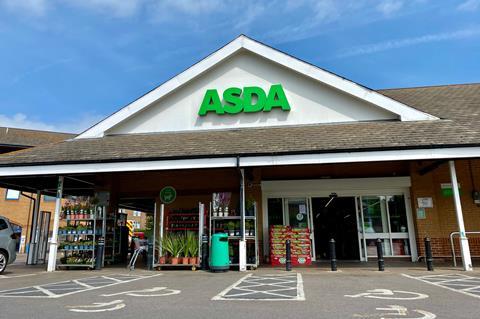
Asda’s sales have fallen in volume by 2.5% year on year, according to previously unpublished Worldpanel data.
Asda’s executive chairman Allan Leighton today said it had passed an “important milestone” by returning to growth, but Worldpanel data seen by The Grocer suggests that does not extend to volume sales.
Its 2.5% year-on-year volume decline in the 12 weeks to 9 August 2026 was by far the worst performance among the country’s top six supermarkets.
Leighton was commenting as Asda announced 0.2% like-for-like sales growth excluding fuel in the seven weeks to 18 August.
Last week, Asda also boasted of its “strongest performance since 2024” when published Worldpanel data showed its sales fell only 0.2% in value year on year in the 12 weeks to 9 August 2026.
The Worldpanel volume sales data covering the same 12-week period paints a different picture of the performance of the biggest grocers. The data covers all grocery categories.
An Asda spokesperson said: “We’re encouraged by the progress we’re making. Momentum built throughout Q2, with market share stabilising and more customers choosing Asda, and we’ve since returned to growth in the current quarter for the first time in more than two years.
“While there’s still more work to do, the improvements we’ve made to price, availability and the overall shopping experience are starting to make a difference.”
Ammunition for Aldi
The volume sales figures also provide ammunition for Aldi CEO Giles Hurley, after he was branded “desperate” for attacking rivals’ loyalty schemes.
While Aldi’s market share has slipped based on value sales over the past year, from 10.9% to 10.7%, its volume share of the market has moved in the other direction, from 12.5% to 12.6%.
Aldi sales are up 1.4% year on year in volume, ahead of its 1.1% rise in value sales. The volume sales numbers have Aldi as the third fastest-growing of the top six, and ahead of the average 0.8% growth of the market.
Differences between value and volume sales performance are sign of price movement at the retailers. The average unit price at Aldi is down 0.1% year on year according to the data, representing the lowest level of inflation across the market. The average unit price figures are based on items in consumer baskets, so can also be influenced by changes in the product mix.
On average across the market, unit price is up 3.2% year on year.
Hurley last week attacked rivals’ loyalty discounts in an article for the Mail’s This is Money, claiming “PM Andy Burnham is right to challenge fake ‘was’ prices”.
“After every card has been scanned and every promotion applied, is the customer actually getting a low price?” he said.
Read more: Poundland latest retailer to knock loyalty cards and ‘fake discounts’
The government has promised a consultation this autumn on “whether tactics such as fake ‘was’ prices, invented discounts and misleading recommended retail prices should be added to the list of practices banned”.
The Telegraph subsequently quoted ‘one senior retail adviser’ as saying Hurley’s stance was “opportunistic, and in a way, perhaps a little bit desperate”.
There has also been a suggestion that the values sales figures show Aldi is losing shoppers, but Worldpanel data shows its shoppers increased 3.2% year on year to 15.6 million in the same 12 weeks. Its shopper gains rank second in the market, with only Lidl recruiting customers faster.




No comments yet