






Traxlo could cut red tape for stores – but is it good for gig workers?
An online platform connecting stores with gig workers is fast expanding into the UK. Promising a “new way” to control “rising labour costs”, Traxlo is launching in Manchester this month after arriving in Leeds at the start of the year.
As reported by The Grocer last week, Traxlo connects independent and franchise c-stores with gig workers, who are paid on an “outcome-priced, pay-per-task” basis. It avoids the “inflexible, fixed-cost” route of securing temporary staff from agencies, the company says.
So, is it the answer to the grocery sector’s labour squeeze?
One early adopter of the app in the UK, who wishes to remain anonymous, says the main appeal is “the flexibility”. The app allows the store to “cover staff absences or respond to sudden spikes in demand” and “secure labour at short notice”.
There is also the reduced “amount of administration required”, the retailer says, “as there is no need to add temporary staff to the payroll or manage them as permanent employees”.
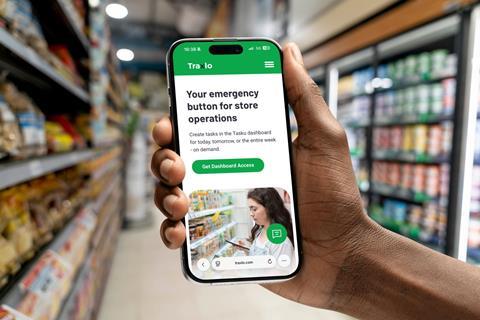
Unlike rival gig work platforms such as Temper, Stint and Brigad, Traxlo sets tasks rather than shift hours, to be undertaken by its ‘taskers’. The platform handles initial legal right-to-work checks and task training on behalf of the stores.
“When [taskers] arrive at the store, they already understand the expectations and are prepared to carry out the work effectively,” the retailer says.
The platform is already in use in Europe, where users include Carrefour, Rewe Group, Baltic retail player Rimi, and Zabka, one of Poland’s largest convenience store chains. Commonly posted tasks include store replenishment, gap scanning, and online picking.
Traxlo’s arrival is “part of a growing trend where retail companies experiment with shifting to self-employment and there is one very simple reason: cost”, says labour market tech expert Alfie Pearce-Higgins.
According to analysis by the Centre for Policy Studies, a combination of tax and minimum wage rises in successive budgets has pushed up the cost of employing a full-time worker on minimum wage by 15% (£3,414) from 2024 to 2026.
The BRC says retail’s employment costs rose by £5bn in 2025.
“It now costs 30% to 40% more to employ a minimum-wage worker than to hire an equivalent self-employed gig worker,” Pearce-Higgins says.
“Most retailers prefer to work with the same staff on a recurring basis so they can build trust and ensure the staff understand their systems. But given the cost pressures, there is a strong incentive to shift to self-employed arrangements.”
What’s more, the early adopter of Traxlo says it is “often the same group of taskers who regularly reserve tasks”.
“They become familiar faces in stores and start to feel like an extension of the existing team rather than gig workers.”
‘Bogus self-employment’

All of the above is positive for the store. However, it opens up Traxlo to criticism from the likes of gig worker policy expert Ben Wray, who says it represents “a classic case of bogus self-employment”.
A worker is hired on an independent contractor basis “but the reality of the working relationship is that of a typical employee”, says Wray. “A shop assistant or a supermarket worker is not an entrepreneur. This should be obvious to anyone with a bit of common sense.
“They have no freedom to decide when and how they carry out the work. They rely on the work space and tools provided, and their labour is tightly controlled by both algorithmic and human supervisors.”
That’s all without full employee protections or sick pay. So the government is facing growing calls to tackle bogus self-employment, including from the TUC, which says that “without proper regulation, there is a risk that we start to see such practices become normalised, creating a race to the bottom” in the labour market.
Those calls are only likely to grow as the Employment Rights Act is implemented this year and next, including provisions such as guaranteed hours.
It is likely to lead to “yet more distortive hiring behaviour”, says the Low Incomes Tax Reform Group. So “now would seem a really good time to tackle this issue”.









No comments yet