






New employment laws make it easier for trade unions to win recognition and give them a statutory right to enter workplaces. What does that mean for fmcg employers – and will workers sign up?
Trade union activity has become synonymous in the popular imagination with 1970s images of uncollected rubbish piles, empty supermarket shelves, rowdy picket lines and a country that had ‘ground to a halt’.
In reality, says Richard Hyman, emeritus professor of industrial relations at the London School of Economics, a “very detailed study of the years when strike levels reached their peak found that just 3% of British workplaces experienced a strike. But that’s not the image anyone would believe.”
It’s a perception that has changed the law. Workers have “far fewer rights in this country than in most of Europe”, says Hyman, and unions have been treated with scepticism at best for more than 50 years. That is reflected in their popularity, with UK trade union membership at historically low levels in most industries.
“There’s been a great bulwark of obstacles to them, all reflecting the view that trade unions were a bad thing, that they didn’t represent workers and that all they wanted to do was strike,” Hyman adds. “There was never much truth in that conception.”
Now that bulwark is coming down. The end of last month saw the final measures brought in under the Plan to Make Work Pay and Employment Rights Act 2025 take effect.
A staggered implementation of the reforms started in December 2025. And while the Act covers numerous areas of employment (see box, p30), a swathe of new rules on trade union access, membership and rights took effect on 30 October – with just one more to follow in January.
Trade union rule changes at a glance
December 2025
- Repeal of the Strikes (Minimum Service Levels) Act 2023
18 February 2026
- Repeal of the majority of the Trade Union Act 2016, simplifying requirements on unions
- Removal of the 10-year ballot requirement for trade union political funds
- Simplification of industrial action notices and industrial action ballot notices
- Introduction of new protections against dismissal for taking industrial action
1 April 2026
- Repeal of the levy that unions and employer associations pay to the certification officer
6 April 2026
- Simplification of the recognition process for trade unions: specifically, removal of the likely majority test on application and removal of the 40% support threshold in recognition ballots
25 August 2026
- Introduction of electronic and workplace balloting for statutory trade union ballots
30 October 2026
- Strengthening of trade unions’ right of access
- Implementing reforms to access and unfair practices during the recognition and derecognition process, and all remaining trade union recognition measures
- New rights and protections for trade union representatives
- Extending protections against detriments for taking industrial action
January 2027
- The duty to inform workers of their right to join a trade union
Of the 13 new regulations, experts agree the most significant changes will be those that simplify the trade union recognition process and strengthen unions’ access rights.
A recognition agreement is a formal written contract in which an employer officially recognises a trade union and gives it the right to negotiate on issues such as pay, hours, holidays, working conditions and more on behalf of a group of workers.
The reforms make it easier for unions to secure that status by removing two tests that previously acted as obstacles: proving likely majority support before an application and securing votes from at least 40% of the whole workforce in ballots on recognition.
Unions’ access rights have also been expanded. They now have a statutory right to enter workplaces either physically or digitally, even where they have little or no existing presence, in order to meet, support, represent, recruit or organise workers and facilitate collective bargaining – although they cannot use that access to organise industrial action.
“These are some of the most significant workplace reforms we’ve seen in many years, so it’s understandable they’re attracting attention from both employers and trade unions,” says James Goodman, chief people officer at Asda.
“The focus for employers will now be on understanding the practical implications and implementing the changes in a way that supports constructive dialogue between businesses, employees and trade unions.”
‘Nothing to fear’: expected outcomes
The potential impact of these changes has got the unions excited, particularly the reforms around access, which Stuart Fegan, the GMB Union’s national officer responsible for members employed in retail, describes as “the key change, as this places worker access (mostly in employers that don’t recognise trade unions) on a statutory footing for the first time in the UK”.
He admits, though, that unions will need to “make sure we do not allow the fast pacing of the fmcg industry to undermine these new access arrangements”.
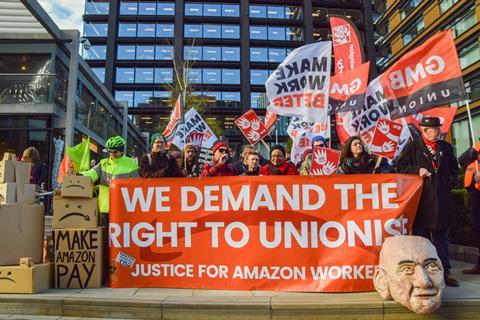
Joanne Thomas, general secretary of the Union of Shop, Distributive and Allied Workers (Usdaw), is equally effusive. “I think these changes will have a dramatic impact,” she says. “There are some employers – the Amazons of the world – who haven’t been open to talking to unions before.
“The changes will give unions the opportunity to engage with workers and organise them, and we think these new access rights will result in trade union recognition being the norm for employers.
“There’s nothing to fear here. It’s a good thing. We want businesses to be successful. I just think some employers might not see it like that. So my strong message to them would be: take another look at this and at least start engaging. It’s happening anyway, so you’ve got nothing to lose.”
Among the unions The Grocer spoke to, there’s little doubt that the ultimate outcome of the reforms will be greater trade union activity and an uptick in membership across the grocery and retail sector. Liz Cotton, a partner in the employment team at law firm TLT, agrees and suggests some measures companies should take.
“Larger, non-unionised fmcg employers in particular could become early targets for recognition,” reckons Cotton. “Fmcg employers should therefore be reviewing employee engagement and preparing their HR and management teams for the changes.”
Whether greater union access is welcomed or worrying likely depends on an employer’s current attitude to unions. At Asda, for example, which has broadly positive relations with unions, Goodman thinks “potential upsides” will include “stronger employee voice and greater engagement between employers, employees and trade unions.
“If that leads to earlier conversations and more collaborative problem-solving, that’s a positive for everyone involved.”
The main challenge, he points out, will be implementation – although that’s the case with any significant regulatory change: “Businesses will need time to adapt processes and understand their new responsibilities, but that’s a normal part of adjusting to any major reform.”
The Grocer contacted seven supermarkets for this piece and, apart from Asda, interview requests were either ignored or declined.
The British Retail Consortium’s director of policy, Tom Ironside, points out that “many retailers already have constructive relationships with unions” but feels “these changes risk undermining them by imposing excessive and disruptive demands on employers.
“Weekly access to multi-site workplaces at short notice could cause serious operational disruption without clear benefits,” he adds, although the government’s code of practice on the right of trade unions to access workplaces states both parties should “be considerate and mindful of the other party’s perspectives”, with the frequency of visits intended to be agreed between the employer and the union as part of an access agreement.
Ironside also feels that “digital access is still too loosely defined, and there is a lack of clarity over when and how it will be used. The significant cost and administrative burden the changes will create will divert investment away from retailers’ people and infrastructure.”
Aldi, Lidl and M&S are comparatively non-unionised among the major grocers. Other employers that appear hostile to unions “have everything to fear from the regulations, as they push the balance of trade union recognition back towards the wishes of their workforce rather than management”, says the GMB’s Fegan. “Generally, though, I believe the industry had accepted this is legislation that was promised by an incoming Labour government upon election, and most have embraced it.”
Multiple sources say that certain fmcg businesses have engaged in “scaremongering” when it comes to union membership and/or recognition. And Usdaw’s Thomas says the industry’s reaction has so far been “hit and miss”.
“It’s dependent on the employer whether or not they’re engaging with this,” she says. “We’re having some really productive conversations. Some of them are being really good, others are just absolutely pretending this isn’t happening. But it is happening.”
She then asks, rhetorically, whether businesses where her union already operates are losing profit as a result. The answer, she says, is a firm “no”.
“They’re managing to pay their staff decent rates, have given them decent terms and conditions – all the good things. And we’re enhancing that. So for anybody to say this is going to be costly for the business, I think there’s hundreds and hundreds of examples where it’s not,” she says.
Why were law changes needed?
Even so, the new rules were clearly brought in for a reason – or, more likely,several. First and foremost, Fegan believes, it’s a recognition by the government that “far too many employers previously undermined the right of workers to join a trade union by thwarting access to their workforce”.
Legal access to workers was certainly a key reason for the legislation – Thomas says Usdaw “often” speaks to workers who are unhappy with their conditions, pay or other aspects of work but are in an unorganised workplace because their employers refuse to recognise unions.
This can happen in smaller workplaces where HR and similar structures are a little behind, but it also happens at larger employers, Thomas says, because such structures “can get lost” amid a heavy focus on KPIs and targets.
New rules were also needed, she says, because “we’ve come up against businesses injecting fear into their employees and creating an environment where if you’re a union member you can be faced with the sack or you’re treated substantially differently to your other colleagues.
“Some employers will spend millions on union-busting tactics – they’re really, really fearful of having a trade union there. And I think you’d have to ask yourself the question: why is that? There’s a whole range of reasons why we needed new legislation.”
She also sees unions as essential because “more and more people we speak to haven’t got access to a decent life. It’s not just about pay, it’s access to decent contracts – people feeling like they have job security, contractual security, financial security, a decent home, that they can have a holiday once a year. That’s not something that happens anymore. I think we’ve evidenced for many years that we help deliver those things.”
‘Good working relationships’
Of course, not every employer is hostile. So, what’s the general outlook for fmcg-adjacent unions in 2026?
Thomas says that “good employers” actively want to hear what unions have got to say and is loathe to “pick favourites” because “we’ve got good, constructive working relationships with lots of employers” in the sector.
That said, Usdaw has “been doing some really good work recently with Tesco, Sainsbury’s and the Co-op in particular. Tesco, for example, recently became the first to broker a policy around time off for domestic violence. It’s the first retailer to do that through a trade union. It’s groundbreaking.”
It’s a similar story at Asda, where Goodman says they “see trade unions as an important part of our colleague voice. They play a valuable role in helping us understand the views and concerns of their members. While we won’t always agree on every issue, the best outcomes come when we work together to understand concerns and find solutions.”
The key problem for unions in 2026 is membership numbers. Usdaw tells The Grocer that, according to the ONS, just 12.2% of retail and wholesale workers were union members in 2025 – an increase from 2024 when it was 10.4%. And although the ONS doesn’t break the figures down for different types of retail, Usdaw “would expect that number is consistent for food and drink”.
Membership density is better in the distribution part of the industry, according to the GMB’s Fegan, though he admits there’s much to do on the retail side of fmcg, where many people often work part time.
“It’s very low in the private sector,” admits Thomas. “That’s appalling to me. I want to do something about it, and I think this is where access rights can help us. People having access to a decent life helps society, it helps people’s mental health, it helps their finances. We need to get back to where people feel that being in work pays, and that’s a huge priority for us in the trade union movement.
“There’s a big prize here. And a lot of employers recognise that. We’ve got agreements with Tesco, the biggest private sector employer in the UK, as well as with Unilever, Sainsbury’s, Morrisons – many big, well-known names. They actively want us representing their staff, because we have good results.”
Looking ahead, though, unions getting improved access to fmcg workers may be one thing, but convincing them to join and organise is another.
For one, the membership fee is a factor, especially during a cost of living crisis. Joining Usdaw, for example, costs £2.98 per week. Not a fortune by any means, but for a single parent working in a supermarket, for example, that nearly £13 a month could be very useful elsewhere.
There is also, Thomas admits, plain and simple apathy, which can then be exploited by commentators and certain politicians “peddling fear and banging on about the voice of workers but voting against the likes of the Employment Rights Act every single chance they could in Parliament”, she says.
“It’s hard to organise any workplace. It shouldn’t be, but it is. Do people see value in joining a trade union? We have to make sure we relentlessly focus on making sure we win that argument – forget about legally, the first people we need to convince are the workers themselves.”
Four other key changes under the Employment Rights Act 2025
By Liz Cotton, partner at UK law firm TLT
Unfair dismissal rights and tribunal limits
From 1 January 2027, employees will gain unfair dismissal protection after six months of continuous employment rather than two years. Alongside this, the compensation cap will be removed. Separately, the time limit for most employment tribunal claims was extended from three to six months from 1 October 2026. Grocers should expect more claims, greater financial exposure in senior exits and tougher settlement negotiations. They should address performance issues early, strengthen recruitment and probation processes, train managers and retain relevant evidence.
Third-party harassment
From 30 October 2026, employers must take ‘all reasonable steps’ to prevent sexual harassment and third-party harassment of employees during the course of their employment. This is particularly relevant to fmcg employers whose employees regularly interact with customers, contractors, delivery drivers and other third parties. Employers in the sector should make sure they update their risk assessments, policies, reporting procedures, third-party safeguards and staff training in line with the legislative changes and the EHRC’s updated technical guidance.
Collective redundancies
From 2027, collective consultation will be triggered where an employer proposes making 20 or more redundancies at one establishment, or a still-to-be-confirmed number across an organisation within 90 days. The maximum protective award doubled in April 2026 to 180 days’ gross pay per affected employee, and that potentially rises to 225 days where the statutory code is breached. The changes mean that multi-site fmcg employers should track proposals centrally, allow longer consultation lead times and reflect increased financial exposure in their restructuring decisions.
Fire and rehire
From March 2027, a dismissal will be automatically unfair where an employee is dismissed for refusing certain restricted contractual changes, or where they are re-engaged or replaced (to carry out substantially similar duties) on terms that include a restricted change. Restricted changes include reductions to pay or holiday, changes to pensions or working hours/patterns, but not currently duties or workplace location. A narrow financial difficulties exception applies. Fmcg employers should audit terms, engage employees early and allow sufficient consultation time.










No comments yet