




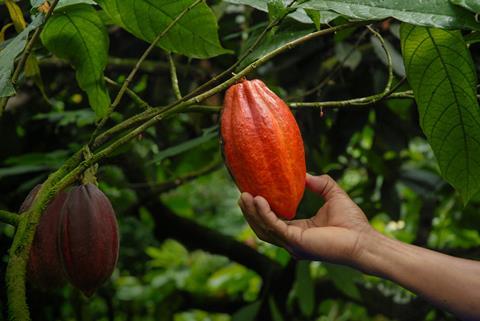
The soaring price of cocoa has forced a quiet but significant reset across the grocery aisle. Nowhere is the pressure more acute than in biscuits, confectionery and desserts, where chocolate is not just an ingredient but the essence of the product itself.
As cocoa prices have surged to historic highs over the past year, manufacturers have been pushed to rethink how they protect margins without losing shoppers.
Some have taken the most direct route: reformulation. Products like McVitie’s Club and Penguin have adjusted recipes, incorporating alternatives such as palm oil and shea butter to reduce reliance on cocoa; in some cases even shifting labelling away from “chocolate” altogether. But for many brands, particularly those with decades of heritage, this kind of visible change is a last resort. Taste, texture and trust are hard won and easily lost.
Broken brand promises
The challenge is that visible reformulation can quickly collide with brand equity. McVitie’s Club is a case in point: a product long associated with the promise “if you like a lot of chocolate on your biscuit, join our Club” faced understandable backlash when it reduced chocolate content. When a product’s positioning is built around abundance or indulgence, even small shifts can feel like a broken promise.
Recent consumer reaction to changes in Reese’s Peanut Butter Cups shows how quickly these adjustments can become visible when taste or texture shifts cross a certain threshold.

This is where a different strategy is emerging. Rather than quietly changing the product, some brands are changing the narrative. Newer entrants, such as Candy Kittens with its chocolate-adjacent innovations like Treets, are built on more flexible positioning from the outset, allowing them to experiment with alternative ingredients without the same consumer expectations.
The result is often more niche, but also more resilient. In time, more established brands may follow, evolving their positioning to reflect the reality of their products rather than trying to preserve legacy promises that are becoming harder to sustain.
Shrinkflation vs premiumisation
Brands are also pulling other commercial levers. Shrinkflation remains a familiar tactic, with portion sizes quietly reduced or multipack counts adjusted; something seen across a range of Cadbury formats in recent years, as well as Mars multipacks, where unit counts have shifted.
Some brands are taking the opposite approach, with a pivot towards premiumisation. Rather than dilute the product, some brands are choosing to justify higher price points through smaller, more indulgent formats. Lindt has long played in this space, but we are now seeing more mainstream brands adopt similar tactics, alongside premium entrants such as France’s staple biscuit brand, Lu, entering the UK biscuit aisle with a focus on quality ingredients and indulgence.
At the more experimental end of the spectrum, a handful of players are exploring a future that reduces dependence on cocoa altogether. Startups such as NotCo and Voyage Foods are developing “beanless chocolate” alternatives, using ingredients like sunflower lecithin, grape seeds and precision fermentation to replicate the sensory profile of chocolate.
What makes this moment more complex is that cocoa prices have already started to fall back from their peak, but shoppers are unlikely to see that reflected on shelf any time soon. Pricing in chocolate is undergoing a reset, with manufacturers cautious about unwinding increases in a still-volatile market, particularly against a backdrop of geopolitical uncertainty that could quickly drive costs back up again.
But there is a deeper question emerging for the category: even if cocoa prices fall, should chocolate become cheaper again? Brands like Tony’s Chocolonely are actively challenging that idea. Built on a model of paying farmers a living income, Tony’s continues to hold firm on pricing, arguing that structurally higher prices are necessary to create a more sustainable cocoa supply chain.
For shoppers, the changes may feel incremental; a slightly smaller biscuit here, a subtly different coating there. But taken together, they point to a category in transition. As prices begin to stabilise, the industry faces a choice: return to business as usual, or redefine what chocolate should really cost and what it should stand for.
Patrick Young is MD at PRS In Vivo




No comments yet