




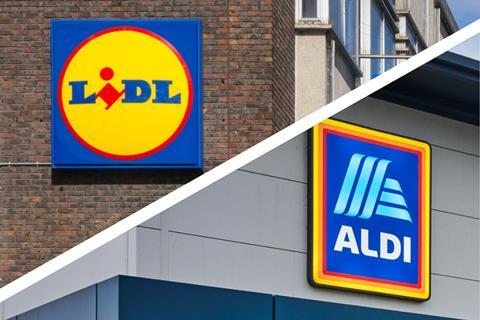
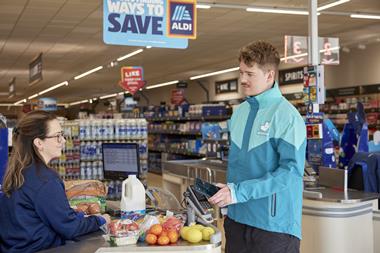
The Competition & Markets Authority has provisionally decided that Aldi and Lidl should face the same land rules as other major supermarkets.
The discounters should be subject to rules set out in the 2010 Controlled Land Order, which already apply to seven of the UK’s biggest grocers – Tesco, Sainsbury’s, Asda, Morrisons, Co-op, M&S and Waitrose – the CMA has said following a review and consultation.
The order bans supermarkets from having clauses in land deals designed to block rivals from opening stores nearby.
“We want everyone to have the best choice of supermarket and range of prices when buying their groceries,” said Juliette Enser, the CMA’s executive director of competition enforcement and markets. “To ensure this happens, we put rules in place to prevent big supermarket chains blocking rival stores from opening nearby – and now we propose applying those rules to Aldi and Lidl too.”
The provisional decision is the outcome of a consultation launched in March. The CMA is yet to deliver a final decision, and is inviting stakeholders to submit views on its provisional findings by 5pm on Monday 7 September 2026. The authority said it would consider these responses before publishing a final decision in October.
“This is about allowing shoppers to choose where they spend their money and levelling the playing field for all major supermarkets,” added Enser. “Today’s proposals are provisional and we welcome views before deciding the best way forward.”
Aldi and Lidl are not currently covered by the 2010 order because they were considered ‘limited assortment discounters’ (LADs), as opposed to ‘large grocery retailers’ (LGRs), when it was drawn up.
The CMA’s provisional findings are that they no longer qualify as LADs because they each have a large number of stores of over 10,000 sq ft, carry a full grocery range, and buy direct from suppliers through their own integrated wholesaling functions.
The provisional decision report said submissions to the consultation “broadly reinforce that Aldi, Lidl GB and Lidl NI are now all widely regarded as mainstream competitors for regular grocery shopping, even though their business models remain distinctive”.
Read more:
Iceland boss urges CMA to get on with decision over Aldi and Lidl
Is it time Aldi and Lidl were roped into restrictive land deals ban?
Why Morrisons calling Aldi ‘attractive’ is a killer point for the CMA
Aldi and Lidl nearly equal in race for UK space, data shows
It said that although Aldi and Lidl still “sell groceries at a low price, we provisionally consider that they no longer sell a significantly more limited range of groceries than LGRs”.
“We also provisionally find that each now offers a broad coverage across the categories of goods defined as ‘groceries’ in the order, can serve as a destination for a main weekly shop for a substantial number of customers, and exerts a material competitive constraint on LGRs.”
An Aldi spokesperson said: “The CMA’s provisional decision does not impact our long-term growth plans across the UK. We remain firmly committed to opening hundreds of new stores across the country, bringing Aldi’s unbeatable value and award-winning quality to even more customers.”
A Lidl spokesperson said: “We note the CMA’s provisional decision regarding our status under the Controlled Land Order. As a discounter, we have always welcomed and embraced competition within the market and our focus remains on continuing to open new stores and bringing our high-quality, lowest-priced groceries to even more communities. Any outcome will not impact our steadfast momentum and growth.”
The initial consultation followed pressure from supermarket bosses for the CMA to level the playing field. In May, it published responses from Sainsbury’s, Morrisons and Iceland, in which they demanded Aldi and Lidl be added to the order. Sainsbury’s said competition was being “distorted” by Aldi and Lidl’s ability “to restrict entry and expansion by competitor grocery retailers in local markets”.
Since 2020, the CMA has named and shamed Tesco, Sainsbury’s, Asda, Morrisons, Co-op, M&S and Waitrose for breaching the order with land deals containing restrictive covenants.
Aldi and Lidl are both aiming to open about 40 UK stores in 2026, as they pursue long-term targets of having 1,500. Aldi currently has 1,088 and Lidl has about 1,020.
Mark Jones, grocery lawyer and partner at law firm Gordons, said: “Given the ascent of Aldi and Lidl since the order was introduced in 2010, going from a combined 5% market share to 21% today, there have been loud and frequent calls from the other major grocers for Aldi and Lidl to be subject to the same restrictions they are.
“Aldi and Lidl were excluded from the order on the basis they operated smaller stores and carried ‘significantly’ fewer products. But times have changed.
“Aldi and Lidl now carry around six times the number of products they used to sell, according to the CMA, and operate much larger stores.”





1 Readers' comment