
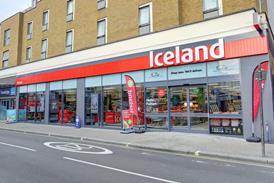




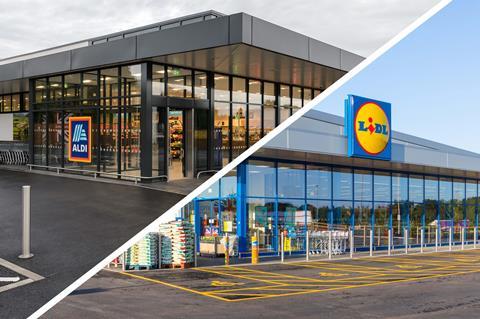
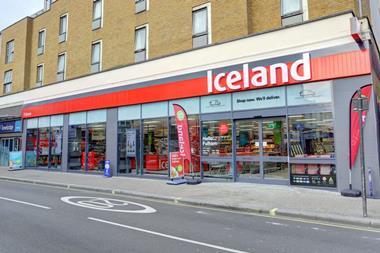
Sainsbury’s, Morrisons and Iceland have told the Competition & Markets Authority that Aldi and Lidl should be banned from using clauses in land deals to block rivals opening nearby.
Competition was being “distorted” by their ability “to restrict entry and expansion by competitor grocery retailers in local markets”, Sainsbury’s said.
The CMA has published responses from the three supermarkets to a consultation on whether a ban against other major supermarkets using restrictive covenants in property deals should be extended to the two discounters.
Seven of the UK’s biggest grocers – Tesco, Sainsbury’s, Asda, Morrisons, Co-op, M&S and Waitrose – have been banned from using the clauses since 2010. Aldi and Lidl were considered ‘limited assortment discounters’ when the legal order was created, distinct from ‘large grocery retailers’ by having smaller stores and much smaller ranges.
“Competition is currently distorted by the asymmetric ability of Aldi, the fourth-largest grocery retailer in the UK, and Lidl, the fifth-largest grocery retailer in the UK, to restrict entry and expansion by competitor grocery retailers in local markets, while equivalent restrictions apply to other retailers of comparable or smaller scale,” said Sainsbury’s in its response.
The three supermarkets argue Aldi and Lidl have changed sufficiently to now warrant inclusion in the 2010 order, including having ranges large enough to cater for a full shop.
Morrisons said: “The UK groceries sector has seen Aldi and Lidl significantly increase their market shares in recent years and open new and larger stores, as they continue to expand their product ranges and compete aggressively and very successfully with the large grocery retailers.
“Aldi and Lidl offer a range of groceries which, in the eyes of the customer, are broad and attractive. Indeed, Aldi and Lidl both advertise to customers that they offer a full range of groceries.”
Pointing to the two discounters’ own market, Morrisons said: “For example: Aldi currently states that its stores offer ‘everything you need (and more!) for your big weekly shop’ across a ‘huge range of tasty groceries’; Lidl tells customers that ‘you’ll find all you need for your weekly shop at great prices in our stores’.
“This is reflected by third party research which shows that customers are doing all of their shopping at Aldi and Lidl.
“Accordingly, the fact that Aldi and Lidl stock fewer SKUs does not mean that they do not offer a full basket of groceries that satisfies customers’ requirements. Instead, it simply reflects the fact that for any given product, Aldi and Lidl stock fewer different brands and/or pack sizes, which does not prevent customers from purchasing all the groceries they need from Aldi and Lidl.”
Iceland said: “It is also pertinent that each of Aldi and Lidl hold themselves out as ‘supermarkets’; advertise ‘groceries’ prominently through their websites and in marketing materials, and directly compare their product offering and prices to that available for purchase from other large grocery retailer, to compete with and induce customer switching from the large grocery retailers.
“It is untenable for Aldi and Lidl to suggest that they offer a sufficient range of groceries which would enable customers to complete a full shop at their stores; but an insufficient number or range of groceries to warrant designation.”
Like Morrisons, Iceland has highlighted some of Aldi and Lidl’s own marketing materials.
Read more: Is it time Aldi and Lidl were roped into restrictive land deals ban?
A response to the consultation from the Association of Convenience stores said: “In recent years, our members observe that Aldi and Lidl have expanded their grocery ranges substantially and are increasingly viewed by consumers as destinations for a broader grocery shop, rather than simply a limited discount offer.”
The ACS has also pointed to the size of Aldi and Lidl’s latest stores. “The order defines a larger grocery store as a grocery store with a ‘net sales area of more than 1,000 square metres’. Aldi and Lidl’s existing store portfolios and opening programmes are centred on stores above this threshold (Aldi require 1,200 sq m or more, Lidl state 1,772 sq m). Therefore, the scale, geographic reach and store formats of the discounters mean that they now clearly resemble other major grocery operators covered by the order.”
The CMA has also published a response to the consultation from Aldi. “The Aldi core range is 2,005 products, representing approximately 7%-10% of the 20,000 to 30,000 SKUs typically offered by large grocery retailers,” the discounter said.
“Even when including any products on ‘trial’ and those considered regionally specific, seasonal lines and groceries included in Aldi’s Specialbuy range, we offer no more than approximately 2,703 grocery SKUs at any time.”
Aldi’s response added: “Beyond product range, our operating model differs fundamentally from large grocery retailers.
“We do not operate e-commerce, click & collect or home delivery services, butchery or fishmonger counters, delicatessens, pharmacies, opticians, cafés, or 24-hour stores. We do not sell tobacco products or newspapers. Our stores are significantly smaller, with a standard net sales area of approximately 1,230 square metres.
“By comparison, the average standard net sales areas of supermarkets operated by large grocery retailers is significantly larger.”
The CMA is due to publish its provisional decision in July and final decision in September.








No comments yet