



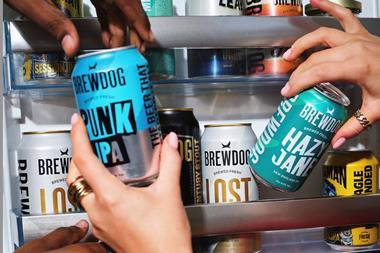
BrewDog has refreshed the recipe for its Punk IPA beer as it looks to turn around sluggish sales of its flagship brew.
The new Punk IPA had been designed to be “cleaner, brighter, punchier and more expressive, without price increases for customers and shoppers”, said BrewDog.
It comes after off-trade sales of Punk IPA fell by 10.1% (£5.9m) on volumes down 10.2% in the year to 19 April [NIQ].
The main change to Punk IPA’s recipe is the introduction of a new krush hop variant.
Krush offered “intense, long-lasting aromatics” and formed the foundation of the new Punk IPA hop bill, alongside the original base hops of simcoe and citra, BrewDog said.
The new Punk IPA was also “lighter, crisper and more drinkable” thanks to “improved water chemistry and reduced speciality malt”, the brewer added.
“We recognise that today’s drinkers expect cleaner profiles, sharper finishes, and more expressive hop character,” said BrewDog CMO Lauren Carrol. “Updating Punk wasn’t optional – it was essential.
“With this in mind, we have built new Punk IPA with absolute intention: cleaner fermentation, sharper drinkability, a lighter base beer and a new hop bill built for maximum aroma impact.
“And unlike many recipe changes, this is not a price move – using modern hops and tighter fermentation control has actually increased our production costs. But Punk IPA is our flagship brand and improving it is a commitment, so we have absorbed the cost whilst keeping the price steady for our customers and consumers.”
In support of the refresh for Punk IPA, BrewDog has launched a new OOH campaign across key locations in London and Manchester.
The push features the strapline ‘Tastes like commercial suicide’ – a reference to the fact the improvements had been made without a corresponding price increase.
Earlier this year, BrewDog announced an internal restructure affecting “a number of roles across several departments” following a year of stagnant sales and mounting losses.
Net revenues at BrewDog in the year ended 31 December 2024 were flat at around £280m, while pre-tax losses remained substantial at £36.6m, down from £59.2m the year prior.


No comments yet