





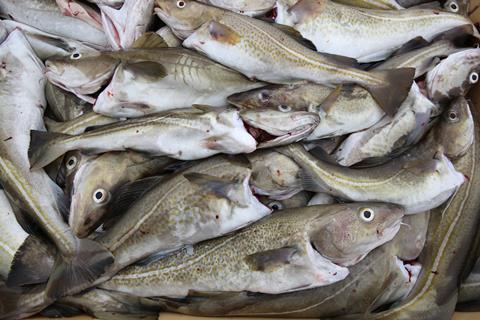
No cod should be caught in UK waters next year, according to the International Council for Exploration of the Sea.
The latest scientific advice has advised there should be a “zero catch” for cod across the North Sea, Irish Sea, Celtic Sea and English Channel next year.
ICES warned that the latest data showed there was a risk the stock would collapse.
Campaigners have urged government to listen to advice that there are “dangerously low numbers of breeding adults in the North Sea” and “barely any cod” in the Channel.
“The truth is simple: UK seas cannot take much more,” said Hugo Tagholm, executive director of Oceana UK.
“Year on year, our government knew the limits, yet it ignored them,” he added. “Year on year, they continued to play into the hands of a few wealthy corporations.
“These industrial titans are asset-stripping our seas for profit, and leaving nature-friendly fishers without livelihoods or a future. Now, here we are, with a stark reminder once again that no fish means no fishing.”
This is the second year in a row that ICES has made this recommendation.
It comes following warnings from ICES over the pelagic stock in the north east Atlantic, advising mackerel catch for 2027 should be 352,938 tonnes.
This week, 29 scientists from universities and research institutes from across Scotland, England and Wales have penned an open letter to the UK government urging it to set catch limits in line with scientific advice to safeguard fish populations, coastal communities and ocean wildlife.
“Following scientific advice on safe catch levels is the foundation of good fisheries management,” said Callum Roberts, professor of marine conservation at the University of Exeter. “For years ministers have set excessive quotas which have led to decline, collapse and economic hardship for the industry.
“You can’t negotiate with nature on how many fish are produced. You have to work with nature’s limits.”
The letter has been published during annual negotiations on setting catch limits for the year ahead.
It stated that: “If scientific advice continues to go unheeded, this runs a serious risk of permanently harming these fisheries and the economies of coastal communities across the UK.”
It added: “The evidence is clear: fishing in line with the science works. It can deliver a long-term regenerative source of seafood for years to come.”











No comments yet