





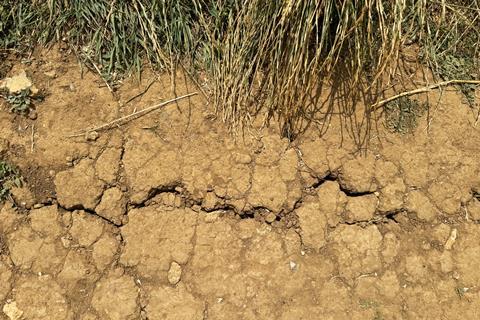
Growers have warned a dry winter would be a “disaster” for next year’s crop.
Grower groups have called for “urgent action” from the government as the Environment Agency warned England will experience worse levels of drought next year should this winter be drier than normal.
Despite more rainfall in September, the record dry spring and hot summer have created “unprecedented dry conditions” which have proved “extremely challenging for farmers”, according to Victoria Vyvyan, president of the Country Land and Business Association.
“Urgent action is needed to minimise the impact of future drought on food production and nature recovery,” she added. “Most farmers have already committed to next year’s cropping and have limited opportunity to adapt this.”
The CLA has called for flexibility on abstraction licences to capture available water during high-flow conditions, the reopening of the Sustainable Farming Incentive, and for it to be cheaper and easier to build on-farm reservoirs.
“This year growers have literally used every last drop of available water to keep the crops in good order,” said John Walgate, British Growers Association CEO. “We now need winter rainfall to replenish reservoirs.”
He added that “a dry winter would be a disaster for next year” and said planning had to be made easier so that more rainfall could be stored to maintain crop irrigation.
“Sometimes it can take years for approval,” he adds.
Read more:
-
Drought to continue without ‘sustained rainfall’, Environment Agency warns
-
Dry winter is a ‘big threat’ to supply, warns leading grower
This concern was echoed by British Apples & Pears executive chair Ali Capper, who said growers “need improved planning regulation from government and local authorities that enables the creation of winter storage reservoirs and enabling policy framework that makes it a priority to provide water to grow food”.
She said that while it was early in the season and too soon to know the impact for sure, “prolonged drought would be serious for top fruit growers as they are dependent on the ability to abstract and water and irrigate crops”.
This week the Environment Agency said water efficiency must become a national priority, adding that the current amount taken out of rivers, lakes and groundwater is not sustainable.
“Climate change and population growth are putting a tremendous strain on resources and this year’s drought is a stark reminder that we all need to be more mindful of our consumption,” said Helen Wakeham, EA director of water.
She called for a concerted effort by water companies, regulators, the government and the public to work together and protect “this precious resource”.
It comes as the EA’s Drought Prospect Report analysed three different rainfall scenarios over winter and what their implications would be for water security ahead of next year’s drier months.
In its most pessimistic projection, which considered if England only received 60% of its average rainfall, the entire nation would be in drought by spring with the “potential for permanent environmental damage.”
“While it’s not possible to definitively forecast weather for the next three months, the chances of a dry period are higher than normal,” said the Met Office’s chief meteorologist Will Lang. “A more average three-month period for rainfall is still the most likely scenario.”




No comments yet