



Shoppers sought out private label and dine-in deals during February as budgets remained under pressure, according to NIQ data out this morning.
Total till sales at UK supermarkets increased 3.3% in the four weeks to 21 February, but volumes declined by 0.8% – a bigger fall than January’s 0.6%.
Inflation continued to ease slightly in the month, decelerating from 3.9% to 3.5%. However, budget-conscious shoppers are now purchasing less and altering buying habits.
In addition, the impact of a decline in consumer confidence (GfK’s index fell to –19 in February, from –16 in January) was felt by food retailers, with a reliance on shoppers spending more around the key calendar events during this period, including half term, Valentine’s Day, Pancake Day and the run-up to Chinese New Year.
Consumers spent £42m on rice, grains and noodles, as well as purchasing more accompaniments to make up a celebratory Chinese New Year meal occasion, spending £6.8m on oriental cooking sauces (+10.9%) and £3.4m on fresh savoury snacks (+32%).
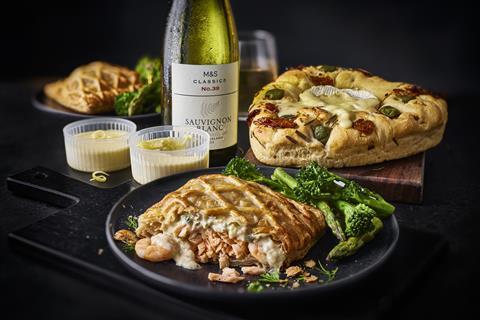
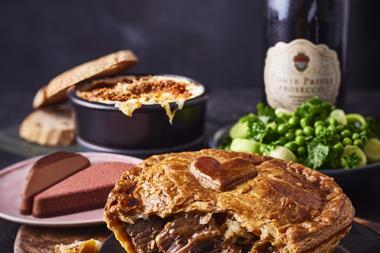
As part of the seasonal dine-in deal offers, shoppers spent £58.5m on own-label ready meals (+3.4%), with 45% being premium SKUs, as an alternative to eating out.
For the first time in over a year, NIQ data showed a dip in the frequency of shopping, alongside a growth in the number of items in the basket, helped by e-commerce. NIQ said that 35% of all growth in fmcg sales since the start of the year had come from online, which remained the fastest-growing channel in terms of value sales growth (9.2%) and continued to increase its market share, which stood at 14.2%.
The reluctance to spend was illustrated with only three super-categories in unit growth: dairy (2.2%), produce (1.3%) and meat/fish/poultry (0.4%). This is supported by data that shows 33% of shoppers are changing the way they shop to save money, rising to 58% for those who feel severely impacted by the cost of living.
And the gap between own-label unit growth (+1%) and branded volumes (–2.2%) continued to widen, with 15% of households switching to save money, 16% choosing cheaper brands and 18% shopping more at discounter stores.
Ocado, which grew sales 14.4% in the 12 weeks to 21 February, continued to gain market share, retaining its position as the fastest-growing retailer, followed by Lidl (+9.9%).
Helped by their respective offers for Valentine’s Day, both M&S (+6.5%) and Waitrose (+6.1%) also gained share, and the frequency of store visits was higher than last year.
Asda and Co-op were the only retailers with negative sales growth in the period, down 4% and 0.6% respectively.
“Many retailers focused on attracting shoppers with a choice of dine-in deals to capture a bigger share of spend at out-of-home channels, with premium offers such as three courses for two people for £25 setting a new and attractive price point compared to eating out,” said Mike Watkins, head of retailer and business insight at NIQ.
“In fact, there was a small increase in basket size in the last four weeks and whilst it is too soon to say if this is a turning point in shopper behaviour, these big events encouraged shoppers to spend more and it’s possible that some are bringing some spend forward to help manage budgets ahead of Easter.”




No comments yet