


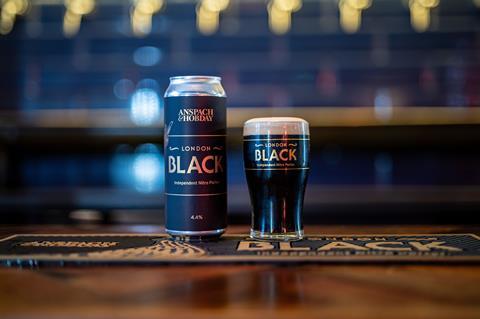
Small independent brewers are yet to fully embrace cans as their preferred format for small-pack beer, despite increased costs associated with glass arising from the government’s extended producer responsibility (EPR) scheme.
The percentage of beer produced by indie brewers in bottles and cans has increased from 16% to 23% over the past decade, new figures from the Society of Independent Brewers and Associates show.
SIBA members were increasingly turning to small-pack as a means to diversify routes to market and reduce their reliance on the on-trade, according to the organisation’s CEO Andy Slee.
“The travails of the on-trade are well documented,” he said. “Not only are there fewer pubs but access to them has become more challenging. So our members have had to look for the alternatives such as bottle shops and local off-trade outlets.”
Cans in decline
However, aluminium cans – which grew in popularity with smaller brewers amid the rise of craft beer in the mid-2010s – have failed to emerge as the small-pack format of choice post-pandemic. The proportion of beer packaged into cans by SIBA members has fallen from 13% in 2021 to 11% last year.
By contrast, the amount of beer packaged in glass bottles has increased by 3% year on year. Despite EPR disproportionally penalising products sold in glass, it has regained its position as the most popular small-pack format among independent brewers.
“The growth in bottles is a surprising finding, given the additional pressure and costs associated with the new extended producer responsibility (EPR) scheme,” said Caroline Nodder, author of SIBA’s Independent Beer Report 2026. “However, it does correlate with growth in web and physical shops among SIBA breweries in 2025, as well as indicating that access to market challenges are likely to have led more breweries to look at wider distribution outside of their local on-trade.”
“It will be interesting to see how this trend develops in future reports, especially as cans might come under pressure when the deposit return scheme is introduced in 2027.”
The challenge faced by independent brewers in raising capital and the high cost of canning lines could also explain why cans were yet to become the default packaging format for small brewers, SIBA’s head of policy and public affairs Barry Watts hypothesised.
“A canning machine is quite an expensive bit of kit,” he said. “Not all breweries are going to be able to afford that. Our report shows 53% of brewers sought no financial investment last year [up from 44% in 2024]. And of those that did, just 9% have actually invested in a canning or bottling line.”
Indie brewers’ routes to market
Despite the drive by small brewers to diversify their routes to market, currently less than one in five SIBA members (19%) sell their beer to supermarkets. This compares to 82% which sell to local pubs, 56% that sell their beer to independent retailers, bottle shops and off-licences, and a third (33%) that sell at local markets and events.
As part of a push to grow the exposure of independent beer in retail, SIBA has partnered with Waitrose to spotlight beer from independent brewers.
The retailer has introduced a new ‘Indie Beer’ section online and is running in-store promotions on beer from independent producers as part of Indie Beer Week between 10-19 April.


No comments yet