



The UK government has said it plans to adopt radical plans for a shift to a mandatory reuse model for packaging, in a move sources say will have huge implications for food and drink companies.
Westminster gave permission earlier this month for the Welsh government to launch a breakaway deposit return scheme after an application under the Internal Markets Act.
However, it turned down a major part of the plans relating to Welsh proposals to set mandatory reuse targets for drinks companies. It said they were not fully fledged enough to get the go-ahead in time for the DRS rollout in October next year,
Yet in the same statement, the government made a bold commitment to not only follow Wales, but to make it part of a wider strategy to end what it calls the “take, make, throw” model.
“The UK government intends to support the Welsh government’s ambitions on reuse,” says the statement released by ministers. “The UK government is committed to working with both the Welsh government and industry as Welsh government develops its reuse policy and continues its leading role on recycling within the UK.
“However, given the reuse policy in Wales is still under development, UK government has been unable to agree a UKIM Act exclusion for this part of the proposal.”
But it adds: “The UK government is committed to transitioning to a circular economy, where reusable and refillable packaging systems are the norm.
“Reuse has an important role to play in ending the linear ‘take, make, throw’ model, reducing carbon emissions, and easing pressure on natural capital.
“The UK government will continue further discussions with the devolved governments on the potential for alignment across the UK on reuse.”
The government announcement has raised alarm bells with sources who are worried about the prospect of another monster wave of costs on the industry from packaging requirements.
One source told The Grocer that while food and drink companies were committed to reducing packaging, the mass shift to a reuse model would come with “huge costs”.
In November, in its response to the Welsh plans, the FDF warned that its mandatory targets would “dwarf” the cost to industry that had been imposed through EPR.
It warned that with supermarket own label making up more than 50% of all sales, packaging specifications were driven in many cases by supermarkets with no ability for producers to override decisions to hit new targets on reuse.
Producers estimated the potential cost of making changes to bottle production could typically require investment of over £1m, which would be crippling for many smaller companies.
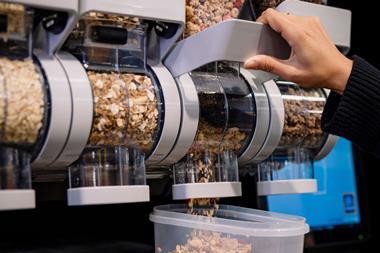
However, supermarkets have agreed to work together in a co-ordinated rollout of a reusable packaging model “at scale” by 2030.
In July last year a statement, signed by nine of the UK’s big food retailers, said that while previous trials had been carried out in isolation, the next phase would be to develop standardised packaging across swathes of products to shift the dial in the war on plastic.
Wrap’s new Packaging Pact, which is due to formally launch next month, has made a shift to reuse a key aim. Research from Go Unpackaged claims that moving to a 30% reuse model could deliver huge financial and environmental benefits for the UK, including a £136m annual saving for producers in packaging EPR costs.








No comments yet