Resurrecting beer brands is all the rage these days.

In the past few years alone, a slew of long-lost brews including Boddington’s, Double Diamond, Hoffmeister and Bass have all been revived or reimagined for a new generation of drinkers.

It should come as no surprise, therefore, that the beer which once lay claim to be the bestselling in Britain is the next off the blocks.

Only this time, Carling Black Label has gone posh.

‘A bold step’

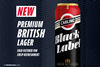
Unveiling the reimagined Carling Black Label last week, brand owner Molson Coors described the 4.7% abv British lager as “a bold step for the brand into the premium segment”.

It’s a step that could be seen as long overdue, with Carling having lost significant ground to more expensive continental lagers in recent years. Last year, value sales tanked 13.6% (£41.0m) on volumes down 12.7% [NIQ 52 w/e 6 September 2025]. The year prior, sales were down 6.9% (£22.2m) on volumes down 13.6%. [NIQ 52 w/e 7 September 2024]. With shoppers abandoning the brand in droves, something needed to be done to arrest the slide.

And Carling’s answer to the likes of Moretti and Madrí certainly looks the part. The retro-inspired packaging is smart and functional, calling out the brand’s British provenance while also being clearly differentiated from the regular Carling on shelf.

“The branding looks great. Its really punchy and it doesn’t look too twee or too retro,” says brand and marketing guru Mark McCulloch.

That the brew is made with 100% British barley will also appeal to those of a more, ahem, patriotic nature. Molson Coors will have no doubt eyed the success of Jeremy Clarkson’s unashamedly British Hawkstone Lager and thought “we can do this for the masses”.

“Its audience will be more patriotic people than left-wingers,” McCulloch says. “If you’re the marketing director at Carling you’ll be thinking ‘let’s get Danny Dyer or Thomas Skinner in to advertise it’.”

Duty play?

The launch also opens up the possibility of Carling Original being dialled down to 3.4% abv to take advantage of duty savings on lower-strength beers.

While Molson Coors may be reluctant to meddle for fear of backlash from Carling’s loyal drinkers, drinkflating its flagship brew and adding Black Label at 4.7% abv would create a sensible value-premium price ladder, enabling it to compete with the likes of Carlsberg and Foster’s on price while also facilitating trade-up within the Carling brand.

Plus with both Carlsberg and Coors seeing off-trade volumes bounce back after abv reductions in recent years, there’s a genuine case to be made that Carling Original should drop to 3.4% abv. Bringing Black Label back is an effective way to soften that blow.

Molson Coors insists that while Black Label’s higher alcohol content supports its upmarket positioning, “it isn’t the full story”.

“We are launching Black Label with its own distinct identity, from its branding and packaging to the way we’ll communicate it,” says brand director Ryan Mclaughlin. “The beer… has been crafted to deliver a fuller-bodied, richer flavour profile and a more intense taste experience.”

But whether Carling – a brand that has for the past 30-plus years traded off its reputation as a mainstream, no-nonsense lager for football lads – can successfully premiumise remains up for debate. For many, the brand’s lack íof pretension is part of its appeal, and previous attempts to turn the lager into something it isn’t (see Carling Premier) have had mixed results, at best.

“If you’re Molson Coors you’ve already got Madrí going gangbusters and Staropramen and Prava. You don’t really need a premium Carling brand extension,” says beer writer Pete Brown. “I remember when Carling started using the 100% [British] barley claim a few years ago and most Carling drinkers turned around and said: ‘I don’t want that, keep making it out of chemicals like you always have!’”

Wrong connotations

Then there’s the fact that – even for those with fond memories of the beer – Carling Black Label could actually have the wrong connotations.

Reviving the name was a way of honouring Carling’s roots “while evolving the portfolio in a way that reflects how the category is moving,” insists Mclaughlin. But the original Black Label was never pitched as an upmarket, aspirational brew. In fact, then-owner Bass Brewers ditched the moniker in the late 1990s as it felt the beer needed modernising.

That makes the decision to bring back the name for a posh line extension a curious one. If Black Label was seen as too old-fashioned and unsophisticated 30 years ago, why bring the name back now?

“If you’re under the age of 30, the name Black Label means nothing to you, and if it does mean something to you then it reminds you of cheap cooking lager from the ’70s,” Brown adds.

Nostalgia can be a powerful selling tool, but only if consumers have genuinely fond memories of the thing you’re trying to evoke. Otherwise, you’re just reminding them of all the reasons why they stopped buying it in the first place.

That feels like a lesson Carling may have forgotten.