






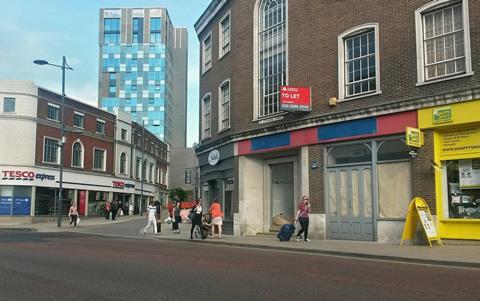
Half of the convenience stores and vape shops on some high streets are suspected to have links to organised crime, according to a poll of Trading Standards officers.
And up to a third of American candy stores, and one in four fast food takeaways, in some areas are thought to be fronts for crime gangs by enforcement officers, the poll found.
The findings were published today in a report by the Chartered Trading Standards Institute (CTSI), which said the ubiquity of the dodgy stores – the site of crimes including the sale of illegal vapes and tobacco, counterfeiting and piracy, and food fraud – is “being underestimated as to how lucrative it is for organised crime gangs and how dangerous it can be to consumers”.
CTSI’s members also considered the presence of organised crime gangs on the UK’s high streets to be biggest emerging threat to consumers and businesses. Some 96% said that they had encountered organised crime within their duties and 97% were aware of suspected organised crime groups operating out of retail premises on their local high street.
While not a new phenomenon, “the scale and prevalence” of crime gang influence and ownership on UK high streets “is now such that it really does pose a serious national threat to our economy and wider society” said John Herriman, chief executive of CTSI.
These groups “are increasingly professionalising and their tentacles reach beyond selling goods on UK high streets. Such groups operate in vast and organised international criminal networks, with extensive shadow supply chains, warehousing and logistics,” he added.
Such gangs may also engage in wider criminality, such as modern slavery, child sexual exploitation, and supplying drugs, the report notes.
A consumer survey found the rise of illicit influence on the high street has not gone unnoticed by shoppers. Almost two-thirds (61%) of Britons think there are too many vape shops on their local high street, and more than half (52%) think there are too many barber shops. These cash-intensive businesses are the focus of the National Crime Agency’s Operation Machinize, which late last year seized more than 100,000 illegal vapes, 4.5 million illicit cigarettes and 622kg of illegal tobacco in a major operation targeting them.
As part of the report, Trading Standards professionals were asked to self-identify places in their region that they considered hotspots for organised criminality, based on their experiences. The top 10 crime hotspots, according to the survey and supplemented by data from the Anti-Counterfeiting Group, were found to be Birmingham, Liverpool, London, Bradford, Manchester, Leeds, Coventry, Sheffield, Huddersfield and Brighton.
Nevertheless, the problem spans “towns and villages across the UK – not just in urbanised centres” the CTSI noted.
The CTSI said heat-mapping the crime hotspots suggested two “corridors of crime” – one stretching from Liverpool on the west coast to Hull and Grimsby on the east coast and another encompassing a string of coastal settlements across Dorset, Hampshire and Sussex.
The report – Hidden In Plain Sight – also found almost three-quarters of Trading Standards professionals said that they had been physically assaulted, threatened with violence, or experienced intimidatory behaviour in the course of their duties.
The CTSI is calling for increased funding, intelligence sharing, and stronger enforcement powers to help it “reclaim the UK’s high streets”.









No comments yet