






Pressure is set to intensify on retail and consumer businesses in 2026, according to the latest Weil European Distress Index.
The European retail and consumer industry – which in Q4 completed a full year as the most distressed of all sectors – will face even more pressure on liquidity and profits this year.
In the UK, corporate distress is expected to rise as persistent cost inflation, weak demand and tighter consumer spending continue to squeeze margins. Weil warned that the sector’s headwinds would only strengthen as rising input costs such as the increase in UK minimum wage fed through more fully in 2026.
The sector’s woes are indicative of an unstable corporate landscape throughout Europe, where different industries face completely different head or tailwinds in a “widening divergence” in performance.
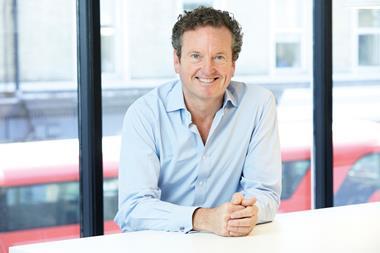
“A modest easing in the aggregate index at the end of 2025 should not be mistaken for a broad-based recovery,” said Neil Devaney, co-head of Weil’s London restructuring practice.
“Distress remains persistent and increasingly uneven, driven by pressure on liquidity and investment. That divergence is most pronounced in retail and consumer goods, which is set to be the most challenged sector in 2026.
“The sector is becoming more polarised, with smaller and mid-sized retailers under the greatest strain, while businesses with stronger balance sheets and established omnichannel models prove more resilient.
“In the UK, recent budget measures – including higher National Insurance and minimum wage costs – are set to add further pressure into 2026. With growth expected to offer little relief over the coming years, these pressures are unlikely to ease quickly.”
Read more: Retail suffered a ‘drab’ Christmas as growth slowed, says BRC
Small comfort this quarter is the UK’s shift down to third place, as France took rank as the second most distressed market in Europe behind Germany.
“The outlook for Europe’s largest economies in 2026 is defined less by a single trajectory and more by pervasive uncertainty,” said Devaney’s co-head of Weil’s London restructuring practice, Andrew Wilkinson.
“In particular,” he added, “the challenges around structural shifts – from the adoption of GenAI, rapid increase in defence spending, debt burdens at sovereign level, US-EU relations and climate transition – alongside general geopolitical and policy uncertainty, are weighing heavily on investment decisions.
“Elevated financing costs and fragile demand are pushing firms to prioritise liquidity over long-term capital deployment, reinforcing uneven distress across sectors and countries.
“Germany, the most distressed market in the index, is a particular concern, although the government’s stimulus programme could help ease pressure over time, with Industrials and Infrastructure best placed to benefit.”







No comments yet