



Food and drink suppliers looking to pass on cost increases caused by soaring transport and energy costs have hit a brick wall of resistance from supermarkets, an exclusive survey for The Grocer has revealed.
A survey of 40 suppliers this month by retail consultancy The Retail Mind revealed that while more than 85% of suppliers surveyed had passed on inflation to retailers this year, only one in five of those had been able to recover their costs.
The survey shows a majority of suppliers expect to have to return with a flood of further requests for CPI increases later this year (54%), while 73% expect to need to pass on more inflation next year.
Suppliers responding to the Retail Mind survey said increased fuel and transport costs were by far the dominant reason for CPI requests, with 94% of retailers citing them. Seventy-nine per cent cited energy costs, 78% higher wage and National Insurance contributions and 73% increases in ingredient prices.
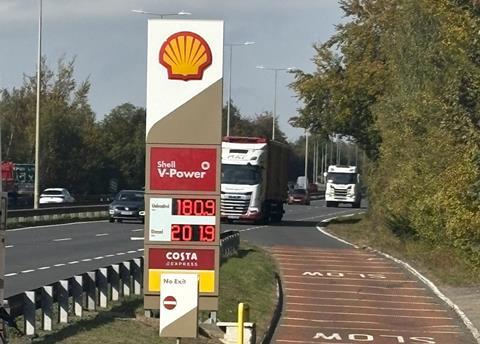
Diesel prices soared to an all-time high of almost £2 a litre according to the RAC yesterday, as the war in the Middle East continues to push up the cost of fuel.
The levels of increase asked for were in line with overall Inflation, with 76% asking for 6% or less, whereas less than 15% had requested increases of over 10%, according to the survey.
Asked which retailer was the most difficult to deal with on CPIs, Tesco came top (26.5%).
One supplier said: “Tesco make you jump through hoops and then take an age to respond and then come back and say they haven’t seen the same challenges.”
Morrisons was cited as the second most difficult to deal with (17%).
The findings come as it emerged the Groceries Code Adjudicator Mark White is to begin talks with retailers next week, promising to “take action” on their behaviour over CPIs.
White told yesterday’s GCA conference in London that despite publication of his “seven golden rules” in 2022, which laid out a voluntary set of guidelines for supermarkets to follow, there were still claims of supermarkets treating suppliers unfairly in their battle to keep down prices.
CPI challenge
Lois Harmer, research manager at YouGov, presented a deep dive into the GCA’s annual suppliers survey, featuring in-depth interviews with 28 direct suppliers across the food and drink sector. She said that CPIs were “one of the most challenging areas of relationships”.
“Experiences are incredibly inconsistent,” she added. “Some suppliers describe really great and constructive relationships and buyers willing to engage.
“Others complained of extended periods of silence, increased resistance to CPI requests and that includes flat-out refusals to engage.
“It’s also worth pointing out that lengthy cost justification forms now appear to be a standard procedure in the CPI process.”
The deep dive report states supermarket buyers are “under even greater pressure to resist or minimise CPIs”, despite clear cost pressures on suppliers.
“Cost conversations operate from a more volatile baseline; fallout from the US-Iran war comes on top of pre-existing, competing pressures. Increasingly complex cost justification processes make negotiations harder, with longer periods of non-response, more last-minute decisions and frequent stalemates.”
The report found that fresh, perishable, and weather-dependent suppliers were most exposed to cost pressures, often faced with intense supply chain volatility, and expectations of honouring guaranteed pricing agreements.
And while some suppliers with stronger bargaining leverage may refuse to supply retailers as a last-resort negotiation tool. Suppliers with weaker leverage continue to defend their position through cost competitiveness, or increasingly, adapting their commercial models, for example through order-by-order pricing and temporary surcharges.
Ged Futter, founder of The Retail Mind, told The Grocer: “As our survey shows, inflation is stubborn and shows no sign of abating.
“If anything, 2026 has been a quiet year but it’s going to be the calm before the storm. I’m expecting 2027 to be more turbulent,” he added: “When retailers deny suppliers the inflation they need by by putting up this brick wall, it just adds more stress to a supply chain that is already under pressure.
“We know that energy prices will be increasing and now we are hearing that diesel availability is stretched. If it is rationed then that has the potential to really impact food availability, especially as we are entering the time of year when imports start to increase.”







No comments yet