




For small and medium-sized businesses, selling online could seem a daunting prospect, particularly in the early stages of brand development. However, the backing of an experienced e-commerce retail partner to help accelerate performance can make all the difference.
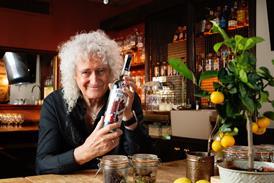
Only four years since its launch, bodycare brand Luna Daily has already secured millions in investment, a string of major high-street listings and global expansion, with its microbiome-balancing products landing in leading US retailers in 2023.
But that track record didn’t stop founder Katy Cottam from seeing how “invaluable” further insight and support from an online retailer like Amazon could be, which is why, earlier this year, the founder was one of nine European start-ups to participate in the retailer’s Sustainability Accelerator.
The nine-week programme, now in its fifth year, is designed to help early-stage brands scale responsible products, with workshops, mentorship, a network of like-minded founders and training that runs the gamut from content strategy to how to avoid burnout as a founder. The 2026 cohort also includes a Danish brand turning surplus bread into pasta, a milk alternative made from brewers’ spent grain and a UK-based organic skincare range.
The accelerator, one of several created by Amazon – all designed to offer support for SMEs as they navigate the complexities of retail and early-stage growth – is a win-win. For FMCG founders like Cottam, the payoff is expertise and exposure to senior leaders at a time when scale has rarely been harder to come by. It’s also part of Amazon’s wider effort to bring customers the most innovative and responsibly made products, by helping the brands behind them grow.
“A focus on innovation is really important, even when times are good. But when they are bad, it’s non-negotiable”
– Anthony Impey, chief executive, Be the Business
The non-negotiables for growth
Battling inflation, dampened volumes and fierce competition means it has rarely been harder for FMCG SMEs to gain their footing and grow, which is why joining a cohort of like-minded founders, backed by the expertise of an experienced retail partner, can be a gamechanger.
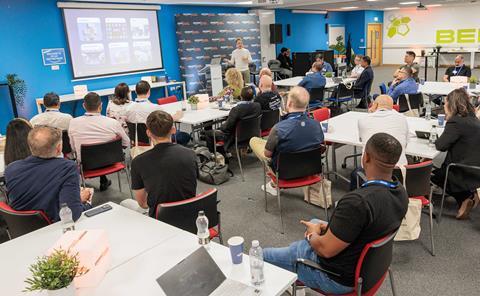
Amazon itself started as a small business with big ambitions and is keen to pass on the learnings of its own growth strategies to ambitious SMEs, notes Anthony Impey, chief executive of charity Be the Business, which – as of this year – runs the Amazon Innovation Accelerator, another of the versions launched by Amazon to provide insights to early-stage businesses. The free six-week programme, now in its fourth year, is unique in being primarily hosted at Amazon sites across the UK. It draws on best practices of Amazon teams, as well as technologies used on site, to help businesses develop and scale product and service innovation.
“That focus on innovation is really important, even when times are good,” says Impey. “But when times are bad, it’s non-negotiable. You’ve got to do it because if you don’t, you can’t get through the unpredictability that we’re all going through.”
The programme kicks off with a day-long workshop. Participants get a behind-the-scenes tour of a facility before a run-through of some of its fundamental leadership principles on how to innovate effectively. That includes its ‘Working Backwards’ approach, which encourages business owners to start by articulating their final product or concept via a press release that describes the ventures and even lists responses to FAQs. “It’s a very powerful way of putting together a growth plan for a business because you’re able to think about what this new idea would look like and anticipate some of the challenges and opportunities that it would create,” explains Impey.
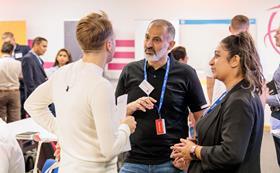
Following the intensive day-long workshop, SMEs have access to six weeks of follow-up support, including further training and access to digital resources, as well as peer-to-peer networking. “At the end of the six weeks, businesses have got a very comprehensive understanding of the way that they can introduce innovation into their business,” he notes.
The final step is to submit an innovation pitch to Amazon’s Innovation Accelerator Challenge prize, using that ‘Working Backwards’ approach, with a handful selected to receive financial backing of up to £100,000. Last year’s winners included London-based Kwerky Foods, which is creating the world’s first fully dissolvable plant-based coffee pod. The brand picked up the Social Value Award and received £10,000 to further its innovation.
The winner of the Amazon Grocery Accelerator is due to be announced later this month at an awards ceremony in the House of Commons, where Small Business Minister Lord Leong is set to present the award.
Backing the founders of new grocery brands
“Grocery is one of the most exciting categories for us and our customers tell us that they are always open to discovering new products,” says Peter Masters, director for EU grocery and everyday essentials at Amazon. “Having seen the success that the Accelerator has had in other areas of our business, this year we launched our first grocery-specific cohort to back the founders behind those products and help them scale so customers can find them sooner.”
An ‘Amazonian’ effort
For Cottam, one of the biggest takeaways of participating in the retailer’s Sustainability Accelerator was the willingness of senior figures at an online store like Amazon to go above and beyond. “Amazon paired us with hands-on employees, so called ‘Amazonians’, who care deeply,” she says. “People who’ve gone above and beyond to understand our mission, given advice and expertise and help us avoid expensive mistakes. That personal investment from the Amazon team has been incredible.”
“For smaller brands, when you’re not launching with the same budgets as some of the big brands, there’s a risk of getting lost”
– Katy Cottam, founder, Luna Daily
As part of the accelerator, start-ups have access to Amazon and AWS’ expertise and network, as well as third-party experts, alongside funding and credits to use towards AWS cloud software. Participants take part in workshops, bootcamps and hear from expert speakers; covering a range of topics from business fundamentals to industry-specific challenges.
With the Luna Daily range already selling “phenomenally well” on Amazon US, participation in the Accelerator was also a great way to equip the team on the specificities of the UK model ahead of a planned October launch, says Cottam. “We waited for the right moment to scale in the UK, and this Accelerator is it,” she says. “Having the team behind Amazon, their expertise and vested interest in supporting us when launching onto the platform holds such weight. For smaller brands, when you’re not launching with the same budgets as some of the big brands, there’s a risk of getting lost.” Through the Accelerator, brands have unique insight into what works and which pitfalls to avoid.
Insight into shopper behaviours

For James Dashwood Chase, co-founder of organic children’s skincare brand Clara’s Corner, its own participation in the Amazon Sustainability Accelerator earlier this year equipped it with invaluable insights on ever-changing shopper behaviours. “The landscape, particularly post-Covid, has changed massively in terms of competition and this digital world that we all find ourselves in,” he says. “So, it was really fascinating to understand via Amazon how the needs of the modern shopper have moved so much.”
The retailer’s experts also help the brand refine its messaging, cutting through any “waffle” to get to the pain points that might lead busy parents to reach for the product. “That was a big realisation,” says Dashwood. “I grew up on a farm and I love storytelling and I love the romance of chatting around things. But I learned a lot about simply getting to the point a bit more.”
Many other fmcg alumni from earlier accelerators can speak to the powerful impact participation can have. That includes Grub Club, a UK startup selling high-protein insect-based pet food which has seen year-on-year growth of 290%, since joining the Amazon Sustainability Accelerator in 2022. There’s also Suri, which creates reusable and repairable electric toothbrushes made from plant-based materials. The brand picked up Start-Up of the Year at the Grocer Gold awards in 2024.
Beyond the textbook
As all small businesses know, time is perhaps their most valuable commodity. But sparing a day, a few weeks or even months to tap into the expertise of online stores like Amazon, while growing their network, can offer real concrete commercial value, says Impey. “Small business leaders are very discerning about how they invest their time,” he says. “So, our focus is always on making sure that this is good value and that’s reflected in the fact that we’re massively oversubscribed.
“The power of it is this is not just a textbook approach about how you make innovation work in a business. This is real world stuff that’s delivering real-world benefits and real-world results.”