






Automation and AI are reshaping the fmcg warehouse – and creating new, higher-value careers for young people. A new Grocer Vision and GXO report explores how investing in skills is building a more resilient supply chain.
Resilience has become the grocery industry’s watchword for 2026. After a year of geopolitical disruption, rising costs and erratic demand, fmcg suppliers and their logistics partners are investing in automation, AI and real-time data to build supply chains that can absorb shocks and keep shelves full.
Technology is only half the story. The warehouses of the future will be run by people with new skills, and the businesses that invest in those people now will be best placed to grow.
It’s one of the themes explored in a new report from Grocer Vision and GXO, Resilience by design: building the future fmcg supply chain. As Chris Hyde, GXO’s managing director for food and beverage, points out, the shift is already well under way. “The different skills required to work in a warehouse of the future will be very different than they are today,” he says. “They’re already very different to what they were five, 10 or 15 years ago.”
From filling vacancies to building skills
Five years ago, the industry was scrambling to find enough HGV drivers to keep goods moving. Today, according to Logistics UK’s 2026 Employment and Skills Report, labour shortages across the sector have eased. The trade body is now advising warehouses to focus on a fresh challenge: building the technical, managerial and specialist skills needed to run an industry being reshaped by technology.
For fmcg suppliers, that focus matters. Automation delivers its full value when it works alongside skilled, experienced people who can manage it, maintain it and act on the data it produces.
Room for a new generation
With a significant share of the logistics workforce nearing retirement age, there’s a real opportunity for a new generation to step up, and a clear case for building training pipelines now.
Leadership is a particular priority. UKWA found that 38% of employers want to strengthen leadership and management capability, and Skills England recognises warehouse managers as an occupation in “critical demand”.
New rules on the warehouse floor
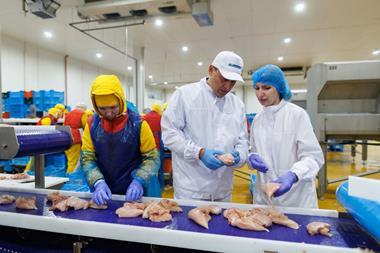
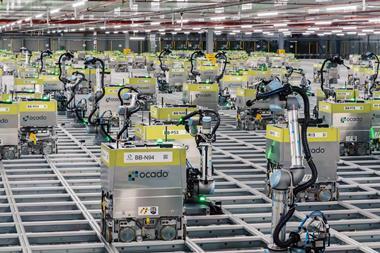
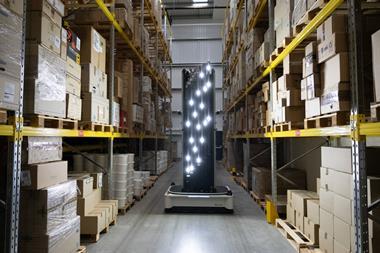
Automation changes what warehouse jobs involve rather than removing them. It takes on the most repetitive and physically demanding tasks, and creates demand for people who can manage robotics, interpret data and keep sophisticated systems running. For colleagues on the warehouse floor, that opens routes into more technical, higher-value careers.
GXO is building those routes itself. Its Data Academy helps colleagues develop skills across data, robotics, automation and AI, and the company is part of the UK’s first degree-level robotics apprenticeship.
Jana Boerger, GXO’s senior director of warehouse AI, sees AI in the same light: as support for the people running the operation, not an add-on. “It’s anticipating, it’s managing, it’s orchestrating processes whereby AI becomes like a foundational partner to our operators in the warehouse,” she says.
Building the future-ready warehouse
So how are the most forward-thinking operators putting people and technology to work together, and what does it take to build a resilient, future-ready warehouse?
The full report explores how automation, AI, the right partnerships and the right people are helping fmcg suppliers build supply chains that are more productive, resilient and ready for growth.
Download your free copy to discover:
- How automation is supporting every stage of the modern fmcg warehouse
- The role of AI as the connective tissue linking modern supply chains
- How modular technology lets businesses invest at their own pace
- Why 3PLs are becoming long-term strategic partners
- How automation is creating new, higher-value roles for warehouse teams