





At first I thought it was a pisstake. The HMRC has “commissioned researchers to analyse the wastewater in multiple waterworks around the country for traces of nicotine and metabolites in the local population’s urine”, The Times reported this week, “so officials can more precisely target investigations and raids” on premises selling illegal tobacco.
On closer inspection, however, I’ve realised the HMRC’s plan is not as daft as it sounds.
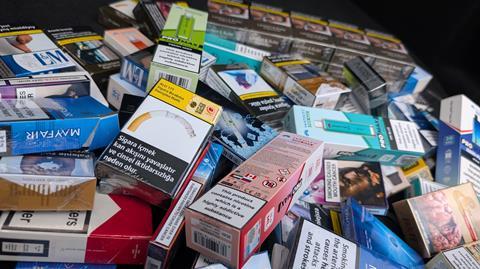
Of course, you hardly need to go underground quite so literally in order to identify and coordinate targeted raids. The illicit tobacco trade is happening in plain sight on our high streets, as the countless police raids conducted in recent months (some involving The Grocer journalists) have shown.
HMRC officials only need to look at local Facebook pages to find regular punters helpfully sharing where to find cheap tobacco to find the very precise co-ordinates needed for their investigations.
So why does Jonathan Athow, HMRC director general of customer strategy and tax design at HMRC, feel the need to “work out what the gap is” between “how much people are smoking” and the data they have on legitimate tobacco sales, as he told a Treasury committee last week.
It’s not as if HMRC isn’t cracking down on illegal tobacco sales: it seized a record 1.9 billion cigarettes worth £1.1bn [52 w/e March 2026] according to the annual Outputs for Tackling Tobacco Smuggling report.
A failure of intelligence
It’s a failure of intelligence in a different sense of the word. According to HMRC, the UK lost £1.3bn in tax revenue to the illegal tobacco trade in 2025. But no-one seriously believes that just 12% of cigarettes and 23% of roll-your-own tobacco (RYO) are illegal.
Industry estimates suggest the scale is far greater. Earlier this month, JTI’s ‘It Costs More Than You Think’ campaign reported that 42% of cigarettes and 63% of RYO were illegal. And that follows a report from Philip Morris in June (conducted by KPMG) which concluded that the Treasury was missing out on £4.5bn from illegal cigarette sales alone.
And illegal tobacco sales are accelerating. JTI’s empty pack analysis (which identifies illegal tobacco sales) found that while 46% were illegal in March 2025, by Q2 of 2026 that had increased to 71%. And the two leading illegal brands – Top Gun and Platinum – accounted for 16% of sales in Q2 vs 3% last year.
This boom is hardly surprising. In the last five years, duty on tobacco has increased well above inflation. Already prohibitively expensive (a 50g Amber Leaf pouch currently costs £45, versus a fiver for a knock-off pouch) a further above-inflation duty hike on 1 October (to maintain a price gap to vapes, when the UK Vaping Products Duty takes effect) will widen this divide even more.
Tackling illegal trade
So why doesn’t the HMRC just use industry data to get on with tackling the illegal trade? Campaign groups such as ASH have criticised the methods behind the tobacco industry’s models, and while they instinctively feel more accurate than the HMRC’s numbers, they are neither foolproof nor independent.
In contrast, urine sampling is a totally objective (and well-established) measure in drug detection. And if the evidence is as compelling as it appears, it will be much easier to secure enforcement funds.
With organised crime running amok on Britain’s high streets, and Trading Standards officers almost powerless (and notoriously under-resourced) to put up a fight, the publication of ‘Hidden in Plain Sight’, the Chartered Trading Standards Institute’s report on how to tackle crime on the UK’s high streets signalled the start of a fightback. A report by the Centre for Social Justice published earlier this month identified 32 policy proposals to tackle serious & organised crime, and last week the Co-op Group published a white paper urging the government to ramp up funding, increase shop raids and scale up use of the Tobacco Track & Trace system.
And to be fair, the government is acting. With the Crime & Policing Act 2026 this summer, the government has allocated a £30m enforcement plan over three years to fund a new High Streets Organised Crime Unit, promising ‘enhanced closure order’ legal powers.
But the measures must not end there. Trading Standards must be given more funding and the power to issue higher fines. Nor should we need to wait for the Tobacco & Vapes Act 2027 to debate a retail tobacco licensing scheme. And for it to be effective it also needs to involve the whole supply chain, because organised crime will always expose the weakest link.
Only then will the UK start to lessen the impact of organised crime, not only on the Treasury’s coffers, but also on the trade of honest retailers and the communities they serve.
Adam Leyland is The Grocer’s editor-at-large





No comments yet