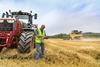
farmer farming tractor tech gps

’For smaller producers and tenant farmers, ‘net zero’ often feels less like a shared mission and more like a set of top-down obligations’


Retailers and food manufacturers are taking centre stage in the race to build net zero supply chains. It is an important leadership role, but we need to ask harder questions: who pays for that ambition, and who gets to decide what the transition looks like?


The UK’s net zero target for agriculture is around a 39% reduction in emissions by 2040, according to the UK’s latest carbon budget – not full carbon neutrality, because certain biological emissions from farming, such as methane from livestock, are extremely difficult to eliminate completely. Yet many corporate sustainability commitments often imply a 100% target across the supply chain. That creates confusion – and, for many farmers, frustration.


The challenges for small producers

For smaller producers and tenant farmers, ‘net zero’ often feels less like a shared mission and more like a set of top-down obligations. Research by Leeds University Business School highlights farmers facing rising audit demands, shifting procurement criteria and expectations to invest in new technology – often without financial support or long-term market certainty.


Tenant farmers face a particular challenge – a theme explored in a project I led, funded by the National Innovation Centre for Rural Enterprise, in collaboration with colleagues from the Countryside and Community Research Institute, Harper Adams University, Strutt & Parker, and Bournemouth University. The study found tenant farmers are frequently expected to align with the environmental targets of their landlords or major buyers, often with limited ability to shape or negotiate those expectations. This lack of autonomy makes it harder to balance environmental ambition with economic viability.


This is a classic case of distributional injustice – where the risks and costs of transformation are carried by the smallest actors, while the reputational benefits accrue upstream. The same pattern plays out globally, where smallholder farmers in lower-income countries are expected to meet sustainability standards designed elsewhere.


The case for fair, flexible targets

But the story does not have to end there. Retailers and processors can help make net zero transitions genuinely fair by co-investing in low-carbon transitions rather than passing the cost downstream, and by rewarding regenerative practices through longer-term contracts and fair pricing.


Targets should be flexible enough to reflect biological and regional differences, rather than applying uniform expectations across highly diverse farm systems. Crucially, inclusion must be embedded by ensuring marginalised farmers – including those from global majority communities, new entrants, tenant farmers and smaller suppliers – have a genuine seat at the table when sustainability plans are designed, not just when they are audited.


If fairness feels like an abstract term, think of it as risk management. Without trust, transparency and shared values, ambitious net zero plans will stall under practical and political resistance. With them, the sector can deliver climate progress and maintain the viability of the people who feed the nation.


Net zero is not just a technical destination, it is a social process. Achieving it will depend less on imposing targets and more on building equitable partnerships between retailers, processors, and the farmers and suppliers they rely on – partnerships grounded in justice, equity and inclusion. A greener food system will only succeed if we share the responsibility fairly. Justice and sustainability are not opposing goals; they are mutually reinforcing. One will not succeed without the other.


Dr Rounaq Nayak is senior lecturer in farming systems at the University of the West of England