






FSA chief Katie Pettifer says public trust in food is ‘precious’. But with food retail changing faster than ever, she explains why regulation must evolve
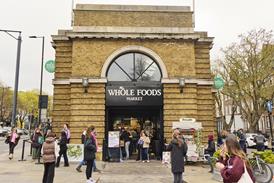
Walking a busy stretch of Ealing High Street with Food Standards Agency boss Katie Pettifer as she prepares to join food safety officers on their inspections is eye-opening. Businesses are gearing up for the Friday lunchtime rush, with food trucks prepping and local cafés and restaurants clearing tables after the morning’s trade. In this part of London alone, Pettifer points out, there are around 3,500 food businesses, some more visible than others.
Consumer confidence in the UK’s food safety system is high. In fact, Pettifer points out, it’s something most of us take for granted, with 94% of consumers ‘confident’ the meal deal they pick up at lunchtime or the takeaway they order on a Friday night will be safe to eat.
“Most consumers will never think about the system that makes their food safe,” she says, highlighting different types of food businesses as we walk down the high street. “And that’s brilliant, but we have to work really hard behind the scenes to keep that confidence high. Public trust in the food system is precious. If we lose that, it’ll be disastrous for businesses as well as for people.”
It’s a theme Pettifer returns to repeatedly. It’s also why she’s driving the biggest review of food regulation in years.
From Ofcom to food safety
Unlike many at the top of the food industry, Pettifer didn’t come to the FSA from farming, manufacturing or retail. Her career began in government policy at the Northern Ireland Office, Ministry of Justice and Cabinet Officer, before she moved into regulation at Ofcom, then to the FSA.
“I was able to get a really good sense of how, as a regulator, you have so much agency to make a difference,” she explains. “You work much more directly with businesses, and I really loved that.”
Pettifer joined the FSA five-and-a-half years ago to focus on the future of food regulation. At the time, food delivery apps were becoming mainstream, online grocery shopping was booming and the shape of the industry was changing rapidly. But it was the organisation’s purpose that ultimately attracted her.
“I knew I could take what I’d learned about regulation and bring it to this sector, but I also loved that the FSA has such a clear purpose. Going to work every day knowing your job is to make sure people have food they can trust is incredibly motivating.”
Coming from outside the sector means Pettifer, who became CEO two years ago, approaches her work through the lens of public policy, risk and consumer trust. And working in the industry quickly changed the way she thinks about food. “I definitely check food hygiene ratings now,” she laughs. “I knew about them before, but I didn’t really pay attention in the same way.”
What is the Future of Food Regulation?
- Enhanced registration: The FSA wants a clearer picture of who is running a food business from the start. It says a stronger registration process will help legitimate businesses thrive and make it harder for bad actors to slip through the net.
- Localised enforcement: The FSA is exploring stronger enforcement powers, such as fixed penalty notices for less serious breaches, allowing inspectors to spend more time tackling the highest-risk cases.
- National approach: The FSA wants to make greater use of data and intelligence from major food businesses and their supply chains, giving regulators a clearer view of emerging risks and issues.
- Clearer guidance: The reforms will simplify guidance and take a more consistent approach, making it easier for businesses to understand what good compliance looks like.
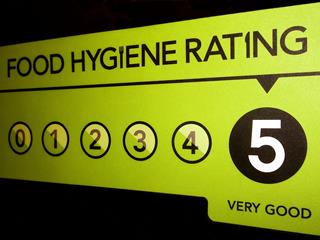
- Consumer transparency: The FSA wants to make it compulsory for businesses to display hygiene ratings in-store and online, helping consumers make more informed choices.
More significantly, it has given her a “deeper understanding” of the complexity of food supply chains and the wider industry, offering a perspective that has shaped her approach to regulation. “When you’re regulating, you’re not trying to catch businesses out. You’re trying to make it easier for them to do the right thing,” she says.
But that doesn’t mean going soft. “You’ve got to have both,” she says, when asked whether her style is more carrot than stick. “There will always be bad actors, but most businesses want to follow the rules.”
That view is echoed by Sean Kelly, food safety team leader at Ealing Council, who says 88% of food businesses in the borough are compliant, although a “small minority take up a lot of headspace” from an enforcement perspective.
“We’ve been talking this morning about local businesses,” Pettifer says. “Some genuinely want to do the right thing but just don’t know how. They need advice, support and someone to talk to. Others have huge internal control systems and advisers, so our role there is very different.”
Ultimately, she believes regulation is about “finding the approach that drives good behaviour”.
A changing food system
It’s an approach that has been remarkably successful thus far. Public confidence in food safety remains high, with the UK enjoying some of the strongest food standards in the world (about three-quarters of businesses have the top food hygiene rating of five). But change is on the horizon – and the food landscape driving that change looks very different to the one the current system was built for.
“The systems we have to keep food safe and protect consumers have worked well,” Pettifer says. “But they were designed around the high street of the 1990s.”
Online food sales and rapid delivery platforms have transformed eating habits, while the number of small food businesses – many being run out of domestic kitchens – has rocketed. Supply chains have become increasingly complex and fewer than 10 major retailers account for 97% of all groceries sold in Britain.
The wider food system is also exposed to a host of external pressures, from geopolitical instability and climate-related disruption to changing trade arrangements and global supply chain shocks.
“We live in a time of change,” says Pettifer. “The Future of Food Regulation programme is about evolving the way we regulate, so the systems that keep our food safe can continue to work in a very different future.”

Name: Katie Pettifer
Lives: North London
Age: 46
Family: Married, with a teenage daughter and a cat
Potted CV: I worked in government on human rights, the criminal justice system and the Northern Ireland peace process before I moved into regulation
Career highlight: Helping to introduce civil partnership registration. I remember people at Pride telling us they’d waited for this for years.
Best advice: Listen more than you talk. I try but don’t always manage it!
I couldn’t live without: Teabags. I can’t function on less than six cups of tea a day
Go-to takeaway: I couldn’t possibly say! But I do love a good steak and chips
During her time at the FSA, the food system has already faced a series of “major shocks”. The pandemic exposed vulnerabilities in global supply chains almost overnight, while the conflict in Ukraine demonstrated how quickly international events can affect food availability, costs and resilience closer to home.
Maintaining public confidence during these shocks circles back to the reason the FSA was created in the first place.
“If something big and systemic shakes consumer trust, the consequences can be catastrophic,” Pettifer says, describing the BSE crisis of the early 1990s – a public health disaster that cost the industry around £2bn in today’s prices – as the FSA’s “origin story”.
Set up in its aftermath to “restore public trust in food”, the FSA remains focused on ensuring the resilience of the food system as a whole. Pettifer puts it simply: “We have to guard against systemic issues.”
Making a difference
It’s that belief that lies behind the Future of Food Regulation. The proposals are being developed over the coming months and will be presented to the FSA board in March 2027. Pettifer expects the suggestions to be well received.
“Most of the reforms we’re proposing are about strengthening local delivery and will give local authorities the tools they need,” she says. “There’s also an element looking at how we take a national approach to a handful of the biggest businesses.”
In developing the proposals, the FSA engaged with around 1,200 stakeholders, many of them from local authorities. Their expertise, Pettifer says, was “critical” because “everything we’re trying to do is about making a difference for people and businesses on the ground”.
While the Future of Food Regulation is likely to dominate much of the FSA’s work over the next year, Pettifer’s in-tray extends well beyond regulatory reform. The next major project on the agenda is the government’s proposed sanitary and phytosanitary (SPS) agreement with the EU.
“Public trust in the food system is precious. If we lose that, it’ll be disastrous for businesses as well as for people.”
“We’re supporting the government in trying to secure a good SPS agreement with the European Union that protects public health and works for British businesses,” she explains.
If agreed, the FSA will subsequently play a key role in helping businesses understand what the agreement means in practice and how any changes should be implemented. It’s one more example of the kind of shift Pettifer has spent the conversation describing: regulation having to move with a food system that rarely stands still.
For Pettifer, that’s representative of the broader direction of travel for the industry. Food regulation might start with inspections and compliance, but it must also consider the resilience of increasingly complex supply chains, the growing role of technology and data, and the risks posed by a rapidly changing – and increasingly unstable – world.
The challenges facing the food system may evolve and change over time, but the mission Pettifer signed up to almost six years ago remains the same. “The most important part,” she says, “is making sure we have systems that will continue to keep food safe in the future.”
For consumers on Ealing High Street and beyond, that work will remain largely invisible. People will continue to pick up their lunch or order a takeaway without ever thinking about what goes on behind the scenes. And for Pettifer, that’s a sign everything is working exactly as it should.




No comments yet