



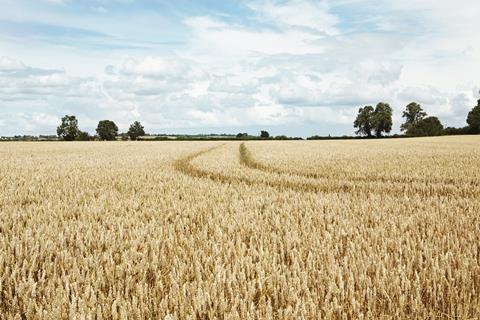
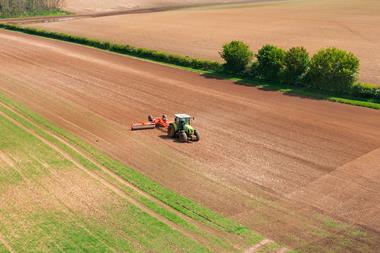
Arable farmers have warned of potential shortages after heatwave conditions have reduced cereal harvests.
Farmers have recorded lower than anticipated yields, with many in the east of England seeing production decrease by almost 50%.
“Yields are substantially down,” said Philip Rayner, MD of Glebe Farm, with many farmers seeing production drop to around seven tonnes per hectare compared with 11 in a typical year and some seeing as few as five tonnes per hectare.
“As with all production, it is the last tonne that is the bit the farmer lives on, so this is a huge hit to profitability,” Rayner said, warning that shortages and food security worries “may well happen across the board”.
He likened the situation to the 1976 heatwave, where the country faced a 16-month drought leading to farmers suffering approximately £500m in crop losses.
The Met Office has said there was no significant rainfall expected in the immediate future, which would cause problems in the long term. However, Rayner warned that any rain at this late stage would “just hinder harvest”.
NFU president Tom Bradshaw echoed concerns, posting on LinkedIn about issues on his farm as hot weather meant he began his earliest ever wheat harvest.
He explained how a “crop that we had expectations could yield 11t/ha back in April is only yielding around 7.5t/ha after extreme heat and very little rain and will make a loss”.
The weather had been “really challenging” and was an “incredible kick in the backside right at the end of harvest”, he added.
Rayner added that the issue went beyond the UK and was a Europe-wide issue.
“This appears a repeat of four poor harvests of the last five years,” he said. “Is it too early to say that this is climate change showing what it will do? Or probably too late if it is!”
In light of the situation, he predicted that a lot of arable and mixed farmers in the UK would be switching to low output and using ELMS for “large parts of their income” in the coming years.
As well as reduced yields, arable farmers are also contending with higher risk of wildfires on farm as the drier weather can cause spontaneous fires during harvest.
The NFU has called for the government to develop a National Wildfire Strategy for England and Wales in response to increased risk.





No comments yet