


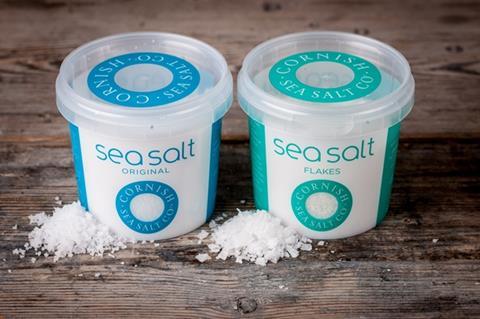
Cornish Sea Salt, known for harvesting salt from waters off the Lizard Peninsula in Cornwall, has admitted using sea salt sourced from Europe to produce its “mineral-rich” flakes.
🔔 Get breaking grocery news direct to WhatsApp
Despite writing on its website that its sea salts were “sourced from Grade A Atlantic waters, eight metres from the shoreline on the Lizard Peninsula”, the brand told The Grocer it combined Cornish seawater brines with “carefully sourced” natural sea salts (electrolytes) from European coastal regions.
“Our production techniques are unique to Cornish Sea Salt and have been specifically developed to preserve the distinctive mineral composition and natural flavour characteristics of seawater from Cornwall’s Lizard Peninsula,” a spokesperson for Cornish Sea Salt said.
The “flake sea salt” production process was developed by Cornish Sea Salt in 2011 in a bid to create a lower-sodium salt for the food industry.
The sea salts from Europe were “essential in our process to stimulate sodium chloride flakes to form, creating our unique Cornish Sea Salt structure and mineral-rich flavour profile consisting of potassium, calcium, magnesium”, the spokesperson insisted.
They added: “We have only ever used 100% natural sea salts in all of our products, and our unique taste comes from minerals only found on the Cornish coast where we harvest the seawater.”
Maldon Salt investigation
It comes days after an investigation by The Observer found Maldon Salt was producing its sea salt flakes using rock salt sourced from Germany.
Lorries were filmed delivering large quantities of rock salt from German mining firm K+S to Maldon Salt’s production site near Goldhanger in Essex.
The revelation has resulted in a swathe of negative comments on Maldon Salt’s Instagram page, with loyal shoppers vowing to boycott the brand.
“I can’t believe this company has been conning us by mixing their salt with German rock salt,” one shopper said.
Another added: “I’ve been a loyal customer for years. Not any more. I’m disgusted at your lies.”
A third said they hoped the brand would face legal action from consumers. “I use your salt for fermenting and after hearing about your ‘sea salt’ truth, I will never buy your salt again,” they said. “It may not be illegal, but it is deception and I am pissed off. I want my money back.”
Polling by The Grocer showed Brits were divided over Maldon’s use of German rock salt. Some 42% of respondents said they had been put off buying the brand, with a further 11% stating they would no longer pay full price for its products. However, just under half (47%) of respondents said the revelation would not stop them purchasing it.
No legal definition of sea salt
Maldon Salt, which uses a production method it describes as “salt-on-salt”, complies with all relevant food regulations, with an investigation by the FSA and Essex Trading Standards in 2019/20 finding no case for the brand to answer.
Currently, there is no legal definition of sea salt, with producers free to describe their products as such even if salt is added from another source.
Meanwhile, rival brand Halen Môn confirmed its sea salt crystals came from “100% pure Anglesey seawater and absolutely nothing else”.
It claims to be the “only sea salt in the UK to hold EU and UK Protected Designation of Origin (PDO) status”, meaning its sea salts must be produced in Anglesey, North Wales, and follow a traditional production method.
“We have been making Halen Môn through these traditional, handmade methods on the Isle of Anglesey for nearly three decades”, a spokesperson said. “Our saltcote is a popular visitor attraction, where visitors can tour our production facilities and see how our natural sea salt is harvested for themselves.”
Lea Arlix, international marketing manager at French salt producer Salins Group, advised shoppers unsure where their salt came from to look out for products with PDO or Protected Geographical Indication (PGI) status.
“Transparency is key, and we recommend that suppliers and consumers look out for the PGI, or Protected Geographical Indication,” she said. “This European quality label links a product to a specific geographical area and to strict production specifications. These specifications cover the product’s origin, production methods, traceability and quality. Compliance is regularly checked by independent, accredited organisations.”





1 Readers' comment